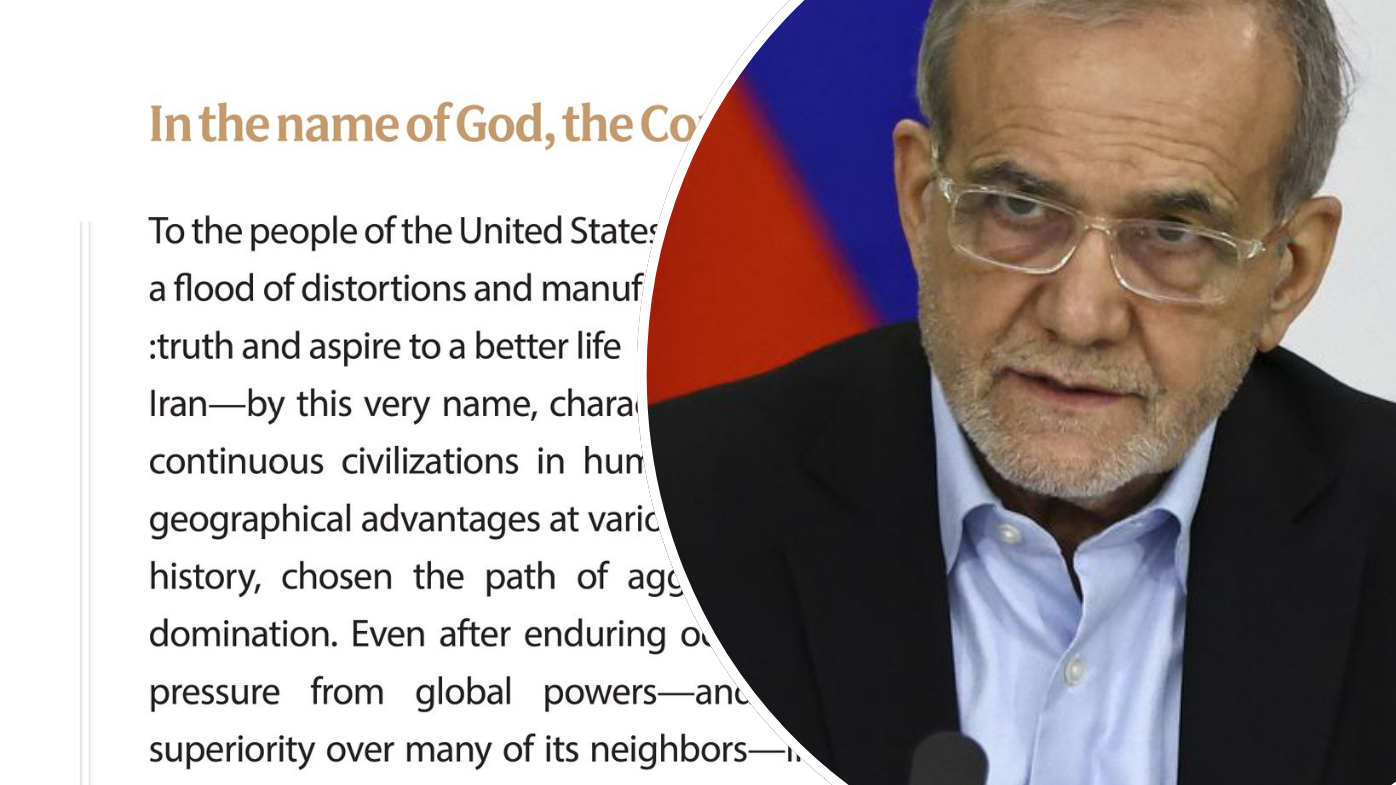
The recent open letter from Tehran addressed to the American public is not a gesture of diplomacy so much as it is a calculated psychological operation. By questioning whether current U.S. foreign policy truly aligns with an "America First" agenda, the Iranian leadership is attempting to drive a wedge into the fractured heart of the American electorate. This isn't about opening a dialogue with Washington; it is about exploiting the deep-seated domestic fatigue regarding Middle Eastern entanglements to weaken the internal consensus required for U.S. interventionism.
While traditional media outlets often frame these communications as mere propaganda or desperate pleas for sanctions relief, a closer investigation reveals a more sophisticated intent. The Iranian establishment has identified a specific vulnerability in the American psyche: the growing skepticism toward "forever wars" among both the populist right and the progressive left. By framing their regional ambitions as a defensive struggle against Western imperialism, they hope to convince the average citizen that the costs of opposing Iran—both financial and human—outweigh any perceived national interest.
The Strategy of Disruption Through Digital Diplomacy
Tehran has long understood that it cannot win a direct military confrontation with the United States. Instead, it relies on asymmetric warfare, a strategy that has now migrated from the physical battlefields of Iraq and Syria to the digital screens of American voters. The letter functions as a centerpiece for a broader narrative designed to trigger a re-evaluation of American priorities.
When the Iranian leadership asks if war serves the American people, they are using a rhetorical mirror. They are reflecting back the internal debates currently happening in town halls from Ohio to Arizona. This isn't an accidental alignment of themes. Iranian intelligence services and their media apparatus have spent years monitoring U.S. social discourse to understand which pressure points yield the most significant domestic friction. By adopting the language of American isolationism, they seek to make the containment of Iran a politically toxic issue for any candidate seeking office.
The timing is equally critical. As the U.S. moves closer to pivotal election cycles, the Iranian government recognizes that political leaders are increasingly sensitive to public opinion on military spending. If they can frame the "America First" doctrine as being fundamentally incompatible with Middle Eastern military posture, they create a scenario where U.S. policymakers are forced to choose between domestic popularity and strategic regional commitments.
Weaponizing the Fatigue of Global Policing
Decades of conflict have left a scar on the American collective consciousness. The Iranian appeal leans heavily into this exhaustion. It posits a world where the U.S. could thrive by simply stepping back, suggesting that the friction between the two nations is a manufactured product of "special interests" and "war-mongering elites" rather than a fundamental clash of geopolitical goals.
This narrative ignores the harsh reality of Iranian regional proxy networks, but it doesn't need to be entirely factual to be effective. It only needs to be resonant. For a taxpayer wondering why billions are sent overseas while domestic infrastructure crumbles, the Iranian message offers a deceptive but tempting simplicity. They are betting that the average American's desire for peace will override their understanding of the complex security architecture that prevents a total vacuum in the Persian Gulf.
The danger of this approach lies in its ability to bypass official government channels. By speaking "directly" to the people, Tehran attempts to delegitimize the U.S. State Department and the intelligence community. They characterize these institutions as entities that act against the will of the citizenry. It is a classic move from the insurgent's playbook: undermine the trust between a population and its government to paralyze that government's ability to act decisively abroad.
Behind the Mask of Iranian Moderation
To understand why this letter is a tactical maneuver rather than a sincere olive branch, one must look at the internal pressures facing the Islamic Republic. The Iranian economy is under immense strain from decades of mismanagement and international pressure. Domestic dissent is a constant threat to the regime’s survival. In this context, an appeal to the American public serves as a pressure valve.
If Tehran can successfully influence American public opinion to the point where sanctions are eased or military posturing is softened, they gain the breathing room necessary to stabilize their domestic front. The "America First" framing is a mask for "Regime Survival First." They are seeking a reprieve, not a partnership.
The Role of Proxy Influence
Even as these letters circulate, Iran continues to fund and direct a network of armed groups across Lebanon, Yemen, and Iraq. This creates a cognitive dissonance that many analysts overlook. How can a state preach peace to American citizens while simultaneously providing the hardware used to target American interests and allies?
The answer lies in the compartmentalization of their strategy. The letter is for the "Western ear"—the student, the laborer, the disillusioned voter. The missiles are for the "regional reality." By maintaining these two tracks, Iran can pursue its expansionist goals while claiming to be the victim of unprovored Western aggression. It is a dual-track policy that relies on the hope that the American public will focus on the rhetoric and ignore the kinetics.
The Economics of Middle Eastern Retrenchment
The argument that a U.S. withdrawal would lead to domestic prosperity is a cornerstone of the Iranian letter. It is an argument that has gained significant traction across the political spectrum. However, the economic reality is far more entangled than the Iranian leadership suggests.
A total U.S. retreat from the region would not simply result in redirected funds for domestic projects. It would likely lead to a massive power vacuum that would be filled by other global players, specifically China and Russia. The resulting instability would inevitably impact global energy markets, leading to price spikes that would hit the very American households Tehran claims to be concerned about.
Iran knows this. Their goal isn't to help the American economy; it's to remove the primary obstacle to their regional hegemony. By framing their request in the language of American economic self-interest, they are attempting to trick the U.S. into a strategic blunder that would have long-term negative consequences for global trade and national security.
Breaking the Cycle of Reactionary Foreign Policy
The U.S. response to such appeals has historically been one of two extremes: total dismissal or naive engagement. Neither has proven particularly effective. Dismissing the message ignores the fact that it is actually reaching people and influencing the domestic debate. Engaging with it at face value risks validating a bad-faith actor.
A more effective strategy requires a nuanced understanding of the "information war." The U.S. must address the underlying concerns of its own citizens—the fatigue, the cost, the lack of clear objectives—rather than letting a foreign adversary define those terms. If the American public feels heard by their own government, they are far less likely to find solace in the propaganda of a hostile regime.
We are seeing a shift in how international conflicts are negotiated. It is no longer just about who has the most carriers or the most advanced cyber-capabilities. It is about who can tell the most compelling story to a global audience that is increasingly skeptical of authority.
The Illusion of a Simple Solution
The Iranian letter offers a fantasy of a world where complex geopolitical rivalries can be solved by simply "minding one's own business." It is an attractive lie. The world is too interconnected for any major power to truly step away without triggering a cascade of unintended consequences.
The "America First" rhetoric used by Tehran is a cynical appropriation of an American political movement. It is a attempt to use our own words against us, to turn our domestic political disagreements into a tool for their regional empowerment. Recognizing this is the first step in neutralizing the impact of their psychological operations.
The reality of the situation is that there are no easy exits. Diplomacy requires a level of trust that currently does not exist, and military action carries risks that the American public is rightfully hesitant to embrace. This middle ground—the gray zone of sanctions, proxy friction, and information warfare—is where the future of the relationship will be decided.
Why Direct Appeals Often Fail
Despite the sophistication of the message, these direct appeals often fall short because of the inherent lack of credibility of the source. The American public may be tired of war, but they are also generally wary of foreign governments telling them what is in their best interest. There is a deeply ingrained American streak of independence that bristles at being lectured by a regime that suppresses its own people.
However, the danger isn't that the American public will suddenly become pro-Iran. The danger is that they will become so exhausted by the complexity of the situation that they will demand a withdrawal regardless of the consequences. That is the true victory Iran is seeking. They don't need us to like them; they just need us to stop standing in their way.
Navigating the Information Battlefield
As the digital landscape becomes more crowded with state-sponsored narratives, the ability to discern intent becomes a primary survival skill for a democracy. The Iranian letter is a case study in how a state can use the openness of a democratic society to inject destabilizing ideas. It is not an act of communication; it is an act of subversion.
The response to this shouldn't be censorship, which only feeds the narrative of government overreach. Instead, it must be a more transparent and honest conversation between American leaders and the public about the actual stakes of Middle Eastern policy. If the "why" of U.S. involvement is not clearly articulated and justified, the vacuum will continue to be filled by the opportunistic rhetoric of adversaries.
We must stop treating these letters as curiosities and start treating them as the tactical volleys they are. The battlefield has changed, and the primary targets are no longer just military installations or economic hubs. The primary target is the conviction of the American voter. Understanding this shift is the only way to avoid falling into the traps laid by those who wish to see the U.S. retreat from its role on the world stage.
The Cost of Disengagement
If the U.S. were to take the advice offered in the Iranian appeal and completely disengage from the region, the immediate aftermath would not be peace. It would be an escalation of the cold war between Iran and its regional rivals, likely leading to a nuclear arms race that would make the current situation look stable by comparison.
The "America First" path that Tehran suggests is actually a path toward a more dangerous, more expensive, and more volatile world. By painting the U.S. as the sole source of friction, they conveniently ignore their own role in the instability of the region. The letter is a masterclass in gaslighting an entire nation.
The hard truth is that staying engaged in the Middle East is costly, frustrating, and often lacks a clear "win" condition. But the cost of walking away—leaving the keys to the world's most volatile region to a regime that uses suicide drones and proxy militias as primary tools of statecraft—is a price that no American administration, regardless of party, can afford to pay.
The Iranian leadership knows this, which is why they aren't writing to the President. They are writing to you. They are hoping you won't check the math.
Demand a foreign policy that is actually based on American interests, but don't let a hostile foreign power define what those interests are.