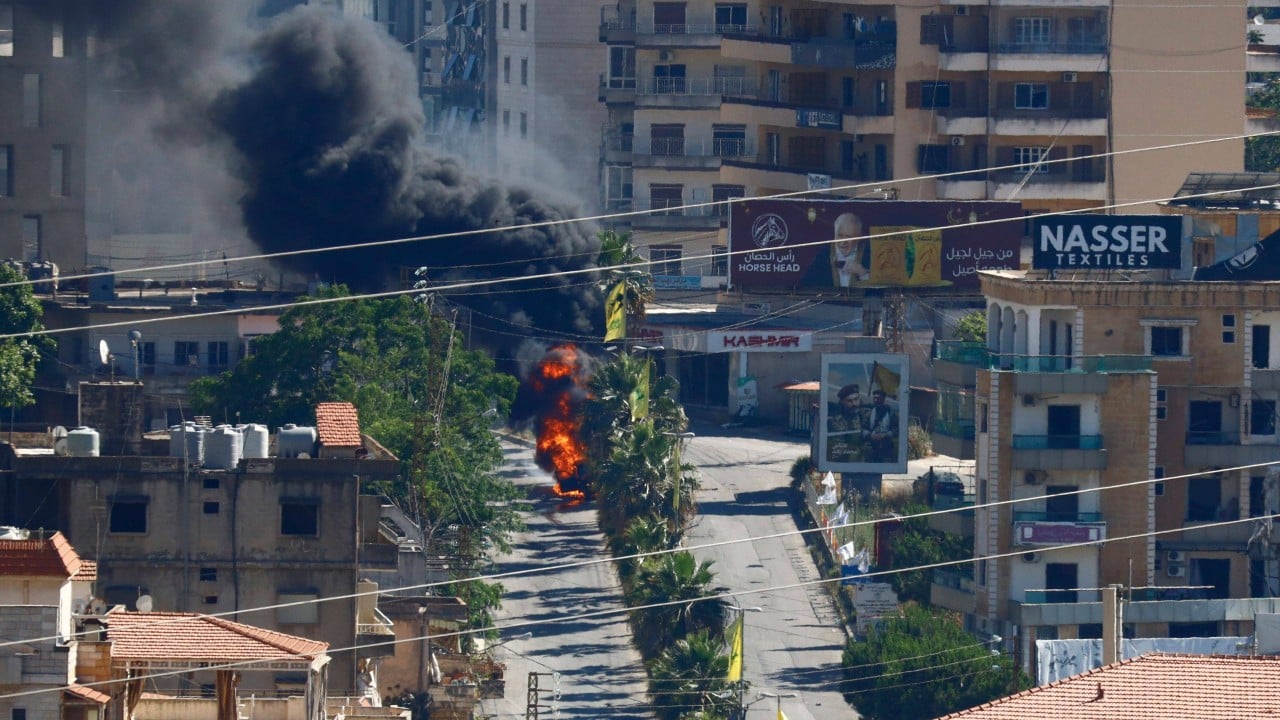
The convergence of the United States and Iranian delegations at the Bürgenstock Resort in Switzerland exposes a fundamental divergence between kinetic leverage and administrative posturing. On June 20, 2026, the Islamic Revolutionary Guard Corps (IRGC) declared the Strait of Hormuz closed, citing alleged Israeli kinetic violations of the newly minted June 17 Memorandum of Understanding (MoU) in southern Lebanon. Simultaneously, U.S. Central Command (CENTCOM) reported that 55 commercial vessels successfully transited the waterway on the exact same day, moving over 17 million barrels of crude oil without disruption.
This friction reveals that the "closure" of the Strait of Hormuz is not an operational reality, but a calculated diplomatic pricing mechanism deployed by Tehran to maximize structural concessions before technical negotiations begin in Switzerland. Meanwhile, you can read other developments here: The Geopolitical Leverage Function: Deconstructing the US Iran Bürgenstock Mandate.
The Friction Function: Deconstructing the Strategic Disconnect
The disconnect between the IRGC’s declaration and CENTCOM’s transit data reflects a sophisticated application of asymmetric escalation. Iran utilizes a specific cost function to balance economic survival against diplomatic leverage.
Leverage = f(Perceived Risk, Diplomatic Concessions) - c(Kinetic Retaliation, Total Revenue Loss)
By announcing a closure while permitting physically shielded or non-aligned vessels to pass, Iran achieves three distinct strategic objectives: To explore the complete picture, we recommend the excellent article by NBC News.
- Information Asymmetry as a Tariff: The mere declaration of a closure reintroduces a high risk premium into global maritime insurance markets. Institutional underwriters, having already cancelled standard Protection and Indemnity (P&I) coverage during the initial February 2026 escalations, must price the northern route through Iranian territorial waters near Larak Island as an active combat zone. This increases shipping costs structurally, pressuring Western economies without requiring the IRGC to fire a single missile.
- The Two-Route Enforcement Asymmetry: The internationally recognized Traffic Separation Scheme (TSS) remains compromised due to legacy mine risks. Consequently, commercial shipping relies on a northern route governed by the Persian Gulf Strait Authority (PGSA) and a southern route through Omani territorial waters. Iran's declaration of closure serves as an administrative block on its own regulated northern channels, forcing traffic into the Omani southern route, which CENTCOM actively patrols. This creates a binary operating theater: an Iranian-controlled administrative zone that is closed, and an international military corridor that remains open.
- Pretextual Escalation for Swiss Concessions: By anchoring the closure to Israeli actions against Hezbollah in Lebanon, Tehran shifts the agenda of the Swiss talks. Vice President JD Vance, accompanied by special envoys Steve Witkoff and Jared Kushner, initially entered the summit to negotiate long-term nuclear frameworks and structural sanctions relief. The IRGC's maneuver forced an immediate structural modification: an emergency session dedicated exclusively to the Israel-Hezbollah conflict was appended to the top of Sunday's agenda, altering the baseline of the negotiations.
The Three Pillars of the Bürgenstock Negotiations
The technical teams remaining in Switzerland face a highly complex, multi-variable optimization problem. The success or failure of the MoU depends on stabilizing three interconnected pillars, each governed by its own strict boundaries.
The Maritime Freedom Matrix
The primary operational constraint is the transition of the Strait of Hormuz from a zone of arbitrary interdiction to a predictable transit corridor. The U.S. strategy rejects any implementation of tolls during a active ceasefire. Iran’s counter-strategy uses its domestic permitting system as a geopolitical valve.
The baseline requirement for the U.S. delegation is the unhindered restoration of global energy flows—specifically the 20% of global crude and 20% of global liquefied natural gas (LNG) that has been severely disrupted since the February 2026 shocks. For Iran, total capitulation on maritime oversight removes its most potent asymmetric lever. The compromise vector requires establishing an international or third-party monitoring mechanism, likely mediated by Qatar and Pakistan, to oversee the PGSA permitting process without validating unilateral Iranian interdiction rights.
The Regional Escalation Linkage
The primary structural flaw in the initial post-war MoU was its failure to explicitly bind regional proxy actions to core bilateral compliance. Iran’s position is clear: any kinetic action by Israeli forces in southern Lebanon invalidates Tehran's maritime commitments. The U.S. position treats the Israel-Hezbollah theater as operationally distinct from the bilateral economic and nuclear commitments made directly between Washington and Tehran.
This creates a severe structural bottleneck. Because neither Israel, Hezbollah, nor the Lebanese government are physical parties to the Bürgenstock talks, the U.S. and Iranian delegations are attempting to negotiate a stabilization framework for a theater where neither side possesses absolute command-and-control.
The Capital Allocation and Sanctions Architecture
The economic engine driving the Swiss negotiations is the mechanics of sanctions relief versus asset verification. Reports indicate a coordinated framework between the U.S. and Qatar to funnel an initial $6 billion tranche of frozen capital to Tehran.
However, the architecture of this transfer is highly restricted. The first limitation is sequencing: Washington demands verifiable maritime stabilization and nuclear enrichment caps before capital release, while Tehran demands immediate liquidity as a precondition for administrative compliance. The second limitation is operational oversight. The capital cannot be delivered as unmonitored budgetary support; it must be routed through Qatari financial institutions strictly for verified humanitarian and non-sanctioned industrial procurement.
Supply Chain Realities and Macroeconomic Limits
While political actors negotiate in Switzerland, global supply chains operate under rigid physical and mathematical constraints. The corporate assumption that maritime corridors will instantly normalize upon the signing of a diplomatic text ignores the systemic scarring of the 2026 dual blockade.
| Routing Mechanism | Incremental Transit Time | Operational Capacity Constraints | Financial Risk Profile |
|---|---|---|---|
| Northern Route (PGSA/Larak Island) | 0 Days (Baseline) | Limited by arbitrary administrative closure and IRGC boarding actions. | Extreme. Subject to immediate P&I insurance revocation. |
| Southern Route (Omani Waters/CENTCOM) | 0 Days (Baseline) | Bottlenecked by traffic density and military convoy sequencing. | Moderate. Mitigated by active U.S. naval escort. |
| Cape of Good Hope (Diverted Traffic) | 10–14 Days | High vessel wear; global container asset depletion. | Low kinetic risk; high structural operational cost. |
| Saudi East-West Pipeline (Yanbu) | Varies | Fixed throughput capacity; limited infrastructure for immediate scaling. | Low kinetic risk; high transshipment tariff. |
The structural reality is that maritime logistics companies are not treating the Swiss talks as a binary switch. Even with 55 transits recorded by CENTCOM, major global carriers maintain diversion protocols. The knock-on effects of the dual blockade—which simultaneously choked the Bab el-Mandeb and the Strait of Hormuz earlier this year—have created a global deficit in container availability.
A sudden spike in transit volumes through the southern route of the strait faces a hard capacity ceiling governed by military convoy speeds and heightened defensive postures.
The Strategic Playbook
The optimal path forward for the U.S. delegation requires decoupling the psychological impact of Iran’s rhetoric from the physical realities of the maritime theater. Executing this strategy requires three immediate tactical moves.
First, the U.S. must maintain a firm military presence through CENTCOM patrols in Omani waters to ensure the physical integrity of the southern route. This invalidates the IRGC’s "closure" rhetoric by demonstrating to global markets that an alternative, secure channel remains open, thereby driving down the artificial risk premium.
Second, the U.S. must condition the release of the $6 billion Qatari-mediated fund on a strict, verifiable correlation with maritime data. The capital allocation must be dispersed in micro-tranches, directly tied to the weekly unhindered transit of commercial vessels through the strait.
Finally, the technical teams must resist integrating the intractable details of the Israel-Hezbollah conflict into the core economic architecture of the bilateral deal. The emergency session should be utilized to establish a secondary, distinct communication channel managed by Qatar and Pakistan, preventing localized kinetic flare-ups from collapsing the broader macro-stabilization framework.