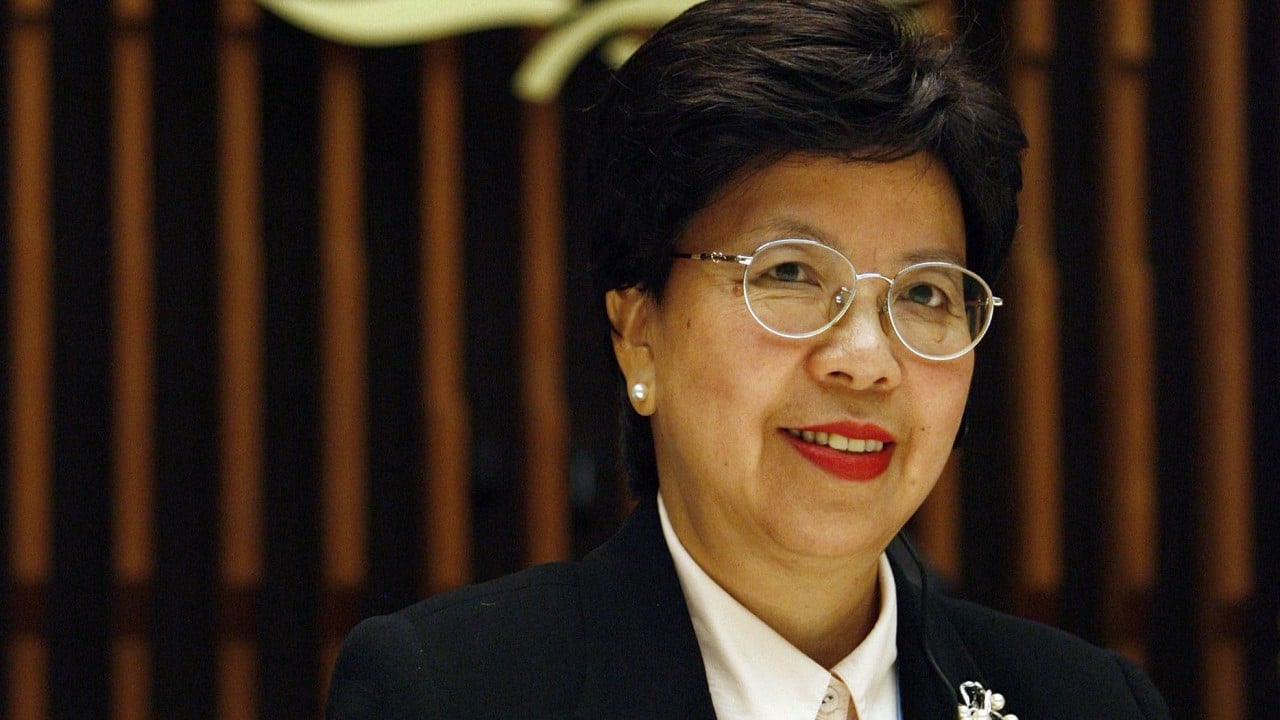
The election of Margaret Chan Fung Fu-chun as Director-General of the World Health Organization (WHO) in November 2006 marked the first time a Chinese national secured the top executive post of a major United Nations specialized agency. Standard historical accounts frame this event through a biographical lens, focusing on Chan’s tenure as Hong Kong’s Director of Health during the 1997 H5N1 avian influenza outbreak and the 2003 Severe Acute Respiratory Syndrome (SARS) epidemic. This surface-level narrative obscures the structural, diplomatic, and institutional forces that engineered her victory. Chan’s ascent was not merely a validation of technical competence; it was the output of a calculated geopolitical shift by Beijing, an institutional pivot toward pandemic preparedness following systemic failures in 2003, and a specific electoral coalition strategy within the WHO Executive Board and World Health Assembly.
The Structural Context of the 2006 Succession
The 2006 election was triggered by an exogenous shock: the sudden death of incumbent Director-General Lee Jong-wook in May 2006 from a cerebral hemorrhage, occurring just days before the annual World Health Assembly. Anders Nordström assumed the role of Acting Director-General, compressing the timeline for succession and altering the strategic calculus of member states. Unlike scheduled transitions that allow candidates years to build grassroots diplomatic networks, an emergency succession favors candidates backed by state apparatus capable of rapid, high-level bilateral lobbying.
At the time of Lee’s death, the WHO was undergoing a fundamental governance transition. The adoption of the revised International Health Regulations (IHR 2005) had expanded the agency’s legal mandate regarding disease surveillance and containment, moving away from passive reliance on state notifications toward active global health security. Member states required an executive who possessed direct operational experience managing cross-border pathogen containment under extreme political and economic pressure.
The field of candidates reflected competing theories of global health governance:
- Operational Crisis Management: Represented by Margaret Chan (China), whose primary credential was executing containment protocols in a high-density global transit hub.
- Public Health Reform and Equity: Represented by Julio Frenk (Mexico), an architect of universal health coverage reforms who appealed to health systems theorists and Latin American blocs.
- Traditional Technical Bureaucracy: Represented by Shigeru Omi (Japan), the WHO Regional Director for the Western Pacific, who offered deep institutional familiarity.
- European Multilateralism: Represented by Bernard Kouchner (France) and Elena Salgado (Spain), who split the European voting bloc and diluted regional influence.
The Three Pillars of Chan’s Candidacy
Analyzing the selection process reveals three distinct mechanisms that converted Chan from a regional public health official into the consensus global candidate.
1. The Dual-Identity Advantage
Chan occupied a unique structural position under the "One Country, Two Systems" framework. She was a career civil servant trained within a British colonial administrative system, holding medical degrees from the University of Western Ontario and public health credentials from the National University of Singapore. This background neutralized Western anxieties regarding ideological rigidity or lack of transparency within mainland Chinese institutions. Simultaneously, her nomination by the central government in Beijing gave her access to the full diplomatic weight of a permanent member of the United Nations Security Council. This dual identity allowed her to function as a bridge between Western donor nations—who funded the majority of the WHO’s extra-budgetary programs—and developing nations seeking multipolar representation in global governance.
2. The Pandemic Securitization Hypothesis
Between 1997 and 2003, global health policy shifted from a development framework to a security framework. Chan’s operational record directly addressed the primary vulnerability exposed by SARS: the speed at which a localized zoonotic spillover can paralyze global trade networks. During the 1997 H5N1 outbreak in Hong Kong, Chan authorized the culling of 1.5 million chickens—the territory's entire poultry population—within three days. From a risk-management perspective, this decision demonstrated a willingness to absorb immediate, severe domestic economic and political costs to eliminate an unquantified biological tail risk. For Western health ministries, this established a predictable behavioral baseline: Chan would prioritize containment over economic preservation.
3. Beijing’s Multilateral Diplomatic Offensive
Prior to 2006, China maintained a largely defensive posture within UN specialized agencies, focused primarily on preventing the diplomatic recognition of Taiwan. The decision to nominate Chan—who had already transitioned to the WHO in 2003 as Director of the Department for Protection of the Human Environment and later Assistant Director-General for Communicable Diseases—signaled a shift toward proactive agenda-setting. Beijing deployed an intensive bilateral campaign across Africa, Asia, and Latin America, linking Chan’s candidacy to broader commitments on South-South cooperation, infrastructure investment, and technical assistance. This created a structural voting floor within the 34-member Executive Board that competitors could not fracture.
Deconstructing the SARS Liability and Reputational Arbitration
A rigorous evaluation of Chan’s candidacy requires examining her primary operational vulnerability: her handling of the 2003 SARS outbreak in Hong Kong. The epidemic resulted in 1,755 infections and 299 deaths within the territory, triggering a Legislative Council inquiry and severe domestic criticism.
The operational bottlenecks during the early phase of the Hong Kong outbreak stemmed from three failures:
- Information Asymmetry: Mainland authorities delayed reporting the atypical pneumonia outbreak in Guangdong province, leaving Hong Kong’s surveillance systems blind to the pathogen's transmissibility until cases crossed the border.
- Jurisdictional Friction: Chan, as Director of Health, held statutory authority over public health policy, while the Hospital Authority managed public hospitals. This bureaucratic division delayed the implementation of unified infection-control protocols and quarantine measures, notably during the Prince of Wales Hospital outbreak and the Amoy Gardens residential cluster.
- Communication Lag: Initial public messaging underestimated the risk of community transmission, eroding public trust and delaying the implementation of mandatory border temperature checks and household quarantines.
In a domestic political context, these failures damaged Chan’s standing; she stepped down as Director of Health in August 2003. However, within the context of the 2006 WHO election, these liabilities were successfully reframed through reputational arbitration. International voters evaluated her performance not against an idealized standard of flawless containment, but relative to the opaque behavior of mainland Chinese officials during the same crisis. Chan’s eventual alignment with WHO outbreak alerts, her transparency once the pathogen was identified, and her institutional insider status from 2003 onward allowed her campaign to present the SARS experience as a formative stress test rather than a disqualifying failure.
The Electoral Mechanics: Executive Board to World Health Assembly
The WHO Director-General election is a two-stage filtering process designed to enforce consensus before a final ratification vote. Understanding the mechanics of the November 2006 ballots explains why Chan’s victory margin was decisive despite fierce initial competition.
Stage 1: The Executive Board Elimination Rounds
On November 6 and 7, 2006, the 34-member WHO Executive Board convened in Geneva to narrow an initial slate of 11 candidates (from an original 13 nominations) down to a shortlist of five, and subsequently to a single nominee.
The elimination sequence followed a predictable pattern of regional consolidation:
- European Fragmentation: Europe entered the race with multiple high-profile candidates, including Bernard Kouchner (France), Elena Salgado (Spain), Pekka Puska (Finland), and Tomris Türmen (Turkey). Without a unified European Union candidate, votes split across ideological and sub-regional lines, preventing any European contender from building early momentum.
- The Asian Consolidation: Asia presented two major candidates: Margaret Chan and Shigeru Omi of Japan. While Omi possessed superior institutional knowledge of the WHO bureaucracy, Japan’s diplomatic capital in the region was constrained by historical friction and China’s aggressive outreach to Southeast Asian and African board members. When Omi was eliminated in the final rounds, Asian votes consolidated behind Chan.
- The Final Runoff: The final Executive Board ballot pitted Chan against Julio Frenk of Mexico. Frenk held strong support from the Americas and segments of the global health academic community. However, Chan’s coalition—comprising China, African member states, and key Asian and Middle Eastern blocs—secured 24 votes to Frenk’s 10.
Stage 2: World Health Assembly Ratification
On November 9, 2006, the special session of the World Health Assembly voted on the Executive Board’s sole nominee. In accordance with WHO procedural norms, the Assembly functions as a legitimizing body rather than a competitive arena once the Executive Board reaches a clear supermajority. Chan was confirmed by a vote of 150 in favor, 11 against, and 11 abstentions (out of 172 voting member states). The 11 dissenting votes reflected lingering geopolitical opposition, primarily from diplomatic allies of Taiwan and a small cohort of states concerned about Beijing’s growing influence over international civil service neutrality.
Systemic Limitations and Governance Trade-offs
Chan’s election resolved the immediate leadership vacuum at the WHO, but it institutionalized specific governance trade-offs that defined the agency’s trajectory over the subsequent decade. Evaluating these structural limitations provides critical insight into the vulnerabilities of international health organizations.
- The Sovereignty-Transparency Paradox: Elevating a candidate backed by a powerful state apparatus strengthened the WHO’s diplomatic access to major capitals, yet it reinforced an institutional culture that prioritized state sovereignty over aggressive, independent verification. Under the IHR (2005), the Director-General holds the authority to declare a Public Health Emergency of International Concern (PHEIC) even without the consent of the affected state. However, executives whose legitimacy relies on sovereign consensus face high political costs when confronting member states over delayed outbreak reporting.
- Securitization Over Health Systems: Chan’s mandate was anchored in acute outbreak response—specifically pandemic influenza preparedness. While this accelerated the creation of global surveillance networks and viral-sharing frameworks (such as the Pandemic Influenza Preparedness Framework), it risked diverting organizational focus and donor funding away from foundational primary healthcare infrastructure in low-income nations. Vertical, disease-specific containment programs often fail when deployed into hollowed-out domestic health systems, a structural flaw later exposed during the 2014 West African Ebola epidemic.
- Extra-Budgetary Dependency: Chan inherited an organization where assessed contributions from member states accounted for less than 30 percent of the total budget, leaving over 70 percent reliant on voluntary, earmarked donations from wealthy governments and philanthropic foundations. A Director-General elected by a coalition of developing nations still had to execute the programmatic priorities dictated by Western donors, creating a persistent operational disconnect between the governance mandate of the World Health Assembly and the financial control of the Secretariat.
Strategic Implications for Multilateral Governance
The 2006 WHO election established a repeatable blueprint for rising powers seeking to capture leadership roles within the United Nations system. By combining a technocratic candidate possessing Western-compatible credentials with an aggressive, state-led bilateral lobbying campaign across the Global South, China demonstrated that institutional influence could be acquired rapidly during leadership transitions.
For state actors and institutional strategists navigating multilateral elections, three operational imperatives emerge from this case:
- Pre-Positioning Within the Bureaucracy: Candidates who transition into senior secretariat roles prior to an election cycle (as Chan did in 2003) neutralize arguments regarding lack of institutional familiarity and build internal intelligence networks before formal campaigning begins.
- Regional Consolidation Before the Executive Board: Entering a proportional or elimination-based board vote with multiple candidates from the same geopolitical bloc guarantees defeat. Regional powers must enforce pre-election primary mechanisms to present a single consensus nominee.
- Aligning Candidate Profiles with Dominant Risk Perceptions: Electoral success depends on matching a candidate’s operational history to the immediate systemic anxiety of the electorate—in 2006, transboundary pandemic risk. Technical competence in secondary domains cannot overcome a perceived deficit in the primary crisis area dominating the geopolitical agenda.