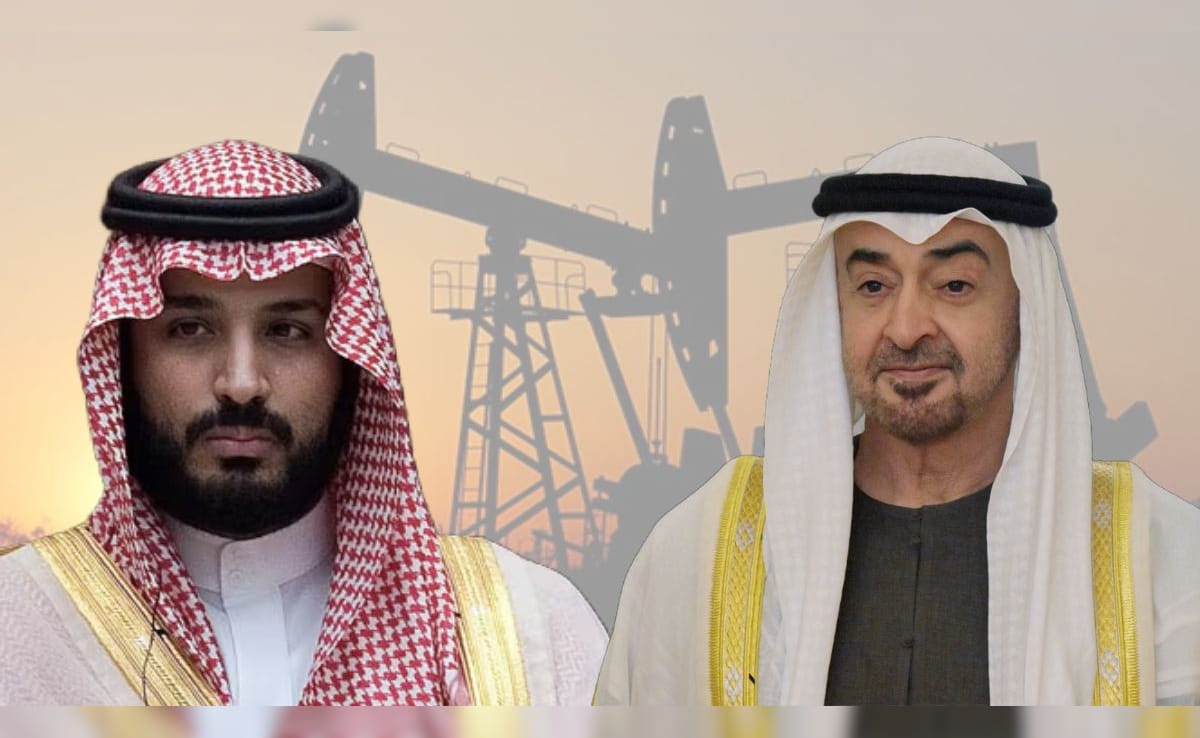
The withdrawal of the United Arab Emirates (UAE) from the Organization of the Petroleum Exporting Countries (OPEC) represents more than a diplomatic friction; it is a calculated pivot from a production-constrained cartel model to a volume-driven market share strategy. While political commentary often frames such exits through the lens of individual leader approval, the underlying driver is a fundamental divergence in the Long-run Marginal Cost (LRMC) of production between the UAE and its peers. The UAE is effectively betting that the era of managed scarcity is over, replaced by a race to monetize reserves before the energy transition renders them stranded assets.
The Trilemma of OPEC Membership
To understand why the UAE’s exit is a rational economic move, one must examine the internal contradictions of the OPEC+ framework. Every member state operates within a trilemma where they can only prioritize two of the following three variables:
- Price Stability: Maintaining a floor price via production cuts.
- Market Share: Protecting the volume of barrels sold globally.
- Fiscal Breakeven: Generating enough revenue to fund national budgets.
The UAE has spent the last decade investing billions into increasing its Maximum Sustainable Capacity (MSC). By 2027, the state-owned ADNOC aims for 5 million barrels per day (mb/d). Under OPEC quotas, this capacity sits idle. The cost of maintaining "shut-in" capacity—oil that is ready to be pumped but held back by treaty—creates a massive drag on the Internal Rate of Return (IRR) for these capital projects. When the UAE exits, it transforms from a "swing producer" that absorbs market shocks into a "price taker" that maximizes volume, similar to the United States’ shale producers.
The Decoupling of Riyadh and Abu Dhabi
The relationship between Saudi Arabia and the UAE, once the bedrock of the cartel, has shifted from cooperation to systemic competition. This friction is rooted in the Saudi Vision 2030 and the UAE 2031 economic plans. Both nations are racing to diversify their economies, which requires massive upfront capital.
Saudi Arabia requires oil prices to remain near $80 per barrel to fund its "Giga-projects" like NEOM. In contrast, the UAE has a lower fiscal breakeven price and a more mature diversified economy (logistics, tourism, and finance). This creates a structural mismatch: Saudi Arabia wants to cut production to raise prices, while the UAE wants to increase production to capture market share, even if it leads to lower prices.
The "Great" approval mentioned by the Trump administration aligns with a specific US energy doctrine: the weakening of a monolithic price-setting entity. A fragmented OPEC reduces the ability of the bloc to use oil as a tool of foreign policy, shifting the power dynamic back toward global markets and away from a centralized committee in Vienna.
The Logic of Stranded Assets and Time Preference
The primary driver for the UAE’s exit is the Energy Transition Velocity. If the global demand for oil peaks in the 2030s, the value of oil in the ground drops toward zero. In this context, the UAE’s strategy is a "first-mover" play to extract and sell as much oil as possible while the market still exists.
- The Saudi Approach: Preserve value through high prices today (High Time Preference).
- The UAE Approach: Capture volume to ensure total reserve depletion before 2050 (Low Time Preference).
This shift creates a "Prisoner’s Dilemma" for other OPEC members. If the UAE leaves and floods the market, other members like Kuwait or Iraq may feel compelled to ignore their quotas to protect their own revenues. This leads to a total collapse of the quota system, resulting in a Mean Reversion of oil prices to the actual cost of production rather than an artificially inflated cartel price.
Strategic Implications for Global Energy Markets
The UAE’s departure triggers three specific market shifts that analysts and investors must quantify:
1. Volatility Compression vs. Price Deflation
While the loss of a major producer might seem like it would increase volatility, it actually creates a ceiling for oil prices. With the UAE’s 4-5 mb/d hitting the market without restriction, the "Spare Capacity" buffer of OPEC+ vanishes. The market moves from a managed system to a pure supply-demand curve. This likely results in a lower average price per barrel but more predictable long-term supply chains.
2. The Resurgence of Brent and Murban Benchmarks
The UAE has been aggressive in promoting its Murban Crude as a global benchmark. By operating outside of OPEC, the UAE can ensure that Murban becomes a more liquid, frequently traded commodity on the ICE Futures Abu Dhabi (IFAD) exchange. This competes directly with Brent and WTI, shifting the financial center of gravity for oil trading toward the Persian Gulf, independent of Saudi influence.
3. The End of the "OPEC Premium"
For decades, oil has traded with a "geopolitical risk premium" or an "OPEC premium" because the cartel could tighten supply at will. An unencumbered UAE introduces a massive, permanent supply source that is unresponsive to cartel dictates. This effectively removes the premium, forcing higher-cost producers (such as deepwater projects in the North Sea or aging fields in Russia) to reconsider their CAPEX.
The Geopolitical Realignment
The endorsement of the UAE’s move by the US executive branch highlights a shift in American strategy. A weakened OPEC serves US interests in three ways:
- Inflation Control: Lower energy prices act as a tax cut for American consumers and reduce manufacturing costs.
- Diminished Adversary Influence: It limits the ability of Russia (via OPEC+) to fund its military objectives through high energy prices.
- Regional Balance: It prevents a single Middle Eastern power from holding a monopoly on energy-related diplomatic leverage.
The UAE is not just "quitting a club"; it is recognizing that the club’s rules are now detrimental to its national survival. The cost of membership—restricted production and lost market share—has finally exceeded the benefit of price support.
The immediate tactical play for global energy desks is to hedge against a long-term decline in the "Cartel Alpha." As the UAE ramps up production, the structural floor for oil prices will shift from a fiscal breakeven (what Saudi Arabia needs) to an operational breakeven (what it costs to pump). In the UAE, that operational cost is among the lowest in the world, often cited below $10 per barrel. In a price war, the UAE is the best-positioned player to survive the race to the bottom.
Investors should move away from broad energy ETFs that rely on cartel-driven price spikes and instead focus on low-cost producers with high-volume capacity. The transition from a "Value" play based on scarcity to a "Growth" play based on volume is the defining shift of the next decade in the hydrocarbons sector.