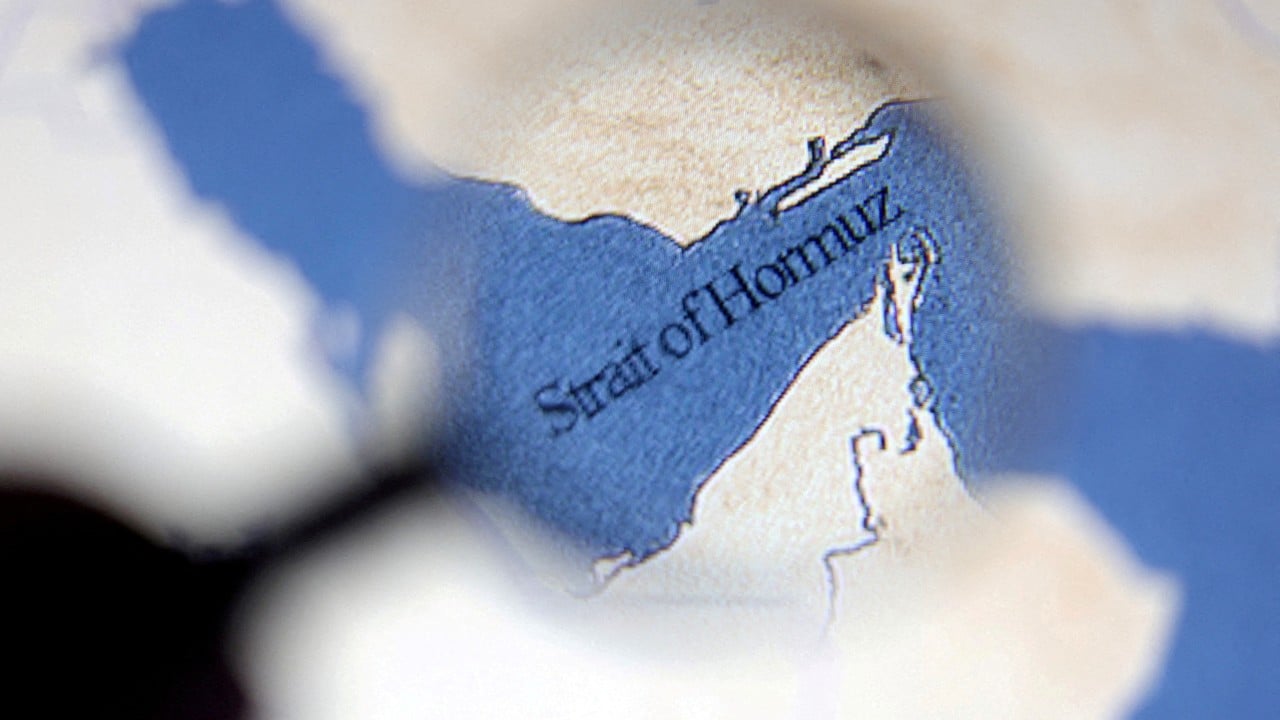
The successful transit of Chinese-flagged container vessels through the Strait of Hormuz following an initial failed attempt is not a random occurrence of maritime logistics; it is a calculated exercise in Geopolitical Risk Arbitrage. When traditional shipping lanes face kinetic threats or blockage, the ability to maintain operational flow depends on a firm's capacity to align its tactical movements with the specific political protections afforded by its flag state. The divergence between initial retreat and subsequent persistence reveals the hidden mechanics of maritime diplomacy and the "safe passage" premiums currently dictating global trade routes.
The Dual-Attempt Mechanics of Risk Calibration
Maritime data tracking shows a clear pattern of "probing and persistence." The first attempt to navigate the Strait by these specific Chinese assets ended in a U-turn—a tactical retreat dictated by immediate threat assessments. The second, successful attempt signals a shift in the underlying risk-reward calculus. This transition can be deconstructed into three primary variables:
- Flag State Shielding: In high-tension maritime corridors, the flag a ship flies acts as a non-kinetic defense system. The Chinese flag provides a unique deterrent against certain regional actors who wish to avoid direct diplomatic friction with Beijing.
- Intelligence Synchronization: The decision to re-engage the route suggests an update in real-time intelligence regarding vessel-specific targeting profiles. If the initial threat was categorized as "general," the second attempt indicates a refinement of that threat to "non-applicable" for Chinese-owned hulls.
- The Persistence Signal: By completing the transit after a failure, the operator establishes a precedent of resilience. This reduces the "insurance friction" for future voyages, as it demonstrates that the route is technically and politically navigable for specific stakeholders.
The Cost Function of Hormuz Transit
The Strait of Hormuz remains the world’s most sensitive energy and trade chokepoint. For container shipping, the decision to transit rather than reroute around the Cape of Good Hope is a mathematical trade-off between Time Decay and Risk Premiums.
The Time Decay Variable
Rerouting adds approximately 10 to 14 days to a standard Asia-Europe or intra-Asia circuit. This delay impacts the "velocity of capital," where inventory tied up at sea represents a non-productive asset. For Chinese manufacturers operating on tight margin cycles, the 2,500+ nautical mile detour is a structural cost that can exceed $1 million per voyage in fuel and operational overhead.
The Risk Premium Variable
War risk insurance surcharges are no longer uniform. We are seeing a "tiered risk model" emerge:
- High-Risk Tier: Vessels with ownership links to nations directly involved in regional conflicts (e.g., Israel, US, UK). These ships face near-prohibitive premiums or total coverage refusal in the Strait and the Red Sea.
- Neutral-Neutral Tier: Ships from non-aligned nations that possess no strategic leverage. They are safe from targeted attacks but vulnerable to "collateral kinetic error."
- Strategic Leverage Tier: Chinese-flagged or owned vessels. These assets operate under a "diplomatic umbrella." Their risk premium is lower because the probability of intentional interference is mitigated by the fear of diplomatic or economic retaliation from a global superpower.
Structural Asymmetry in Maritime Security
The ability of Chinese ships to navigate where Western-linked ships cannot creates a profound competitive advantage. This is not merely about "luck"; it is an Asymmetric Operating Environment. While Western naval coalitions attempt to secure the commons through physical presence (Operation Prosperity Guardian), China secures its passage through bilateral relationships and economic interdependence.
This creates a split in global logistics. One system operates under the traditional "Freedom of Navigation" doctrine, which is currently being tested and, in some sectors, failing. The second system operates under a "Direct Guarantee" model, where safety is derived from the specific identity of the vessel and its alignment with regional power dynamics.
The Mechanism of the "U-Turn" and Re-Entry
The initial retreat of the Chinese vessels likely stemmed from a mismatch between the vessel’s automated risk alerts and the actual political reality on the water. Modern shipping utilizes AI-driven risk assessment tools that flag kinetic events (missile launches, drone sightings) regardless of the vessel’s nationality.
The subsequent re-entry and successful transit indicate a manual override of these automated systems. Human operators—likely in coordination with state-level maritime security advisors—calculated that the "kinetic noise" in the Strait did not translate to a "kinetic threat" for a Chinese-flagged hull. This move from Automated Risk Avoidance to Strategic Risk Tolerance is the defining characteristic of modern high-stakes logistics.
Supply Chain Bifurcation and the New Maritime Order
The successful Hormuz transits by Chinese carriers provide a blueprint for a bifurcated global supply chain. We are moving toward a reality where:
- Political Proximity Equals Physical Safety: The safety of a cargo container is now tied more to the geopolitics of its carrier than the physical security of the lane.
- The Erosion of the Global Commons: The idea that the seas are equally open to all is being replaced by a "permission-based" transit system.
- The Insurance Gap: Maritime insurers are beginning to price policies based on "Flag-Based Risk Profiles." A vessel flagged in Panama but owned by a Chinese entity may soon be viewed as a lower risk than a US-owned vessel, regardless of the crew's nationality.
Strategic Play: Exploiting Flag-State Advantages
For global logistics directors and commodity traders, the lesson of the Hormuz persistence is clear: diversification of "Flag Risk" is as important as diversification of "Supplier Risk."
The strategic recommendation is to shift high-priority, time-sensitive cargo to carriers that possess Geopolitical Immunity in specific chokepoints. This requires a granular audit of the parent ownership and flag state of every vessel in a company’s charter. If a route is closed to Western-linked assets, the "China-Flagged Bridge" becomes the only viable path to maintaining velocity. Firms must move away from general freight forwarding toward a "Flag-Aware Procurement" model, intentionally selecting carriers whose national interests align with the regional powers controlling the chokepoints. The data proves that while the Strait is "closed" for some, it is effectively "open" for those with the correct political credentials.