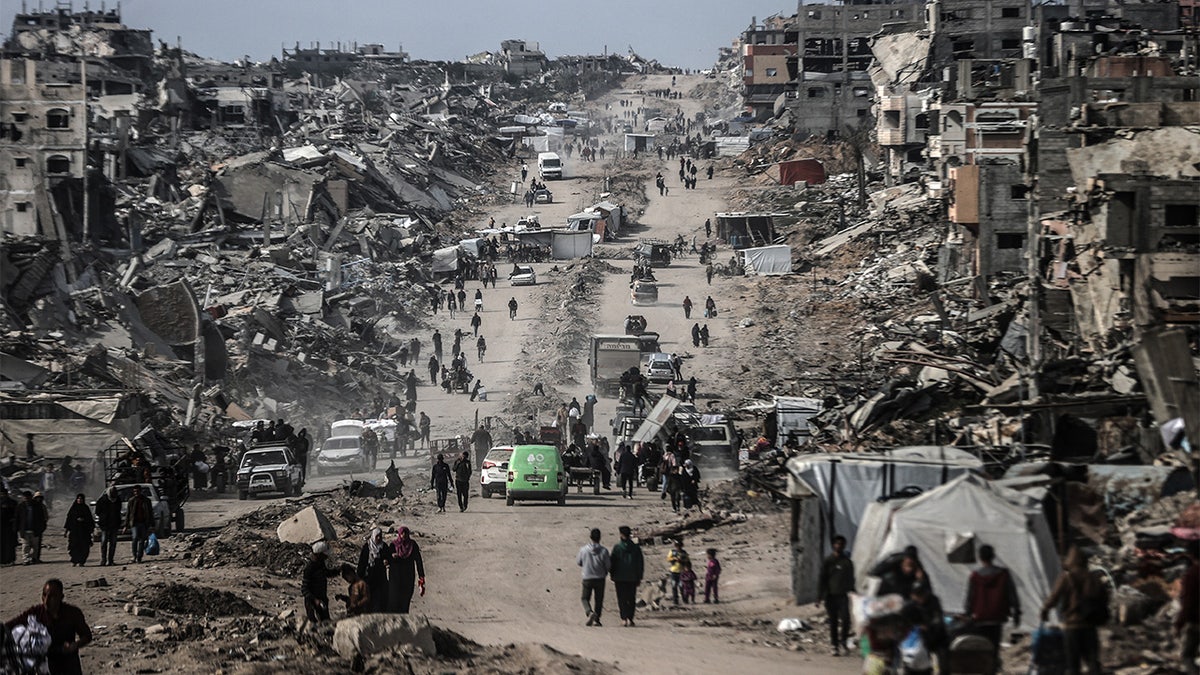
The threat of precision targeting against Iranian physical assets shifts the regional risk profile from a state of low-intensity attrition to a structural crisis of essential service delivery. When political rhetoric focuses on "infrastructure," it specifically addresses the intersection of dual-use energy grids, refined petroleum logistics, and the critical water desalination pathways that sustain urban populations. For a domestic audience in Tehran, the anxiety is not merely a reaction to external aggression but a rational calculation of the fragility inherent in a centralized, sanctioned economy where replacement parts for high-tech industrial components are subject to global interdiction.
The Triad of Infrastructure Fragility
Analyzing the impact of external threats on Iran requires a decomposition of the state’s physical foundations into three distinct nodes of vulnerability. Each node carries a different recovery timeline and a unique threshold for social unrest. You might also find this similar coverage interesting: The End of the Dubai Sanctuary and the Fall of the Regency Era.
1. The Hydrocarbon Refining Bottleneck
Iran possesses massive crude reserves but maintains a disproportionately narrow capacity for high-grade refining. The primary risk is not the destruction of crude extraction—which is distributed and easily repaired—but the neutralization of key refineries such as Abadan or Isfahan.
- Logic of the Constraint: Sanctions have already forced these facilities to operate at maximum utilization with limited access to modern Siemens or Honeywell control systems.
- The Chain Reaction: A kinetic or cyber-disruption at a single "super-node" refinery triggers an immediate deficit in domestic gasoline. This forces the state to allocate scarce foreign currency to imports, devaluing the Rial and sparking hyper-inflation at the pump within 72 hours.
2. The Electrical Grid and Desalination Nexus
Tehran’s stability relies on a power grid that is currently suffering from a chronic investment gap estimated at over $5 billion annually. The system operates on a razor-thin margin of error. As discussed in latest coverage by Associated Press, the implications are significant.
- Interdependence: Power generation is the lead variable for water security. In arid urban centers, the pumps required to move water from reservoirs or desalination plants are electrically driven.
- Systemic Failure: Targeting the "step-up" transformers at major power plants creates a long-term blackout. Unlike a localized line break, a destroyed 500kV transformer requires a bespoke manufacturing cycle that can take 12 to 18 months to replace—a duration that exceeds the social endurance of a modern city.
3. Port Logistics and the "Just-in-Time" Food Gap
The port of Bandar Abbas handles the vast majority of Iran’s non-oil trade, including grain and medicine. The strategic threat here is "functional paralysis" rather than total destruction. By targeting the gantry cranes or the digital logistics backbones, an adversary can halt the flow of essential goods without sinking a single ship.
Psychological Arbitrage and the Perception of Risk
The "threat" of infrastructure damage often achieves more than the actual strike. This is a phenomenon of psychological arbitrage: the gap between the actual probability of a strike and the public’s defensive response.
The Iranian Rial consistently devalues in the wake of escalatory rhetoric because the merchant class (the Bazaari) and the middle class act on the "Precautionary Savings Hypothesis." They convert local currency into hard assets—gold or USD—to hedge against the total collapse of state-provided services. This flight to safety creates a self-fulfilling prophecy of economic contraction.
The threat acts as a tax on the Iranian state's legitimacy. When the population perceives that the government cannot protect the basic utilities required for daily life (electricity, internet, fuel), the social contract dissolves. The state is then forced to divert resources from its regional defense posture toward internal security and subsidized imports, effectively achieving a strategic containment of Iran without a single kinetic launch.
The Cost Function of Repair Under Sanctions
A critical oversight in standard analysis is the assumption that infrastructure can be rebuilt. In a sanctioned environment, the cost of repair is not linear; it is exponential.
- The Procurement Premium: Iran often bypasses sanctions by using third-party intermediaries in Dubai or Turkey to source industrial parts. This adds a 30% to 50% "sanction tax" on every component.
- Technological Regression: If high-end Western turbines are damaged, the state may be forced to replace them with less efficient Chinese or domestic variants. This leads to a permanent decrease in the Total Factor Productivity (TFP) of the Iranian economy.
Strategic Realignment of Domestic Expectations
The shift in rhetoric toward infrastructure threats forces the Iranian leadership into a defensive crouch. They must choose between three sub-optimal paths:
- De-escalation: Trading regional influence for a reduction in direct threats to the homeland.
- Militarization of Utilities: Spending billions on air defense systems (like the Bavar-373) to ring-fence power plants, which further drains the civilian budget.
- Decentralization: Moving away from massive, vulnerable power plants toward small-scale solar or local generators—a process that is technologically difficult and takes decades to implement.
The current atmosphere in Tehran reflects the realization that the "Shield of Deterrence" has shifted. While Iran can project power through its proxies, its domestic "soft underbelly"—the aging, strained, and high-density infrastructure—remains an unshielded liability. The threat of a "Return to the Stone Age" is a potent lever because, in a modern urban society, the transition from comfort to catastrophe is only as wide as a single transformer's lifespan.
The strategic play for any administration moving forward is the "Service-Delivery Siege." By focusing threats and sanctions on the specific industrial components that enable urban life, an adversary forces the Iranian state to choose between its external ideological goals and the basic survival of its internal civil order. This creates a friction point that no amount of revolutionary fervor can lubricate. The focus should remain on the "dual-use" nature of this infrastructure: it is both a tool of state power and the hostage of the state’s survival.