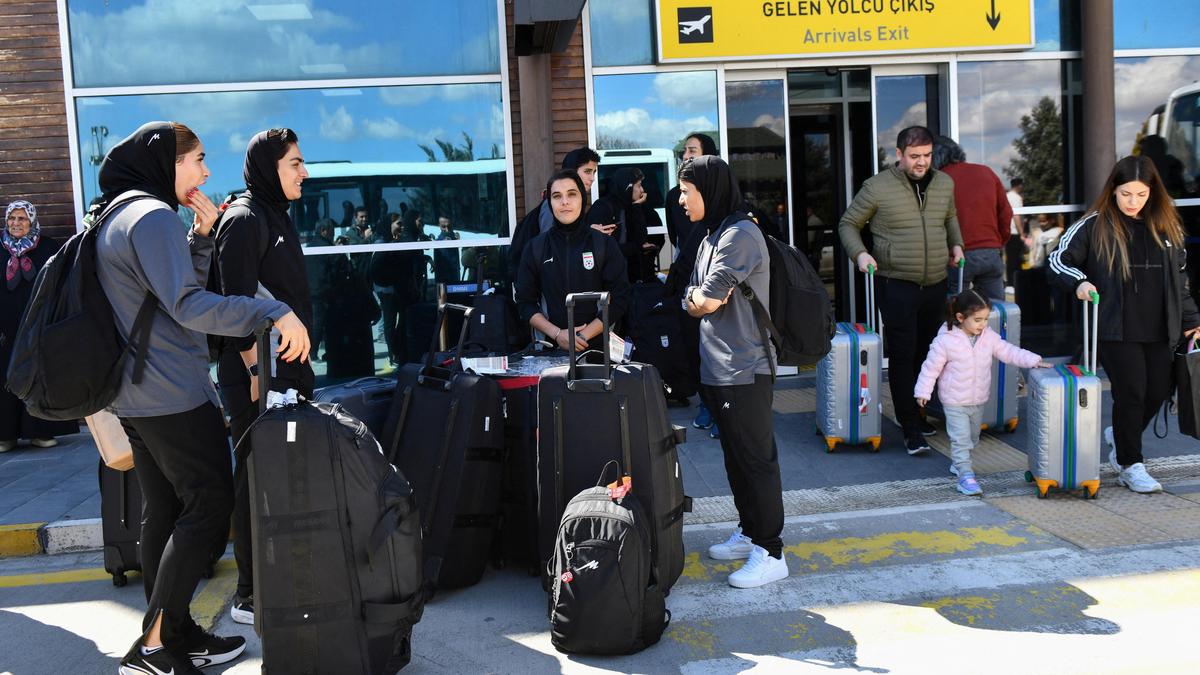
The return of the Iranian women’s national soccer team following a brief, fragmented attempt by several members to seek asylum in the West represents a failure of individual exit strategies when measured against the state's collective enforcement mechanisms. Asylum seeking in international sports is rarely a spontaneous emotional outburst; it is a high-stakes calculation where the perceived utility of a new life in a liberal democracy is weighed against the immediate and secondary costs imposed by the home state. In this instance, the reversal of asylum claims by certain players suggests that the Iranian state’s "Cost of Exit" exceeded the "Benefit of Refusal." To understand why these athletes returned, one must analyze the interplay between athletic mobility, state-sanctioned surveillance, and the specific leverage points used to neutralize dissent within national squads.
The Triad of State Leverage
State control over national athletes functions through three distinct pressure points. When an athlete considers defecting during an away tournament, the state pivots from a facilitator of talent to a debt collector.
- The Collateralization of Kinship: The most potent deterrent is not the threat to the athlete’s own career, but the potential for state-directed retribution against family members remaining in the country. In the Iranian context, this is a formalized lever. Athletes are often required to post significant financial bonds or have "guarantors" sign legal documents before traveling. If an athlete fails to return, the state can freeze assets, terminate the employment of relatives, or initiate legal proceedings against the guarantors.
- The Professional Dead Zone: For a professional soccer player, defection often results in a "Sporting Limbo." FIFA regulations regarding international transfers and player registration usually require an International Transfer Certificate (ITC). If the Iranian Football Federation refuses to release the ITC on the grounds of a contract breach or "disciplinary" issues, the defecting player may be barred from playing professional club football in their host country for years. The athlete trades a high-status career for a low-status existence as a political refugee, a trade-off many find untenable once the initial adrenaline of the escape subsides.
- Transnational Repression and Psychological Warfare: Modern state security apparatuses do not stop at the border. Consular officials and "team handlers" utilize proximity to the players to provide a constant reminder of the state’s reach. The psychological pressure applied during the window between the initial asylum request and the formal processing—often involving "reassurance" meetings that subtly highlight the vulnerabilities of the athlete's life back home—is designed to trigger a reversal of the decision.
The Mechanics of the Asylum Reversal
The withdrawal of an asylum claim is a rare and mathematically specific event. It indicates that the "Return Incentive" was restructured mid-process. This restructuring typically follows a three-stage escalation:
The Soft Outreach Phase
During the initial hours of a reported disappearance or claim, the state utilizes "trusted" intermediaries—coaches, teammates, or former players—to establish contact. The messaging at this stage focuses on "misunderstandings" and promises of "amnesty." By framing the defection as a momentary lapse in judgment rather than a political act, the state provides the athlete with a socially acceptable path back into the fold.
The Targeted Threat Escalation
If the athlete remains firm, the communication shifts to the specifics of their domestic footprint. This is the stage where the aforementioned "Collateralization of Kinship" is activated. Evidence from previous Iranian defections suggests that family members are often brought into a room with security officials and forced to call the athlete. The sound of a parent’s distress is a more effective repatriation tool than any formal extradition treaty.
The Resource Depletion Point
Asylum seekers often find themselves in a logistical vacuum. They may lack access to their passports (frequently held by team managers), financial resources, or legal counsel familiar with the nuances of international sports law. When the reality of a long, isolated legal battle in a foreign detention center or halfway house is compared against a coordinated "welcome home" campaign, the perceived safety of the known—even a repressive known—begins to outweigh the uncertainty of the unknown.
The Role of International Sporting Bodies
The vulnerability of the Iranian women's team highlights a systemic gap in the governance models of organizations like FIFA and the AFC. These bodies operate under a veneer of political neutrality that effectively empowers the state. By recognizing the Iranian Football Federation as the sole arbiter of a player’s professional standing, FIFA inadvertently provides the state with the "Professional Dead Zone" lever.
The current system treats a national team as the property of the federation. This creates a bottleneck for athletes who wish to separate their sporting identity from their national identity. Until international governing bodies create a "Neutral Athlete" status that allows defectors to continue their professional careers without the consent of their home federation, the state will always hold the ultimate career-ending card.
Structural Obstacles for Female Athletes
Female athletes in Iran face a compounded set of restrictions that their male counterparts do not. The mandatory hijab laws and the "morality" oversight of the female squads mean that their very presence on the pitch is a negotiated concession from the state. Consequently, any act of defiance is viewed not just as a political defection, but as a moral betrayal of the Islamic Republic’s cultural pillars.
This increases the "Stigma Cost" of return. A returning male athlete might be framed as a "prodigal son" who was misled. A returning female athlete is often subjected to intense public "re-education" or used as a prop in state media to "prove" the benevolence of the system she tried to flee. The decision to return, therefore, is rarely a sign of renewed loyalty; it is a tactical surrender to an overwhelming force-multiplier.
The Cost-Benefit Equilibrium of Future Defections
The return of these players serves as a deterrent for future athletes, but it also provides a blueprint for the state on how to tighten its grip. We can project a shift in how Iranian national teams travel in the future:
- Increased "Security-to-Athlete" Ratios: The number of non-playing "staff" accompanying squads will likely increase, with a specific focus on monitoring movement during non-training hours.
- Digital Surveillance: Confiscation of personal mobile devices or the mandatory installation of state-monitored communication apps during international travel will become standard operating procedure.
- Tiered Bond Systems: The financial requirements for traveling athletes will likely be indexed against the athlete’s "flight risk," determined by their social media activity or family ties.
The failure of this specific asylum attempt does not signal a lack of desire for exit; it signals a refinement in the state's "Capture and Return" protocols. For the athletes who returned, the immediate priority shifted from "Freedom" to "Damage Limitation."
The strategic move for international observers and human rights organizations is not to focus on the "why" of their return—which is self-evident under the pressure of state leverage—but to monitor the "treatment upon arrival." The state’s promise of amnesty is a tactical tool used to secure the return; its expiration date is usually the moment the plane touches down in Tehran. The focus must now move to the legal and physical safety of these players as they are reintegrated into a system that now views them as high-probability flight risks.