Standard wind turbines have a friction problem. Near the ground, trees, hills, and buildings slow the air down, creating a turbulent mess that eats away at energy output. Engineers in eastern Germany just decided to bypass that friction zone entirely.
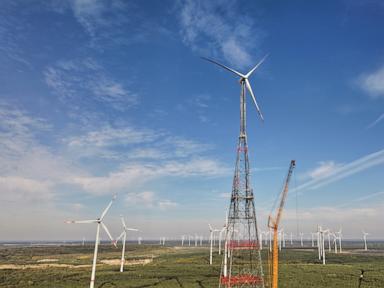
Rising 365 meters (1,197 feet) from its base to the tip of its spinning blades in Schipkau, a record-breaking structure now dwarfs the local landscape. It stands taller than the Eiffel Tower and sits just three meters shorter than the Berlin TV Tower. This massive engineering feat isn't just about breaking construction records. It marks a fundamental shift in how onshore wind energy can be harvested without consuming vast new tracts of land.
Breaking the Altitude Barrier in German Energy Production
The physics behind this giant are straightforward. Wind speed increases dramatically the higher you go, and high-altitude air currents flow with far greater consistency. Jochen Grossmann, CEO of Gicon, the engineering firm behind the project, points out a simple reality known to every sailor: you have to reach higher up to catch steady power.
At an altitude of 300 meters, this high-wind tower taps into air streams that allow it to produce more than twice the electrical energy of a conventional turbine operating at standard heights. Once fully commissioned, a single turbine of this scale is expected to generate enough electricity to power roughly 7,500 households.
Germany already draws a massive share of its power from renewables, with wind acting as the single largest individual source. Even so, the country faces a persistent bottleneck: physical space. Finding new land for expansive wind farms triggers local pushback, complex zoning laws, and environmental reviews.
Retrofitting Existing Infrastructure Without Claiming New Land
The smartest aspect of the Schipkau project isn't just its height. It's where it lives.
The colossal turbine was erected directly inside an existing wind park among standard-height towers. By building upward rather than outward, developers bypass the land-use crisis entirely. Germany alone has thousands of established wind parks where older, shorter turbines could theoretically be retrofitted with second-tier high-altitude towers as they reach the end of their operational lifespans.
This strategy solves two major engineering headaches at once. First, it maximizes electricity yields per square kilometer, which lowers the overall cost per megawatt-hour. Second, it reduces the pressure to build massive new high-voltage transmission corridors across the country. When energy is produced reliably on-site within existing infrastructure footprints, long-distance grid congestion drops.
Engineering Challenges at 365 Meters
Building something this massive requires pushing material science and construction logistics to the absolute edge. Strong gusts of wind routinely delay construction phases, because hoisting multi-ton components hundreds of feet into the air leaves zero room for error.
The tower utilizes an innovative telescopic mechanism to raise its inner sections into place. Crews must coordinate complex hydraulic lifts and structural locks under intense pressure, prioritizing safety over speed while working against unpredictable meteorological conditions.
Critics often question whether the astronomical capital costs of such tall towers make financial sense compared to offshore wind farms. Offshore installations benefit from strong marine winds, but they require expensive subsea cables, specialized marine vessels, and costly maintenance routines prone to saltwater corrosion. Onshore high-altitude towers offer a middle ground, capturing high-altitude wind speeds while keeping maintenance crews grounded on solid earth.
What This Means for the Future of Onshore Wind
We are reaching the physical limits of standard onshore wind technology. Traditional towers max out around 150 to 200 meters because transporting massive blades and building taller self-supporting steel tubes becomes economically prohibitive.
If the Schipkau pilot proves its long-term financial viability, expect a rush to redesign how wind farms are planned globally. Countries with dense populations and limited land availability will likely follow suit, trading dozens of small, inefficient turbines for single, high-yield giants.
Keep an eye on maintenance logs and capacity factor data over the next year. If the operational numbers match the engineering projections, the era of the standard wind turbine is officially coming to a close.