The water in the flooded várzea forest does not flow so much as it breathes. It rises with the snowmelt of the distant Andes, swallowing tree trunks, erasing footpaths, and turning solid ground into a dark, tannin-stained mirror. If you sit in a wooden canoe at dusk, listening to the chorus of tree frogs and the wet slap of paddle against current, you begin to realize that the river is not a boundary. It is a shared room. And beneath the surface of that room lies seventy kilograms of silent, coiled muscle.
Wait.
Look closely at the floating mat of water hyacinths ten feet off the bow. That is not a submerged log. A slow, rhythmic undulation ripples through the weeds, followed by the faint, unmistakable glint of olive-green scales patterned with black ovals. A green anaconda, Eunectes murinus, is watching you. It has likely been watching you since you pushed off from the wooden dock twenty minutes ago.
For most of the world, that realization triggers an immediate, primal spike of adrenaline. Hollywood has spent decades training the global imagination to view the giant anaconda as a relentless, man-eating monster—a scaly leviathan waiting to drag unsuspecting travelers into the murky depths. Yet, for the people who actually wake up every morning to the sound of the Amazon lapping against their stilts, the reality is infinitely more complicated, deeply personal, and surprisingly divided.
A landmark 2025 study examining human-anaconda relationships across Amazonian communities has pulled back the curtain on this exact tension. Researchers spent months interviewing riverine residents, indigenous elders, cattle ranchers, and fishermen, uncovering a striking psychological and cultural fault line. Why does one neighbor view the giant snake as a sacred guardian of the waters, while the man living three bends down the river reaches for his machete at the mere sight of a shed skin?
The answer has very little to do with the snake itself, and everything to do with how humans survive when their backyard is one of the wildest ecosystems left on Earth.
The Architecture of Fear
To understand why some people in the Amazon fear the anaconda, you have to step out of the air-conditioned comfort of abstract conservationism and stand ankle-deep in mud alongside someone whose entire livelihood can vanish in a single afternoon.
Consider a hypothetical scenario based directly on the patterns documented in the 2025 research. Meet Mateus, a small-scale cattle rancher and subsistence fisherman living along a tributary in the Brazilian state of Pará. Mateus does not have a bank account padded with savings, nor does he have insurance policies to cover agricultural losses. His wealth walks on four legs, grazing along the nutrient-rich floodplains where the grass grows thickest near the water's edge.
One Tuesday morning, Mateus notices his herd is restless. A young calf, worth three months of backbreaking labor, is missing. Near the muddy bank, Mateus finds a wide, heavy drag mark—like a loaded burlap sack pulled straight into the dark water. There is no blood. There is no struggle left to see. Just the eerie silence of the river.
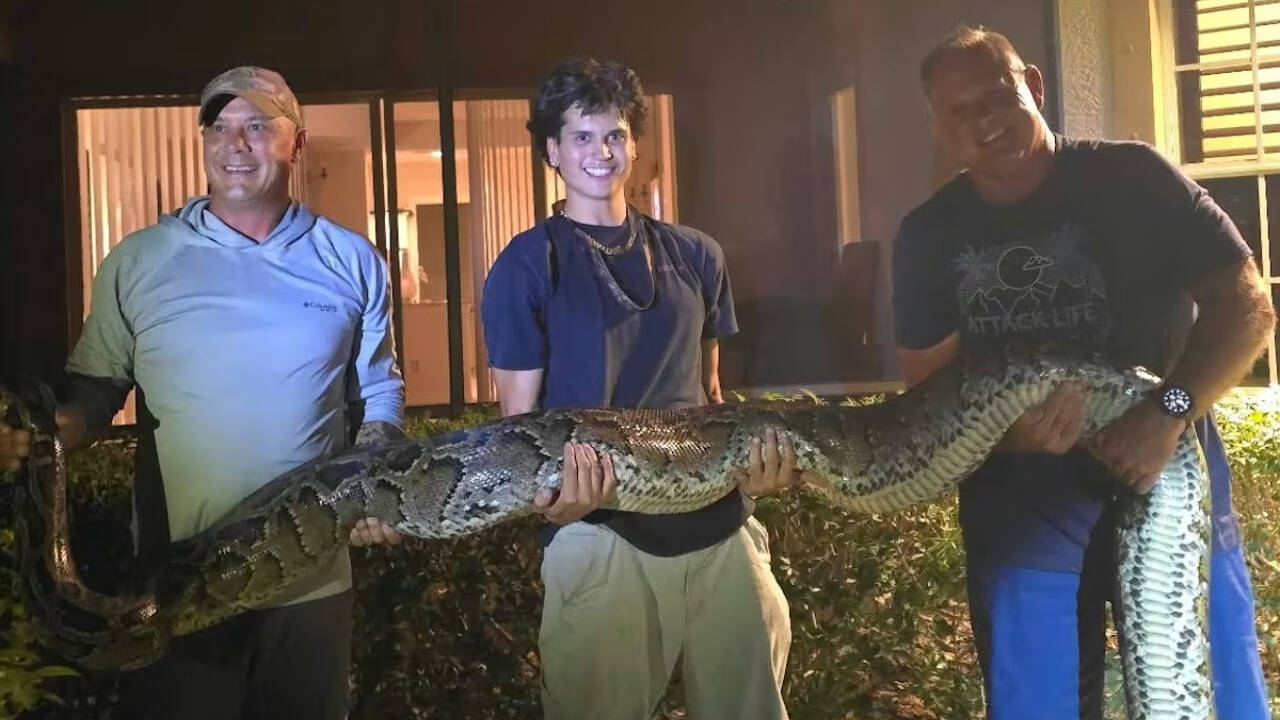
For Mateus, the green anaconda is not a majestic apex predator deserving of a nature documentary narration. It is a direct economic threat. The 2025 study revealed that fear and hostility toward giant anacondas cluster heavily around livelihoods tied to livestock and shallow-water fishing. When a snake capable of reaching lengths of over twenty feet—and weighing upward of two hundred pounds—decides that a tethered pig, a wandering dog, or a young calf is an easy meal, the resulting animosity is entirely rational.
Fear, in these communities, is rarely born from irrational hysteria. It is forged in proximity. When you wash your clothes in the same river where an ambush predator hunts, when your children swim ten yards from submerged root systems that serve as anaconda dens, the margin for error feels terrifyingly thin. While verified, fatal attacks on adult humans by green anacondas are extraordinarily rare—so rare that biologists struggle to document more than a handful of credible cases over decades—the possibility lingers in the collective memory of river towns like a persistent fever.
Stories travel faster than boats on the Amazon. A single encounter where a fisherman is knocked out of his canoe, or a child is startled by a massive tail thrashing in the shallows, gets retold at every evening meal. Over time, those stories harden into a defensive posture. In the data gathered by researchers, residents who experienced direct economic loss or lacked familiarity with snake behavior were vastly more likely to support lethal retaliation. To them, killing a giant anaconda isn't an act of cruelty; it is an act of pest control, no different than setting a trap for a rat in a grain silo.
The Myth of the Water Mother
Now, paddle fifty miles upstream, past the cleared pastures and the drone of motorized skiffs, into a community where the forest still presses tight against the riverbanks. Here, the water is not viewed as a resource to be extracted, nor as a hazard to be conquered. It is a living ancestor.
In this village, if you mention the giant snake, voices drop—not out of panic, but out of reverence.
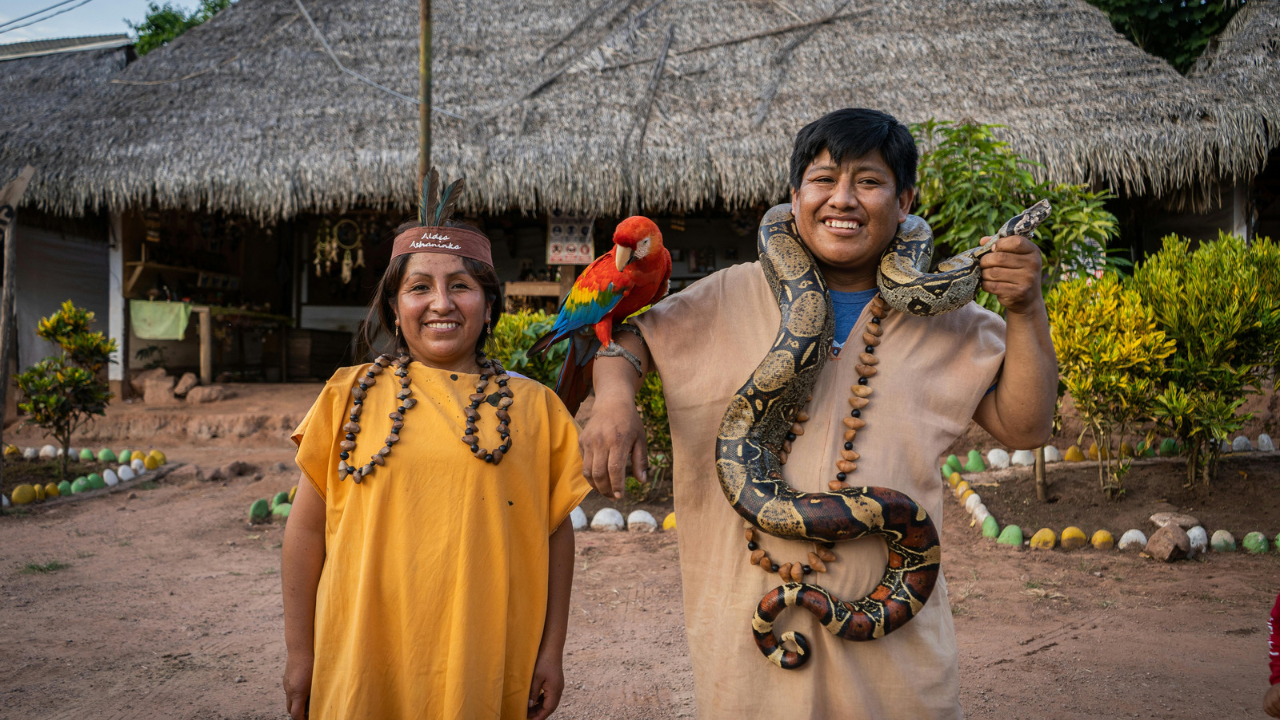
To understand this perspective, we have to look at the cultural bedrock of indigenous and traditional ribeirinho (river-dwelling) societies. Across vast swathes of the Amazon basin, the giant anaconda is inextricably linked to the Cobra Grande—the Great Serpent—and Yacumama, the Mother of Water. According to deeply rooted oral traditions, these colossal snakes are not mere animals; they are the spiritual architects of the rivers themselves, carving out the winding channels with their massive bodies and guarding the fish stocks from overexploitation.
The 2025 study highlighted a fascinating correlation: communities with stronger ties to traditional ecological knowledge and indigenous cosmology exhibited dramatically higher tolerance—and even active protection—toward green anacondas.
Think of this dynamic like the difference between a tourist walking through an unfamiliar, unlit city neighborhood at midnight and a lifelong resident walking down that exact same street. To the tourist, every shadow is a potential mugger, every doorway a trap. To the resident, those shadows are familiar landmarks; they know which dogs bark behind which fences, which floorboards creak, and how to move through the space without inviting trouble.
Elders in these communities teach their children the etiquette of the river from the moment they can walk. You do not splash excessively at dusk, when anacondas are actively hunting. You do not clean fish directly at the water's edge where you bathe, because the scent of blood is a dinner bell for every predator within half a mile. You respect the igapó—the flooded forest—during breeding season, when massive females release pheromones that draw dozens of smaller males into writhing, tangled breeding balls that can last for weeks.
When you understand the rhythms of the animal, the terror evaporates, replaced by a pragmatic, watchful coexistence. Villagers in these areas recognize that the anaconda is an ecological keystone. By preying on capybaras, caimans, large rodents, and invasive or overabundant fish species, the snakes keep the floodplain ecosystem balanced. Remove the giant constrictors, and rodent populations explode, decimating manioc crops and spreading disease. The locals do not need a university degree in trophic cascades to understand this; they have watched the river function for centuries.
The Weight of a Changing River
Yet, the most sobering revelation of the 2025 research is that this delicate equilibrium—the fragile truce between human survival and serpent existence—is beginning to fracture. And the culprit is not the snake. It is the changing geometry of the Amazon itself.
Imagine your house slowly shrinking, room by room, forcing you and your neighbors into a single hallway. Tension is inevitable.
Deforestation, illegal gold mining, agricultural expansion, and erratic climate patterns are systematically dismantling the wetlands that green anacondas rely on. In 2023 and 2024, the Amazon experienced historic, devastating droughts that left vast stretches of riverbed cracked and dry, stranding river dolphins and concentrating aquatic life into shrinking, stagnant pools. When wetlands dry up or are drained to create cattle pastures, anacondas lose their primary hunting grounds and thermal sanctuaries.
They do not simply vanish. They move.
Forced out of degraded habitats, giant anacondas are increasingly pushing into human-dominated spaces—drainage ditches, irrigation canals, aquaculture ponds, and the edges of rapidly expanding peri-urban settlements. At the exact same time, human populations are pushing deeper into formerly isolated forest corridors. The buffer zone is disappearing.
This spatial collision creates a feedback loop of conflict. A snake displaced by habitat destruction wanders into a backyard chicken coop out of sheer desperation. The homeowner, terrified and furious at the loss of food, kills the snake and posts a photo on social media. Within hours, the image goes viral, stripped of all ecological context, reinforcing the narrative that giant snakes are invading human towns and must be eradicated.
The 2025 study underscored how modern media and shifting generational values are eroding traditional protections. Younger generations in Amazonian towns, increasingly connected to globalized culture via smartphones and less reliant on traditional river lore, often view wildlife through a lens of fear or indifference rather than spiritual kinship. The old taboos against harming the Cobra Grande are losing their grip, replaced by the immediate impulses of a world that prefers its nature sanitized, fenced off, and predictable.
What Happens When the Giant Disappears
I still remember the first time I saw a wild green anaconda up close. It wasn't in a zoo, behind thick reinforced glass with a neat plastic plaque detailing its Latin name and diet. It was in a slow-moving blackwater creek in the Peruvian Amazon, during the height of the rainy season.
Our guide cut the outboard motor, letting the aluminum skiff drift silently toward a tangle of submerged branches. He pointed a weathered finger downward. At first, my eyes refused to process what they were seeing. The brain wants to categorize shapes into familiar buckets: tree root, fallen palm frond, rock. It took three full seconds for my mind to connect the thick, muscular coils draped across the underwater limbs into a single, continuous organism.
She was easily sixteen feet long, her girth thicker than my thigh. Her head rested calmly just above the waterline, nostrils and eyes positioned neatly on top of her snout like a crocodile's, allowing her to breathe and scan the surface while remaining ninety-nine percent submerged. She didn't hiss. She didn't lunge. She didn't display a single ounce of the cinematic malice we project onto reptiles. She simply existed—an ancient, perfectly adapted piece of evolutionary machinery, completely at home in a world that would drown a human in minutes.
Watching her, I felt a profound sense of vulnerability, quickly followed by a strange kind of relief. There is something deeply grounding about sharing a planet with creatures that do not care about human borders, stock markets, or social media algorithms. They operate on an older, simpler currency: warmth, water, prey, and stillness.
Biologists are only just beginning to untangle the full complexity of these animals. In fact, recent genetic research has revealed that what scientists long classified as a single species of green anaconda is actually two genetically distinct species—the northern green anaconda and the southern green anaconda—separated by nearly ten million years of evolution, despite looking virtually identical to the naked eye. We are only scratching the surface of their biology, their migration patterns, and their role in maintaining the health of South America's watersheds.
If we allow fear and habitat destruction to drive these giants out of the Amazon's waterways, we lose far more than a charismatic predator. We lose an essential regulator of wetland health. We lose a living thread connecting modern Amazonian communities to centuries of indigenous wisdom and ecological stewardship. And we send a grim signal that we are incapable of coexisting with anything large enough to remind us that we are not the sole masters of the natural world.
Learning to Share the Water
Solving human-wildlife conflict in the Amazon cannot be achieved by lecturing impoverished farmers from afar about the intrinsic value of biodiversity. When a man's livelihood is threatened, moralizing does not put food on his table.
The researchers behind the 2025 study argue that the path forward lies in bridging the divide between traditional wisdom and practical, community-led mitigation. Where communities are given the tools to protect their livestock—such as elevated, predator-proof enclosures for poultry and small animals, or buffer zones that keep cattle away from vulnerable riverbanks—retaliatory killings plummet. When local residents are trained and paid as ecotourism guides or biological monitors, a living anaconda suddenly becomes far more valuable than a dead one.
It comes down to shifting the story we tell about the river.
In communities where elders still pass down the tales of the water spirits, conservationists don't need to invent new reasons to save the snake; they simply need to validate and support the cultural frameworks that already exist. And in areas where fear dominates, education must focus not on abstract ecological statistics, but on practical river safety and honest demystification—separating Hollywood fiction from biological reality.
As darkness settles completely over the várzea, the chorus of the night rises to a deafening crescendo. Somewhere beneath the black water, the heavy coils shift again, sliding effortlessly through the flooded roots without leaving a single ripple on the surface. The river keeps its secrets, asking only that those who travel upon it remember they are guests.