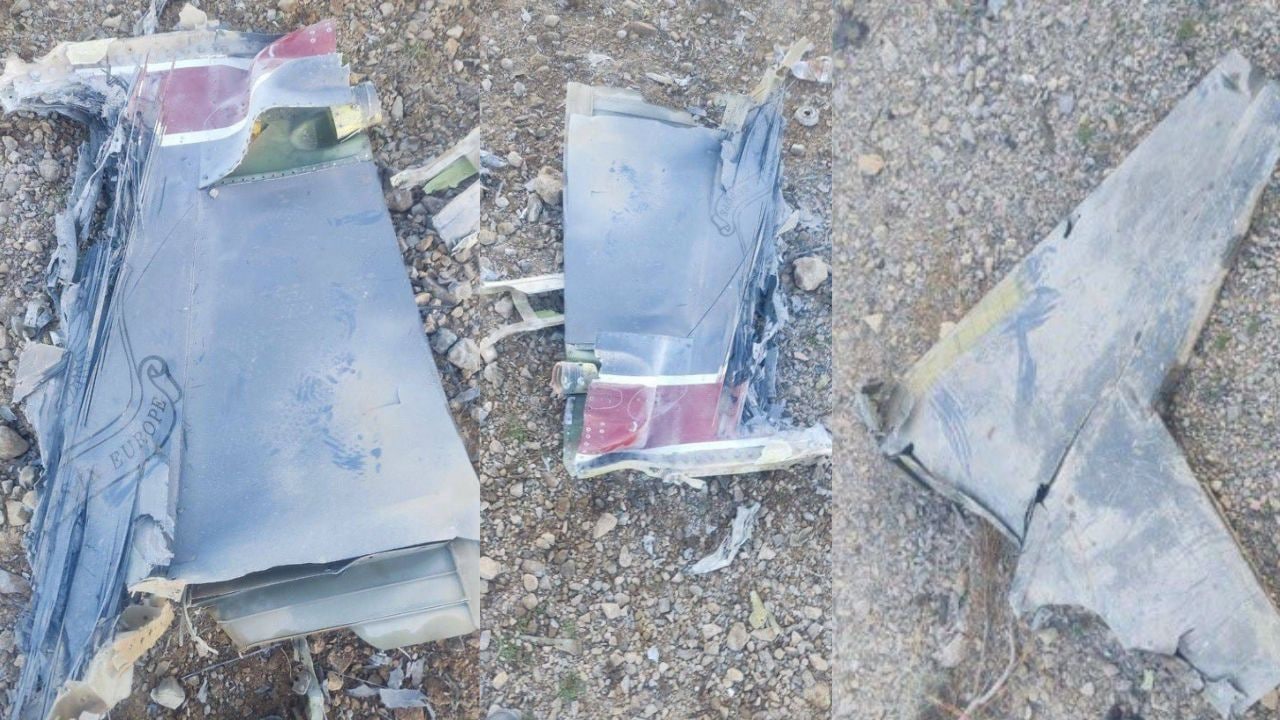
The desert does not keep secrets; it only buries them until the wind shifts. Somewhere in the jagged expanse of the Middle East, a piece of American engineering worth more than the lifelong earnings of a thousand families lies shattered. It is a jagged mosaic of carbon fiber and classified sensors. But for the men in the Situation Room, the hardware is secondary. The real crisis isn't the millions of dollars in sunken costs or the charred wreckage of an F-35.
It is the man who isn't there.
When a pilot goes down in hostile territory, time stops being a linear progression and starts behaving like a predator. Every minute that passes without a localized beacon signal is a minute where the geopolitical map of the world begins to warp. Tehran knows this. They aren't just looking for a survivor. They are looking for a lever.
The Weight of a Single Life
Consider the physics of a bailout. The seat fires with a violence that compresses the spine, a desperate mechanical heave to eject a human soul from a falling furnace. If the parachute opens, the pilot descends into a silence so profound it feels like a physical weight. Below, the ground is no longer a strategic map. It is a hunt.
In the dry, analytical reports of a standard news cycle, we call this "personnel recovery." In reality, it is a race against a clock that has no hands. For the Trump administration, the missing pilot represents a vulnerability that no amount of military posturing can mask. You can threaten a nation with sanctions or carrier groups, but you cannot threaten a ghost. If the Iranian Revolutionary Guard finds that pilot first, the narrative shifts from tactical failure to a televised hostage crisis that could define a decade.
Fear is the primary currency here. Not just the fear felt by the individual hiding in a dry wash, clutching a survival radio and praying for the thump of a friendly rotor. It is the systemic fear of a superpower realizing its technological invincibility has been punctured by a lucky shot or a mechanical fluke.
The Invisible War for Information
Modern warfare is sold to the public as a clean, digital affair. We see the grainy infrared footage of precision strikes and believe that the humans involved are merely operators of a flawless machine. This is a lie we tell ourselves to sleep better.
When a plane falls, the digital veneer vanishes. Suddenly, the most advanced military on the planet is forced to rely on the most ancient forms of intelligence: tracking footprints in the dust and intercepting radio chatter. The Iranians are masters of this terrain. They understand that while a stealth fighter can evade radar, a human being cannot evade the biological need for water, shade, and safety.
The hunters in Tehran are not merely looking for a prisoner. They are looking for the "black box" of the pilot's mind. A captured aviator is a fountain of information regarding operational rhythms, carrier locations, and the specific limitations of the airframe they were flying. More importantly, they are a propaganda victory of such magnitude that it can force a President's hand.
Donald Trump has built a political identity on the image of strength and the refusal to be bullied on the world stage. A pilot in a jumpsuit, paraded before cameras in Tehran, represents a direct assault on that brand. It creates a vacuum where the only options are escalation or humiliation. Neither path is paved with anything but blood.
The Machinery of Rescue
While the diplomats posture, the real work happens in the dark. Elite teams are currently sitting in the back of MH-47 Chinooks, their faces illuminated only by the green glow of night-vision goggles. They are the "Guardian Angels," the Pararescuemen whose entire existence is predicated on the idea that no one gets left behind.
They don't care about the nuclear deal. They don't care about the price of oil or the latest tweet from the Oval Office. They care about a heartbeat.
The technical difficulty of these missions is staggering. To fly into Iranian-monitored airspace, pick up a survivor, and exit without starting a full-scale war requires a level of precision that borders on the miraculous. It involves a "Synergy" of satellite overwatch, electronic warfare to jam local communications, and raw, old-fashioned courage.
But the odds are shifting. With every hour the pilot remains missing, the search area expands exponentially. What starts as a five-mile radius becomes fifty, then a hundred. The wind erases the trail. The heat exhausts the body.
The Political Poker Table
In Washington, the atmosphere is brittle. The standard playbook for a downed pilot involves a mix of back-channel negotiations and a show of force. But the relationship with Iran is currently a scorched earth. There are no "back channels" left that haven't been poisoned by years of mutual distrust.
The missing pilot is a wild card in a high-stakes game of poker where the pot is regional stability. If the pilot is recovered, the event becomes a footnote, a story of "technical malfunction" and "heroic rescue." If they are captured, it becomes the catalyst for a conflict that could engulf the entire Persian Gulf.
We often talk about "geopolitics" as if it were a game of chess played by giants. We forget that the pieces on the board are made of flesh and bone. The entire weight of the American-Iranian standoff is currently resting on the shoulders of one individual, likely cold, certainly terrified, waiting for a sound in the night.
The tragedy of modern conflict is that the most expensive machines in history are still ultimately dependent on the fragility of the human spirit. An F-35 can fly at Mach 1.6 and disappear from radar, but it cannot protect the person inside once they hit the sand.
There is a specific kind of hollow silence that fills a military briefing room when a "missing" status remains unchanged for more than twenty-four hours. It is the sound of reality crashing into rhetoric.
The desert wind continues to blow. Somewhere, a beacon is either chirping or silent. Somewhere, a group of men in fatigues are moving through the shadows with infrared eyes, looking for a sign of life. And in the high offices of power, the most powerful men in the world are realizing that for all their gold and all their steel, they are currently at the mercy of a single, missing man in the dirt.
The pilot is the only one who knows the truth of how they went down. And as long as they are missing, the truth is whatever the person who finds them says it is.
The hunt is no longer just about a person. It is about who owns the story of the war.
The sun rises over the plateau, indifferent to the satellites watching from above or the soldiers moving below. The tracks in the sand are filling in. The window is closing.
A single boot print. A discarded thermal blanket. A radio that won't stop buzzing.
These are the things that keep Presidents awake at night. These are the small, human things that break empires.


