We tend to think of power in concrete terms. Steel hulls cutting through dark water. Heavy armor rolling down concrete streets. The roar of afterburners tearing through the stratosphere. These are the totoms of military might that have dominated our collective imagination for a century. But somewhere along the way, the center of gravity shifted. The heaviest weapon in the modern arsenal does not weigh a single ounce. It is lines of logic, strings of conditional statements, and algorithms running silently in the dark.
When a mind that architects those algorithms vanishes, the silence is deafening. Don't forget to check out our previous coverage on this related article.
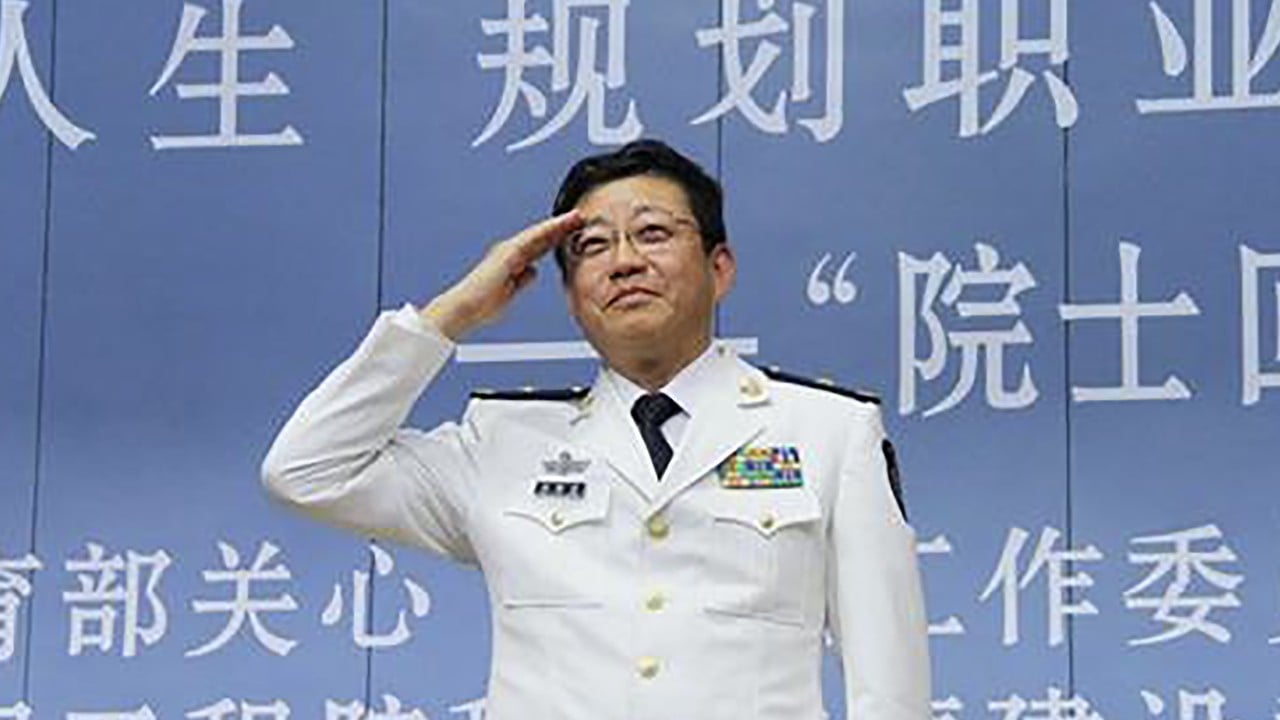
Consider the quiet removal of Zhao Xiaozhe from the academy website of China's People's Liberation Army. To the casual observer scrolling through defense bulletins, it is a dry administrative update. A name removed. A profile scrubbed. Bureaucratic housekeeping in a notoriously opaque system. But inside the tight-knit circles of naval intelligence and military technology analysts, it is a tremor that suggests an earthquake beneath the surface. Zhao is not a traditional deck-plate admiral. He is a combat software guru. He is the architect of the invisible nervous system that tells modern warships when to strike, how to evade, and where to look.
To understand why a missing academic profile matters more than a decommissioned cruiser, we have to look at how modern navies actually fight. If you want more about the background of this, The Guardian offers an in-depth summary.
Imagine sitting in the combat information center of a modern guided-missile destroyer. The room smells of stale coffee and ozone. Banks of blue-lit displays cast long shadows across the faces of young officers. Outside, the ocean is a featureless void of black water and heavy swells. The human crew can see maybe a few miles with their own eyes, and perhaps thirty miles on a conventional radar horizon. But the war they are preparing to fight happens across hundreds of miles, at speeds that defy human reaction time.
A supersonic anti-ship missile does not care about human courage. It closes the distance at Mach 3, giving defenders roughly twenty seconds from horizon-break to impact. In that window, human reflexes are obsolete. Flesh and bone cannot evaluate sensor data, calculate vector trajectories, allocate fire control channels, and launch counter-measures fast enough.
That is where the software lives.
Men like Zhao Xiaozhe are the authors of the twenty-second window. They write the combat management systems that bridge the gap between raw hardware and split-second survival. They are the ones who decide how an automated network prioritizes threats when three incoming missiles approach from different bearings simultaneously. When a key figure in that domain disappears from public view, it tells us something profound about the shifting priorities and internal fractures of a rising superpower betting its entire future on algorithmic dominance.
The official silence surrounding Zhao's removal from the Naval Submarine Academy website is characteristic of defense bureaucracies everywhere. They do not issue press releases when a key technical visionary falls out of favor, gets caught in an anti-corruption purge, or is quietly reassigned to a black-budget bunker. They simply delete the breadcrumbs. They hope the outside world will mistake absence for irrelevance.
History tells us otherwise.
We have seen this pattern before, albeit in different uniforms. During the Cold Park arms race, the most critical breakthroughs were rarely announced with fanfare. They happened behind closed doors, punctuated by sudden disappearances, unexplained reassignments, and sudden shifts in research direction. When a nation stakes its military doctrine on autonomous warfare, artificial intelligence, and integrated combat networks, the people who write the code become more valuable than the generals who wear the medals. They are the single points of failure in an otherwise distributed network.
If Zhao was pushed out due to ideological impurity or political maneuvering, it exposes a dangerous vulnerability in top-down technological development. Authoritarian systems crave control, but innovation requires a certain tolerance for intellectual friction. When you purge the designers because their political alignment or institutional loyalties are questioned, you risk breaking the complex intellectual machinery required to keep advanced systems running. Software is not just a tool; it is an accumulation of deep, highly specialized human insight. You cannot simply plug a new party loyalist into a seat that requires decades of advanced systems engineering and expect the code to compile.
Conversely, if Zhao was reassigned to an ultra-classified black project to accelerate the integration of artificial intelligence into naval combat architecture, it signals an escalation of a different kind. It suggests a hardening of lines, a race to build autonomous swarms and self-correcting defense grids that operate entirely outside human oversight until the trigger is pulled.
Either way, the vanishing act points to a reality that military planners whisper about in windowless briefings: the next major conflict will not be won by the side with the most steel in the water, but by the side whose algorithms make fewer mistakes in the opening seconds of engagement.
We are living through a quiet revolution. The weapons we build are becoming too complex for us to fully comprehend in real-time. We are delegating life-and-death decisions to lines of logic written by a handful of brilliant, invisible figures whose names most of the world will never know until something breaks.
Zhao Xiaozhe’s name is gone from a webpage. But the code he helped shape remains out there on the dark water, humming in the server racks of guided-missile destroyers, waiting for an input that could change the course of history before the sun rises again.