The Mojave at three in the morning is not a place; it is a vacuum. The heat of the day bleeds into the shale, but the air above the dry lakes turns cold enough to crack your knuckles. Out here, silence has weight. It presses against the windshield of a parked truck. It coats the dust on your boots.
Then comes the sound.
It is not a roar. Roars belong to the past, to the thunderous afterburners of F-15s shaking the windows of roadside diners in Ridgecrest. This is something else. A low, subterranean pulse. A vibration that starts in the marrow of your ribs before your ears even register a frequency.
Look up.
There is nothing. Just the sweep of the Milky Way, unpolluted by city neon, and the steady, indifferent blink of high-altitude satellites.
And then a star vanishes.
It is an optical sleight of hand. A geometry of carbon and radar-absorbent paint erasing a constellation for a fraction of a second. A silhouette, sharp-edged and impossible, sliding across the dark. By the time you reach for binoculars, the canvas is empty again. The ghost is gone.
For decades, we have lived in the shadow of things we are not supposed to see.
The Anatomy of a Rumor
Ask anyone living along the fence line of Plant 42 in Palmdale or the outer perimeters of Edwards Air Force Base about the shape of the future, and they will not point to a press release. They will point to a vapor trail that ended too abruptly, or a midnight rumble that rattled the teacups in the kitchen.
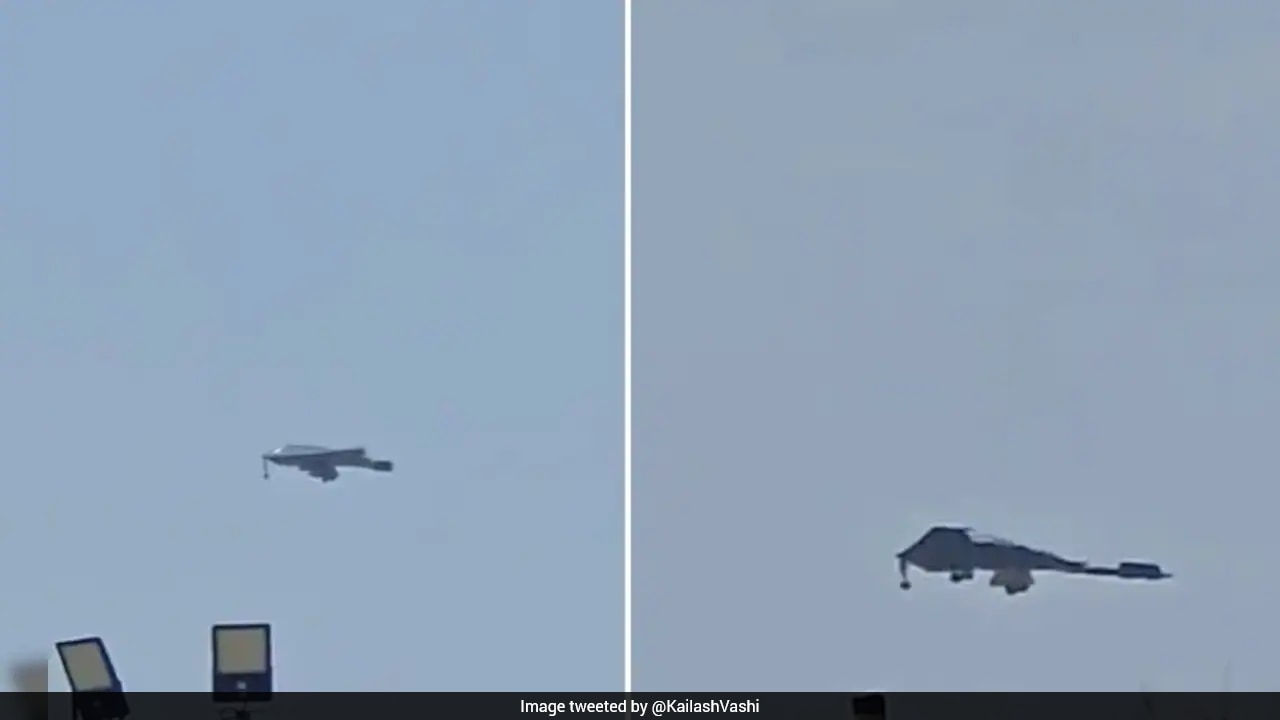
Photographs emerge in low-resolution pixels on niche forums. Grainy smudges against a gray dawn. The aviation community dissects them like medieval scholars reading entrails. Is it an uncrewed loyal wingman? A secret reconnaissance platform born from black budgets? Or is it the silhouette that has haunted aviation watchers for years: the B-21 Raider, stepping out of the developmental darkness and into the unforgiving light of operational testing?
Let us speak plainly about what we know, and what we can only deduce through the cold calculus of aerospace engineering.
The B-21 Raider was unveiled to the public in late 2022 inside a controlled hangar in Palmdale, illuminated by theatrical blue light. Northrop Grumman rolled it out nose-first, carefully hiding its exhaust ports and trailing edges from the prying lenses of media long-range zoom lenses. It looked like a sleek, featureless wedge of charcoal. A flying wing designed to slip through the densest integrated air defense systems on Earth.
Since that night, the aircraft has transitioned from a marketing marvel to a flying machine. Flight tests at Edwards Air Force Base are not gentle strolls through the clouds. They are brutal, systemic interrogations of aerodynamics, thermal signature management, and digital system resilience.
When a mysterious aircraft is caught on camera by an amateur lensman parked on a public overlook miles from the runway, the internet erupts with theories. Some swear the proportions are too small for a strategic bomber, arguing for a scaled-down stealth drone. Others note the distinct boomerang geometry, pointing directly toward the Raider family tree.
Both sides miss the deeper human truth.
The Weight of the Invisible
To understand why these blurry photographs matter, we have to look past the hardware and into the psychology of deterrence.
We are a species that relies on sight to feel secure. We want to see our shields. We want to measure our swords. Throughout history, military power has been theatrical. The Roman legions marched in tight formation with polished brass. Dreadnoughts lined up in ports to intimidate rivals with their sheer, smoking bulk.
Stealth broke that contract.
When you build an airplane that refuses to reflect radar waves, absorb heat, or catch the morning sun, you are waging psychological warfare against the very concept of visibility. You are telling the world that the most lethal instrument in the sky can pass directly overhead without leaving a trace of its existence.
Imagine standing on a tarmac in 1944, watching a B-17 Fortress lumber past with forty tons of aluminum and a chorus of four radial engines screaming in unison. You felt the power. You heard it in your chest. Now, imagine standing beneath the flight path of a modern low-observable platform.
Nothing.
That absence of sound and sight is the entire point. It is an engineered vacuum. And when a photograph slips out—a digital ghost captured by a teenager with a telephoto lens—it punctures that artificial vacuum for just a second. It reminds us that behind the curtain of national security, engineers are constantly pushing the boundaries of physics into realms that feel suspiciously like magic.
The Logic of the Shape
Why does it look the way it does?
The flying wing is not a designer's aesthetic whim; it is a mathematical surrender. If you want to defeat modern X-band and L-band radar systems, you cannot have vertical tails, horizontal stabilizers, or cylindrical fuselages. Those surfaces act as corner reflectors, screaming back radar returns to sender.
Instead, you must embrace the pure delta or the blended wing. You must make the leading edge of the aircraft match the sweep of the radar beam, scattering energy harmlessly away from the receiver. Every curve, every panel gap, every coat of radar-absorbent material is calculated down to the microscopic level.
When observers spot a mysterious aircraft near a major flight test center, they are usually looking at the awkward adolescence of this math. Flight testing is iterative. Technicians slap temporary telemetry pods on wings, paint test patterns across composite skins, and fly prototypes with gear doors slightly misaligned to measure aerodynamic flutter.
A finished combat aircraft is a polished jewel. A test aircraft is a Frankensteined laboratory with wings.
That is why the recent sightings spark such ferocious debate. The proportions do not always match the pristine digital renderings released by the Department of Defense. But variation is the signature of reality. Real engineering is messy, duct-taped, and iterative. It happens in the glare of harsh fluorescent lights at two in the morning, long after the press corps has gone home.
The Culture of the Fence Line
There is a distinct subculture of people who spend their lives parked on public dirt roads outside military reservations. They are often called "plane spotters," but that title trivializes their dedication. They are amateur historians, acoustic experts, and stubborn archivists of the classified.
They sit in folding chairs with heavy thermos flasks, scanning the horizon with military-surplus optics. They know the call signs. They know the shift changes of base security. They recognize the distant drone of a chase plane before it clears the mountain ridge.
Why do they do it?
Partly out of curiosity. Partly out of an innate resistance to absolute secrecy. In a world where governments classify everything from weather patterns to procurement budgets, standing on a public highway and taking a photograph of the sky is a quiet act of sovereignty. It is citizens saying: We pay for this sky. We have the right to look at it.
When one of these spotters captures a frame that defies easy classification, the community goes to work. Pixels are magnified. Contrast is adjusted. Thermal signatures are analyzed for engine placement. In those frantic hours of digital forensics, we see a fascinating collaboration of open-source intelligence. People from entirely different walks of life unite to solve a visual riddle.
They are trying to read the future from ten miles away.
The Cost of Silence
There is a profound irony at the heart of modern defense technology. The more advanced an aircraft becomes, the less we are allowed to appreciate its creation.
The Apollo missions were public spectacles. Millions watched white-hot fire consume the launchpad because the drama was part of the political message. The space race was designed to be seen.
Strategic stealth is the exact inverse. Its ultimate success relies on total anonymity. If a weapon system never has to fire a shot in anger because its mere presence induces caution in an adversary, it has succeeded. And if it remains so thoroughly shrouded in mystery that no one outside a handful of clearance-holders knows its true capabilities, it has achieved the holy grail of deterrence.
Yet, this secrecy creates a strange cultural alienation. We live surrounded by immense technological power that we cannot discuss, cannot photograph, and cannot fully comprehend. We see the blurry photograph on a glowing screen before bed. We read the speculation. Then we close the browser, turn off the light, and go to sleep under a sky that looks peaceful, quiet, and completely empty.
Until the next vibration hits the floorboards.
Until a star blinks out for a fraction of a second.
Until the ghost returns to the dark.