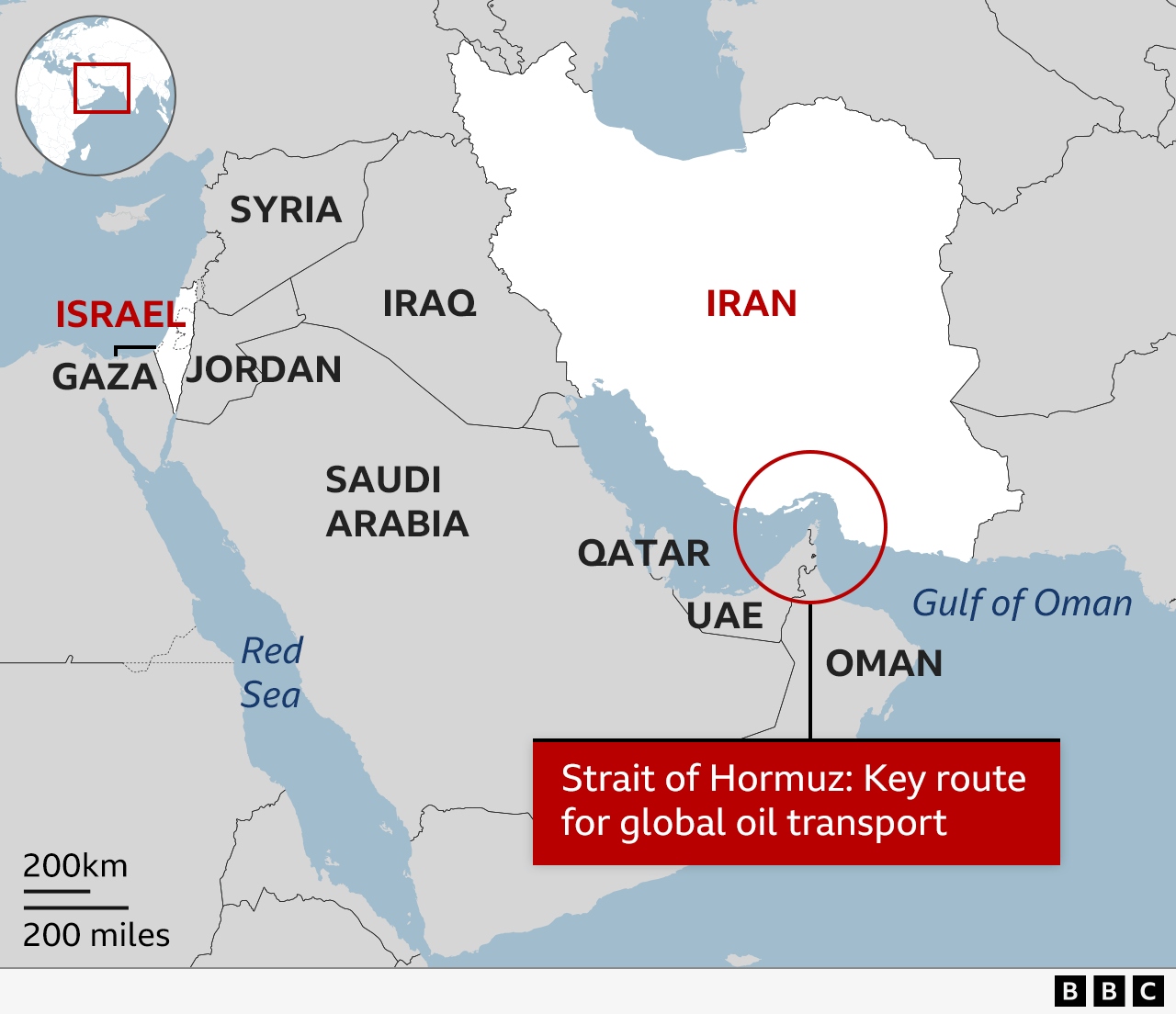
In the middle of the South China Sea, a rusted tanker cuts its engine and drifts into the dark. Its transponders are dead. On the digital maps used by global maritime authorities, the ship has effectively ceased to exist. To the crew on board, sweating in the humid salt air, they are simply waiting for a signal. They are part of the "Ghost Fleet," a shadow network of vessels carrying the lifeblood of the global economy: Iranian crude oil.
For years, this has been a cat-and-mouse game played in the margins. But recently, the rules changed. The game isn't just about hiding anymore; it is about standing in the open and daring anyone to do something about it. For an alternative look, consider: this related article.
Beijing has sent a clear, quiet directive to its independent refiners: ignore the American sanctions. Stop hiding. Buy the oil.
To understand why this matters, you have to look past the spreadsheets of "Crude Oil Prices Today" and into the offices of the "Teapots." These are the small, independent refineries in China’s Shandong province. They aren’t the state-owned giants with glittering glass headquarters in Beijing. They are gritty, practical, and profit-driven. For a Teapot owner—let’s call him Mr. Chen—the math of geopolitics is simple. If the United States places a bounty on Iranian oil by sanctioning those who buy it, that oil becomes a "toxic" asset. In the world of commodities, toxicity translates to a massive discount. Related analysis on this trend has been published by MarketWatch.
When a barrel of global benchmark Brent crude sits at $85, Mr. Chen can often find Iranian light for $10 or $15 less. In a business where margins are razor-thin, that discount isn't just a bonus. It’s the difference between keeping the lights on and bankruptcy. For years, Chen and his peers operated in the shadows, using middleman banks and "ship-to-ship" transfers where oil is pumped from one tanker to another in the middle of the ocean to scrub its origin. It was a headache. It was expensive.
Now, the Chinese government has effectively told Chen that the shield is up. China is no longer asking its refiners to be discreet. They are being told to prioritize energy security over Western financial compliance.
The Friction of Invisible Borders
The U.S. dollar is more than just money. It is a nervous system. Because most of the world’s oil is traded in dollars, every transaction eventually pulses through a U.S.-regulated bank. This is the "exorbitant privilege" of the American treasury. If Washington decides a country is a pariah, they can effectively cut off that country’s ability to participate in modern civilization.
Iran has been living in this state of cardiac arrest for years. Their oil sits in storage tanks, millions of barrels with nowhere to go. Or at least, that was the theory.
But China has spent the last decade building a parallel nervous system. They have the CIPS (Cross-Border Interbank Payment System), their version of the SWIFT network. They have the digital yuan. Most importantly, they have a hunger for energy that ignores the moral or political qualms of the West. When Beijing orders its refiners to ignore sanctions, they aren’t just buying oil; they are testing the structural integrity of the American financial cage.
Consider the physical reality of an oil tanker. A VLCC (Very Large Crude Carrier) is a monstrosity of engineering, longer than three football fields. It carries two million barrels of oil. When the U.S. Treasury Department adds one of these ships to a "Specially Designated Nationals" list, that ship becomes a pariah. It can’t get insurance. It can’t dock at major ports. It can’t even get serviced by reputable engineering firms.
Usually, this would be a death sentence for the vessel. But China has created a "closed-loop" ecology. They provide their own insurance. They use their own ports. They have their own technicians. The "Ghost Fleet" is becoming a legitimate, sovereign-protected merchant navy.
The Human Toll of the Price Floor
Why does this matter to someone filling up their car in Ohio or a factory manager in Germany? Because the price of oil is not a single number. It is a weighted average of global reality.
When China—the world’s largest oil importer—moves a significant portion of its demand into the "shadow market," it creates a massive vacuum. If China buys 1.5 million barrels a day from Iran and Russia at a discount, they aren't buying those 1.5 million barrels from Saudi Arabia or West Africa. This leaves more "legal" oil on the market for everyone else, which, paradoxically, keeps global prices lower than they would otherwise be.
We are living in a moment of profound hypocrisy. The West wants to punish Iran and Russia by restricting their oil revenue, but the West also desperately needs global oil prices to stay low to prevent domestic inflation from toppling governments. China has realized that they are the "vent" for this pressure. By defying sanctions, they are helping the global economy stay afloat while simultaneously enriching themselves and their allies.
But the "Teapot" refiners are the ones on the front lines. These men and women operate in a high-stakes environment where a single policy shift could see their assets frozen or their ships seized. One day, a refiner is a local hero providing cheap fuel for the province’s trucking fleets. The next, they are a name on a U.S. Treasury press release, barred from ever sending their children to an American university or holding a bank account in Hong Kong.
The psychological toll is real. There is a sense of "sanction fatigue." When everything is sanctioned, nothing is sanctioned. If the U.S. targets every small refinery in China, they risk a total breakdown in diplomatic relations with their largest trading partner. It is a bluff that Beijing is now calling.
The Architecture of the New World
This isn't a temporary spike or a brief period of defiance. This is the construction of a bifurcated world.
In one world, the "Rules-Based International Order" dictates who can trade and what currency they must use. In this world, transparency is a requirement, and the U.S. dollar is the ultimate arbiter of value.
In the other world—the one China is rapidly finalizing—sovereignty is the only rule. In this world, energy security trumps financial diplomacy. If you have a resource and I have a need, we will trade. We will use our own currencies. We will use our own ships. We will ignore the digital red lines drawn by bureaucrats in D.C.
The Iranian oil buyers in China are the architects of this second world. Every time a tanker docks at the port of Qingdao and unloads its "heavy mac" (a common pseudonym for sanctioned Iranian oil), a brick is laid in a wall that the West cannot see over.
There is a visceral, gritty reality to this trade. It happens in the middle of the night. It involves forged paperwork, renamed ships, and complex offshore banking structures that look like something out of a spy novel. But the motivation isn't a thriller plot. It is the raw, primal need for heat, light, and movement.
The U.S. has used the dollar as a weapon for decades. It is a clean weapon. No shots are fired. No blood is spilled. You simply flip a switch and a country’s economy goes dark. But weapons have a shelf life. Eventually, the enemy learns how to build armor. China’s order to its refiners is the sound of that armor being buckled into place.
The Ripple Effect
Imagine a farmer in rural China. He doesn’t know about the "Ghost Fleet." He doesn’t know about the U.S. Treasury’s list of sanctioned entities. All he knows is that the cost of diesel for his tractor has remained stable despite the wars raging in the Middle East and Europe. That stability is bought with Iranian oil. It is bought by men like Mr. Chen who are willing to gamble their personal standing against the needs of their balance sheets.
This creates a dangerous disconnect. In Washington, the sanctions are seen as a moral necessity—a way to drain the coffers of a regime that funds proxy wars. In Beijing, those same sanctions are seen as "long-arm jurisdiction," an arrogant attempt by a fading power to dictate the internal energy policy of a rising one.
Between these two viewpoints lies the reality of the water.
There are currently over 300 tankers in the "Ghost Fleet." These ships are often old, poorly maintained, and operated by crews willing to take immense risks for higher pay. Because they operate outside the normal insurance circles, a single accident—a spill in the Malacca Strait or a collision in the crowded waters of the South China Sea—would be an ecological catastrophe with no one to hold accountable.
This is the hidden cost of the defiance. By forcing this trade into the shadows, the global community has traded financial control for environmental chaos. We have created a world where the most essential commodity on earth is being moved by "ghosts" who have no reason to follow the rules because they have already been kicked out of the game.
The End of the Unipolar Moment
The order from Beijing to ignore U.S. sanctions is the final bell toll for the era of total American financial dominance. It is an admission that the "weaponization of the dollar" has reached its limit of effectiveness.
When the world’s largest manufacturer tells its businesses to ignore the world’s largest financial power, the friction creates heat. That heat is what we see in the fluctuating oil markets, the tense naval standoffs, and the increasingly desperate rhetoric from diplomatic podiums.
We often talk about "the market" as if it is a sentient, mathematical god. It isn't. The market is just a collection of human choices. It is the choice of a Chinese refiner to pick up the phone. It is the choice of an Iranian port captain to open the valves. It is the choice of a sailor to turn off his transponder and disappear into the mist.
As the sun sets over the docks in Shandong, the pumps are humming. The oil is flowing. The sanctions are there, etched into law and printed on official documents in a city thousands of miles away, but here, they are as thin as the paper they are written on. The tankers continue to arrive, their hulls heavy with the forbidden cargo, proof that in the hunt for energy, a hungry giant will always find a way to eat.
The silence from the "Ghost Fleet" is the loudest sound in the global economy. It is the sound of the world moving on.