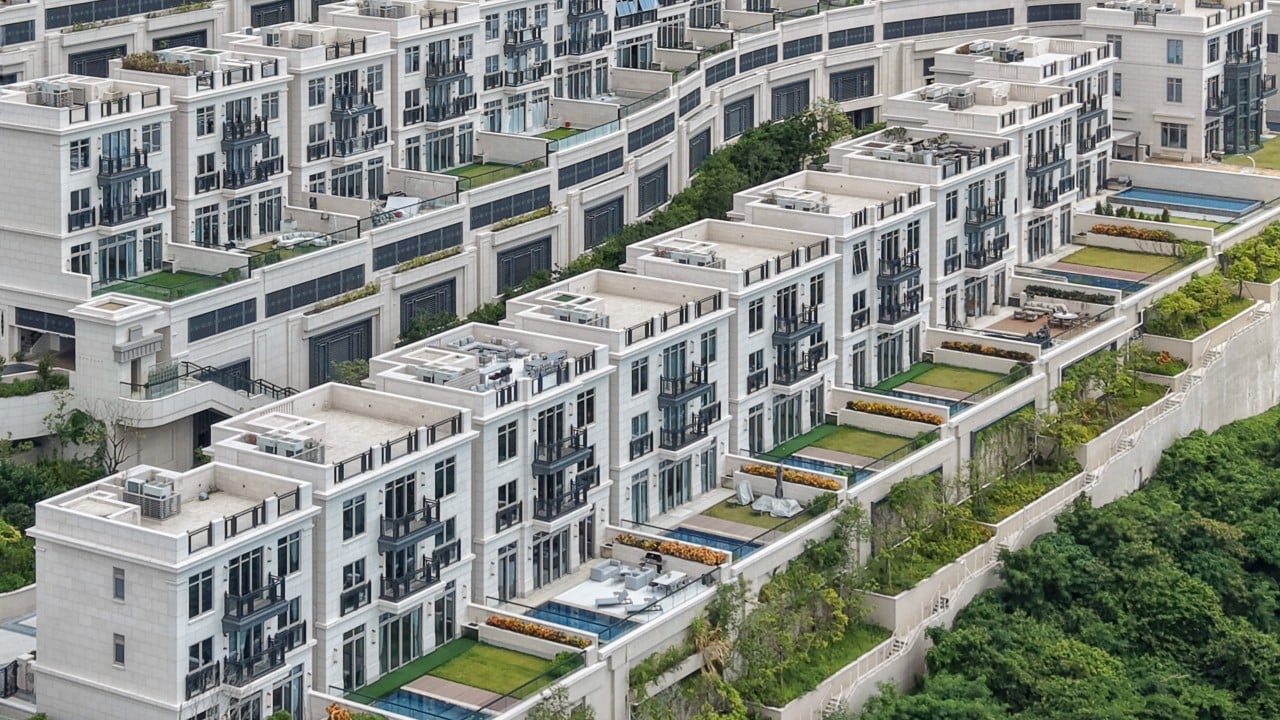
Concrete does not care about ambition.
Stand at the edge of Stanley Bay on a humid Tuesday morning, when the sea mist hangs low enough to swallow the hills of Hong Kong Island, and you can smell the wet lime curing inside a half-finished retaining wall. Salt air stings the back of your throat. Somewhere behind the bamboo scaffolding, a crane groans under the weight of imported limestone, lifting another piece of a multi-billion-dollar dream toward the sky. For decades, the southern coast of Hong Kong has operated on an unspoken bargain: developers pour unimaginable sums of capital into jagged cliffsides, and in return, the city grants them the quiet predictability of the rule of law. Building on this topic, you can find more in: The Quiet Billions Sitting on a Spreadsheet While the World Waits.
Until the phone rings.
Wait. Analysts at Harvard Business Review have provided expertise on this situation.
Picture a corner office thirty stories above Central, miles away from the sea spray of Stanley. Let us call the executive sitting behind the mahogany desk Arthur, a composite figure drawn from the real-world pressures facing Hong Kong's property directors today. Arthur has spent six years managing the financing, zoning approvals, and engineering headaches of a flagship coastal estate—a project like One Stanley, developed by K&K Property Holdings along Wong Ma Kok Road. Every square foot of that site represents a labyrinth of bank covenants, architectural tolerances, and investor expectations. When Arthur’s private line buzzes with an unfamiliar number, or when an envelope lands on a secretary’s desk without a return address, the threat rarely arrives like a scene from a gangster movie. There are no broken windows. No theatrical warnings. Instead, there is a demand for "tens of millions" of dollars, dressed up as a dispute, a regulatory complication, or a sudden obstacle that only money can make vanish.
That is the cold reality behind the headlines when a major developer like K&K Property reports an alleged extortion bid to the Hong Kong police. On paper, the news reads like a dry corporate blotter item: a luxury residential project in the Southern District, a reported demand running into the tens of millions of Hong Kong dollars, an ongoing criminal investigation. Most readers skim past the paragraph before finishing their morning coffee. To them, it looks like a distant clash between faceless corporations and unseen opportunists.
They miss the entire point.
When extortion creeps onto a construction site worth billions, the money itself is almost beside the point. Tens of millions of dollars is a rounding error on a balance sheet that spans decades. What the extortionist is actually trying to buy—and what the developer is fighting to keep—is time, certainty, and the fragile illusion that modern commerce operates on rational rules rather than raw intimidation.
The Architecture of Vulnerability
To understand why a massive real estate project becomes a magnet for high-stakes extortion, you have to understand how fragile a luxury development actually is.
Think of a flagship coastal build not as a fortress of steel and stone, but as a watchmaker’s bench exposed to a gale. Every gear depends on the one beside it turning at the exact millisecond prescribed on a master schedule. Excavation cannot finish until slope stabilization passes inspection. Interior fit-outs cannot begin until curtain walls are sealed against typhoon season. Sales launches—those carefully choreographed spectacles where billionaires and family offices tour show flats overlooking the South China Sea—are timed to interest rate cycles, equity market sentiment, and lunar calendar auspiciousness.
A delay of three weeks can cost a developer tens of millions in carrying charges alone. A rumor of structural trouble, a sudden blockade by subcontracted transport crews, or a fabricated regulatory complaint can spook buyers who are putting down deposits larger than most people’s lifetime earnings.
Extortionists know this arithmetic better than anyone. They do not target failing projects; you cannot squeeze blood from an insolvent stone. They target crown jewels. One Stanley, perched along the exclusive peninsula of Wong Ma Kok Road, sits in one of the rarest residential enclaves in Asia. Low-density seaside houses and luxury apartments in Stanley are trophy assets, scarce by geography and fiercely protected by heritage and environmental rules. Building there requires navigating a minefield of local infrastructure limits, narrow winding access roads, and strict coastal conservation standards.
Every single one of those chokepoints is a lever.
Imagine—as a hypothetical illustration of how these pressures mount—a narrow two-lane road leading down to a coastal construction site. Hundreds of concrete mixers and flatbed trucks must pass through that bottleneck every week. If an outside party claims "historical access rights," threatens to orchestrate endless nuisance complaints, or hints that work crews might suddenly walk off the job unless a "consultancy fee" of thirty million dollars is wired to an offshore shell company, the developer faces an agonizing calculation.
Pay, and the problem disappears tomorrow morning. Refuse, and you invite months of chaos, police interviews, court injunctions, and front-page headlines that link your pristine luxury brand to the ugly word extortion.
For decades, the quiet tragedy of Asian real estate—and global construction from New York to Naples—was how often executives chose silence. Paying quietly was treated like buying insurance against bad weather. You buried the cost under "site logistics" or "community liaison," swallowed your pride, and kept the cranes moving.
Which is precisely why reporting an alleged tens-of-millions extortion bid to law enforcement is such a radical, high-stakes break from the old script.
What Happens When the Silence Breaks
I have sat across from project directors during moments when a regulatory snag or a hostile subcontractor threatened to freeze a nine-figure build. You can see the exhaustion in the grey skin beneath their eyes before they even speak. In property development, you are trained to solve problems with capital and compromise. Everything has a price; everything can be negotiated at a banquet table over tea.
Except blackmail.
The moment you negotiate with an extortionist, you do not buy peace. You establish a subscription. Once a syndicate or an opportunistic schemer learns that a developer will pay twenty or thirty million dollars to avoid friction, the price doubles at the next milestone—before the occupation permit is issued, before the handover to buyers, before the strata title transfer. The demand never ends because the vulnerability never ends.
By going to the police, the developer behind One Stanley flipped the table. They traded the short-term convenience of silence for the long-term survival of institutional integrity.
Look closely at what that decision requires in a market like Hong Kong right now. The city’s luxury property sector has been fighting through one of the toughest stretches in a generation. High borrowing costs, cautious mainland buyers, and sluggish transaction volumes have forced developers to sharpen every pencil and defend every ounce of buyer confidence. When K&K Property poured capital into acquiring the Wong Ma Kok Road site and crafting a low-density coastal sanctuary, they were betting on Hong Kong’s enduring appeal as a safe harbor for global wealth.
Wealthy buyers do not spend hundreds of millions of dollars on a seaside villa just for the infinity pool or the Italian marble. They buy into the jurisdiction. They buy the assurance that the title deed in their vault is backed by courts that work, police who investigate, and companies that do not bow to street-level coercion.
If a developer folds to extortion, that invisible contract rots from the inside out.
The Invisible Web Behind "Tens of Millions"
People often ask how an extortion attempt against a major company even gets off the ground. Who thinks they can walk up to a powerhouse property firm and demand tens of millions of dollars?
History shows us that high-level commercial extortion rarely wears a ski mask. In modern financial hubs, it almost always wears a tailored suit or hides behind layers of plausible deniability.
Sometimes it begins with a genuine commercial relationship that curdles into predation—a former middleman, a disgruntled land consultant, or a peripheral vendor who claims they were cut out of a deal and demands an astronomical "settlement" backed by threats to sabotage the project’s reputation. Other times, it involves opportunistic operators who weaponize administrative friction: threatening to flood government departments with fabricated environmental violations, leaking distorted internal documents to the press, or mobilizing local agitators to disrupt construction traffic unless paid to stand down.
In Hong Kong, the law draws a sharp, unforgiving line under the Theft Ordinance. Under Section 23, blackmail occurs whenever a person makes any unwarranted demand with menaces with a view to gain for themselves or another, or with intent to cause loss to another. The penalty carries up to fourteen years in prison. Crucially, the law does not care whether the person making the demand believes they have a grievance; if the method used to extract money relies on intimidation or fabricated ruin, the demand is unwarranted.
Yet proving it is a grueling ordeal.
Think about the mechanics of an investigation when tens of millions of dollars are at stake. Detectives from the Organized Crime and Triad Bureau or regional crime units have to trace encrypted messages, untangle shell companies, record covert phone calls, and distinguish hardball commercial negotiation from criminal menace. Meanwhile, the developer has to keep building. Engineers still have to test soil anchors. Architects still have to sign off on stone cladding. Sales agents still have to smile for prospective buyers while reporters call the corporate communications desk asking who made the threat and why.
It is messy. It is exposed. It strips away the polished veneer that luxury brands spend millions cultivating.
Why This Matters Far Beyond Stanley Bay
If you do not own a villa on Wong Ma Kok Road, and you do not hold shares in a Hong Kong property firm, it is tempting to treat this story as rich-people drama. A billionaire developer versus a greedy extortionist—let them fight it out in court.
That cynicism is dangerous.
Every hidden tax paid to corruption or extortion eventually flows downhill to ordinary people. When construction costs bloat because developers have to price in "protection" or legal warfare, housing becomes more expensive across the entire city. When contractors have to pad bids to cover site interference, public infrastructure—hospitals, rail lines, schools—absorbs the exact same rot. Worse still, when prominent businesses quietly pay off extortionists, it signals to every mid-sized restaurant owner, logistics operator, and shopkeeper in the district that the authorities cannot or will not protect them.
Resistance at the top creates oxygen for everyone below.
Consider what happens when a high-profile developer refuses to blink. First, it forces the threat out of the shadows and into the fluorescent light of a police station and a courtroom, where intimidation loses its power. Second, it sets a precedent across the industry: attempts to hold major projects hostage will be met with criminal prosecution, not a quiet wire transfer. Third, it reminds investors—both local and international—that Hong Kong’s commercial ecosystem still possesses the immune system required to reject coercion.
I used to think that the strength of a city’s economy could be measured by its skyline—by the height of its towers and the price per square foot of its waterfront penthouses. Years of watching deals succeed and unravel taught me otherwise. Skylines are just glass and steel. The real measure of a city is what happens in a quiet room when someone slides a demand across the table and waits to see if the other person will flinch.
Down in Stanley, the tide still rolls in against the seawall twice a day, indifferent to police blotters and property valuations. The bamboo scaffolding still climbs the hillside, lashed together with black nylon strips that flex in the coastal wind without snapping. Soon enough, families will move into those sunlit rooms overlooking the bay, arguing over furniture placement and watching ferries trace white wakes across the blue water.
None of them will ever see the phone call that wasn't paid, or the threat that died in an interrogation room instead of being buried in a ledger. They will simply turn the key in the front door, step inside, and take for granted that the ground beneath their feet belongs cleanly to them.