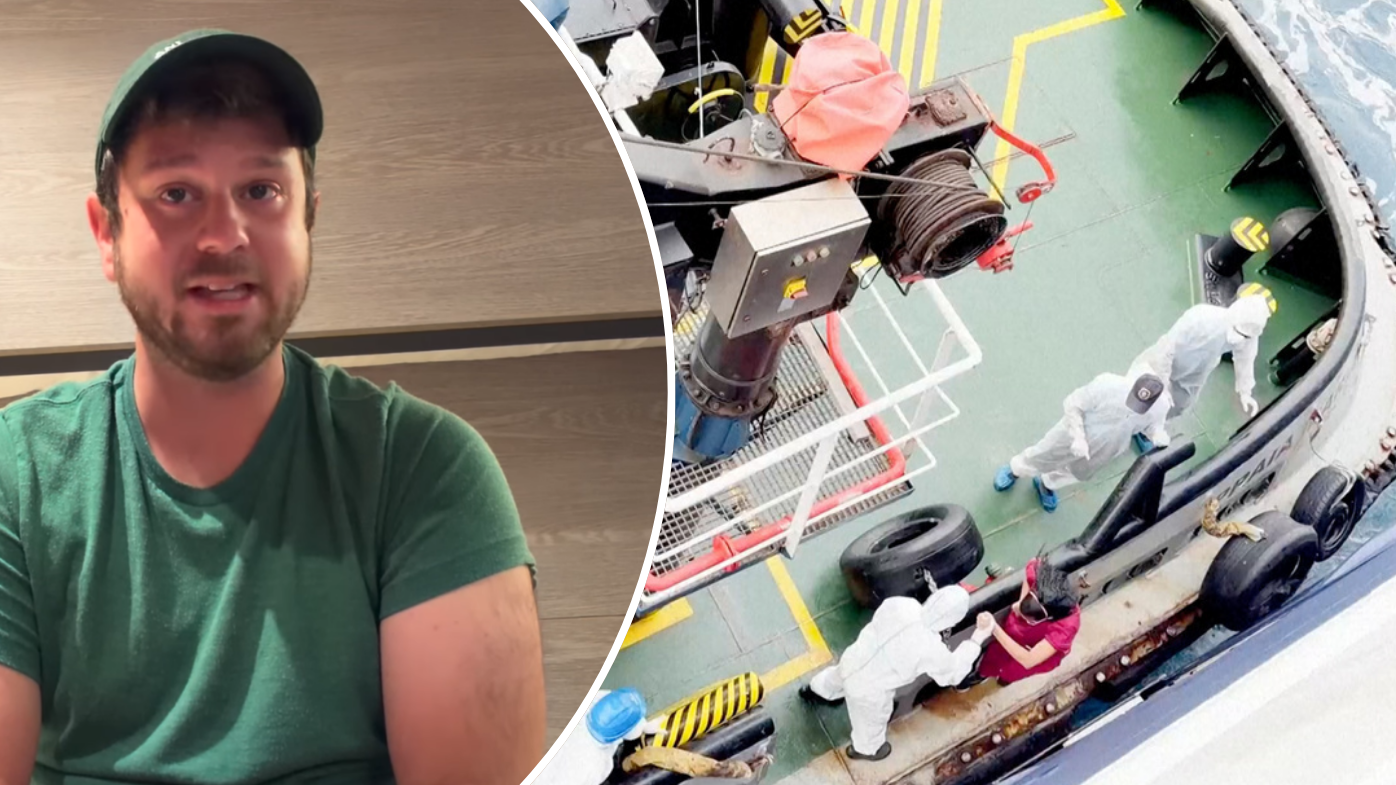
The sea has a way of swallowing sound, but it cannot silence the thrum of the engines. For the three thousand souls aboard the Grand Horizon, that steady vibration used to be the heartbeat of a vacation. Now, it feels like a countdown. Somewhere in the ventilation, or perhaps beneath the floorboards of a luxury suite, a silent passenger has hitched a ride. It doesn't have a ticket. It doesn't have a face. It is a virus born of dust and shadows, and it is currently charting a course toward the Canary Islands.
Public health bulletins call it Hantavirus. To the medical world, it is a "zoonotic respiratory disease." To a family trapped in Cabin 402, watching the coastline of North Africa slip away, it is a sudden, terrifying thief of breath.
The Dust of the Unseen
Imagine a mouse. Not the cartoon variety, but a small, scuttling creature seeking warmth in a dry corner of a warehouse before the ship’s linens were loaded. It leaves behind a microscopic legacy in its waste. When that waste dries and breaks apart, it becomes a fine powder. One stray breeze, one flick of a feather duster, and that powder becomes airborne.
You breathe it in. You don't feel a sting. There is no immediate cough. The incubation period is a slow-motion fuse, burning for one to five weeks. By the time the Grand Horizon cleared the Mediterranean, the fuse had reached the powder keg.
Hantavirus Pulmonary Syndrome (HPS) starts with a deception. It mimics the exhaustion of a long flight or the mild aches of a slight sea-chill. Fever, headache, and muscle pain—the standard tax of travel. But then the lungs begin to fill, not with water from the ocean outside, but with fluid leaked from the body’s own tiny blood vessels.
The ship isn't just a vessel anymore. It’s an island.
The Arithmetic of Isolation
The captain’s voice over the intercom is calm, practiced, and utterly chilling. He speaks of "enhanced cleaning protocols" and "precautionary measures." Between the lines, the passengers hear the truth: the buffet is closed, the theaters are dark, and the bright, salt-sprayed dream of the Canaries has been replaced by the sterile smell of bleach.
[Image of a modern cruise ship at sea]
Logistics on a cruise ship are a miracle of modern engineering until something goes wrong. Every day, thousands of gallons of water are desalinated, tons of food are prepared, and miles of air ducting circulate oxygen to every corner of the steel hull. When a pathogen enters that system, the very infrastructure meant to sustain life becomes a delivery mechanism for anxiety.
Consider a passenger we will call Elena. She saved for three years to see the black sands of Tenerife. Now, she sits on the edge of her bed, clutching a thermometer like a talisman. Every time she clears her throat, she wonders if it is the dry air or the beginning of the end. She looks at the door. On the other side, crew members in masks move with a frantic, quiet urgency.
The stakes are not just biological; they are psychological. In the confined space of a ship, information travels faster than any virus. Rumors grow teeth. A sneeze in the elevator becomes a death sentence in the mind of the person standing next to you.
Why the Canary Islands?
The decision to continue toward the Canary Islands isn't a matter of callousness. It is a desperate search for a port with the infrastructure to handle a crisis. The archipelago, while a paradise for tourists, houses some of the most advanced medical facilities in the Atlantic. Spain’s health ministry is already on high alert, preparing isolation wards that look more like space stations than hospital rooms.
But the arrival carries a heavy weight of irony. The Canaries are famous for their air—the "eternal spring" that supposedly heals the lungs. To arrive there while struggling to breathe is a cruel twist of fate.
Health officials are currently tracing the source. Was it a contaminated shipment of dry goods? Was it an infestation at the port of departure? While the investigators look backward, the passengers can only look forward. They watch the horizon for the first glimpse of Teide, the Great Volcano, hoping that the land will offer the safety that the water has denied them.
The Fragility of the Bubble
We live in a world where we believe we have conquered the wild. We build floating cities with stabilizers that defy the waves and GPS systems that find a needle in a blue haystack. Yet, we are still vulnerable to a shadow cast by a rodent.
Hantavirus is rare, yes. It isn't the next global pandemic. It doesn't spread from human to human like the flu. You have to breathe the dust. You have to be in the wrong place at the very moment the air turns toxic. But for those on the Grand Horizon, statistics are cold comfort. When you are the one in the hospital bed, the rarity of your condition doesn't make the oxygen mask any lighter.
The reality of the situation is a jagged pill to swallow. The ship will dock. The sick will be carried off on stretchers, shielded by plastic bubbles. The healthy will be quarantined in hotels that feel like gilded cages, watching the sun set over a sea they no longer trust.
There is a specific kind of silence that falls over a ship in distress. It is the absence of the piano player in the lounge, the lack of splashing in the pool, and the hushed tones of people who realize that their luxury escape has become a laboratory.
As the Grand Horizon cuts through the swells of the North Atlantic, the blue water remains indifferent. The virus doesn't care about the itinerary. It doesn't care about the price of the suite. It only knows the warmth of a lung and the drive to persist.
The passengers wait. They watch the digital map in their cabins, the little glowing ship icon inching toward the islands. They breathe shallow breaths, testing the air, waiting to see if the ghost in the steel cabin has finished its work, or if the worst is yet to come.
The sun rises over the Atlantic, gold and indifferent, illuminating a vessel that is no longer a holiday, but a prayer.