The phone rings. You are thousands of miles away, standing under a heavy tropical sun in Costa Rica, entirely unaware that the world you left behind has just ended.
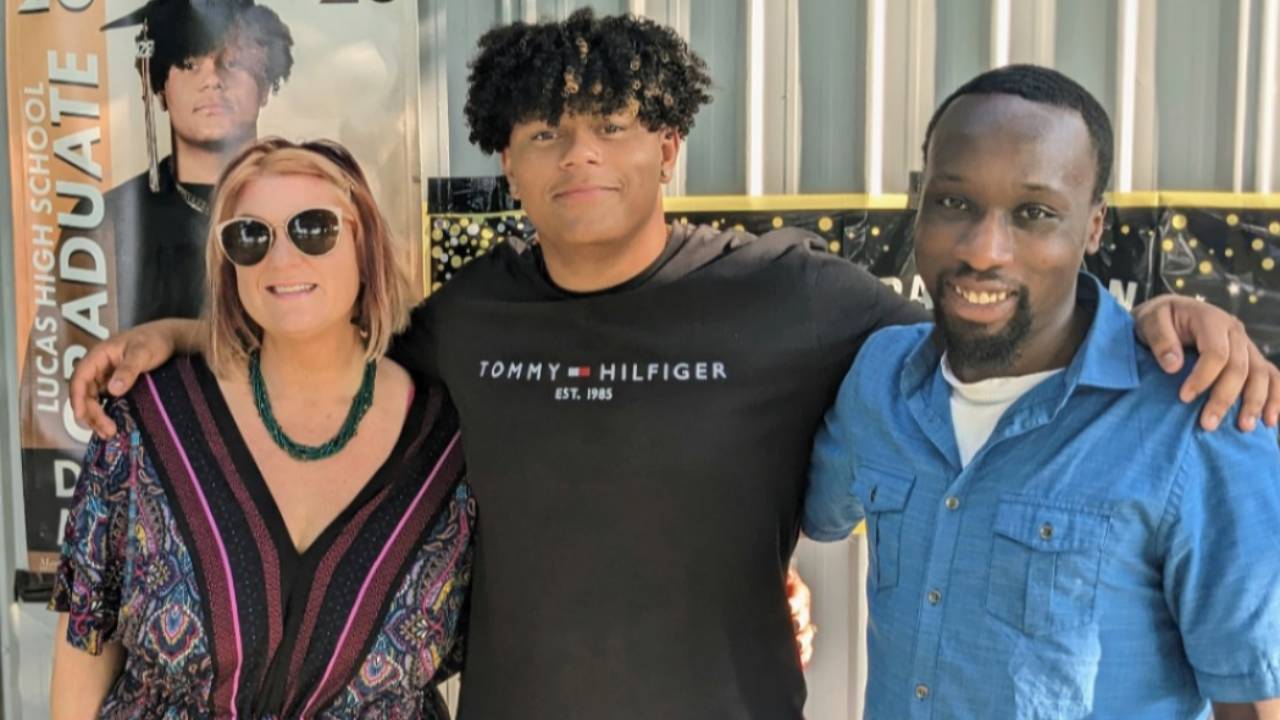
For Andrea Mauk, that call arrived on a summer day. Her eighteen-year-old son, Damon, had just graduated from high school. He was studying for his real estate license, laughing with friends, and stepping right into the wide-open door of his adulthood. Then a car slid off a quiet rural road in Lucas, Ohio, and struck a tree.
Distance is a cruel amplifier for grief. While Mauk scrambled for a flight home, paralyzed by shock and heavy sedatives, a parallel machinery clicked into motion back in Ohio. It is a system built with noble intentions—saving lives through tissue and organ recovery—yet it operates with cold, bureaucratic anonymity.
Damon was not a registered organ donor. But under the complex mechanics of modern procurement protocols, the absence of a registry card does not always halt the process. Organ procurement organizations and hospitals work under legal frameworks that allow consent to be gathered from alternative family members. In Damon’s case, authorization was secured from his biological father—a man Mauk notes had played little role in their son's life.
Meanwhile, Mauk—listed as the primary emergency contact, reachable and desperate for news—heard nothing.
Consider what happens next: You return home, step into a funeral home to say your final goodbye, and discover that your child has been disassembled.
"They stole my son's eyes," Mauk later expressed, capturing the visceral horror of a mother confronting an unfamiliar physical reality. The tissues, heart valves, ligaments, and eyes had already been harvested as anatomical gifts. Some of those biological materials were routed to research organizations; his eyes were shipped as far away as Argentina.
This is where the invisible stakes of the medical procurement machine collide with human trauma. The system measures success in metrics, quotas, and tissue yields. Federal oversight and local organ procurement organizations navigate a high-stakes environment where every recovered valve or scrap of tissue feeds a global medical supply chain. But human beings are not inventory warehouses. When communication breaks down, families are left standing in the wreckage of a bureaucratic blind spot.
Mauk is clear about one fundamental distinction: she is not anti-donation. She does not want to dismantle the architecture that saves lives. Her crusade—manifesting in an advocacy push she calls Damon's Law—is about something far more foundational.
Consent. Communication. Dignity.
A phone call was all she wanted. A single conversation before a grieving mother's final memory of her child is permanently altered.
The machinery of modern medicine moves fast, driven by the acute shortage of human tissue and the desperate needs of recipients waiting in the dark. Yet, in maximizing efficiency, the system occasionally forgets the living left behind.
The silence remains long after the forms are signed and the tissues are shipped across oceans. And somewhere in Ohio, a mother’s voice echoes through legislative halls, demanding that the human element be written back into the law.


