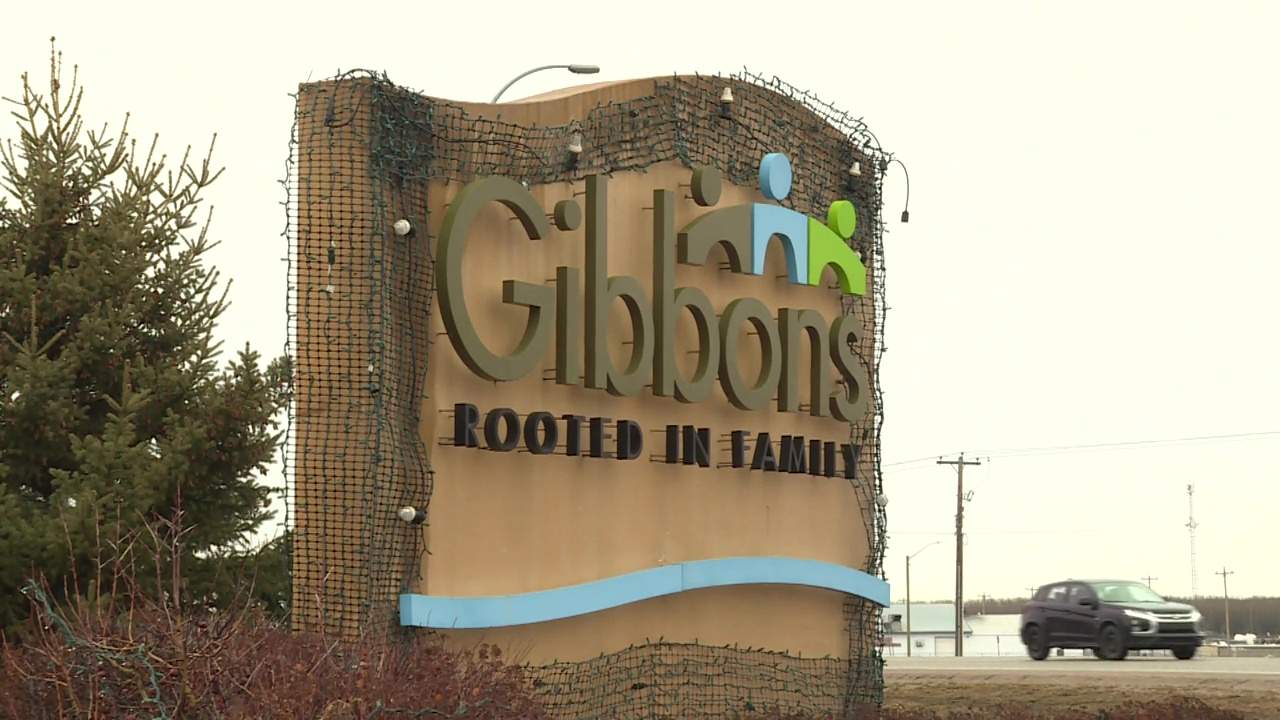
The headlines are screaming about a $15.3 million "catastrophe" in Gibbons, Alberta. Local pundits and worried residents are treating the town’s potential loss of status as a death sentence. They see the debt as a terminal illness. They see the provincial intervention as a funeral.
They are wrong.
The panic surrounding Gibbons isn't based on financial reality; it is rooted in an emotional attachment to a municipal structure that has outlived its utility. If you look at the books without the fog of civic pride, you realize that the "crisis" is actually a long-overdue market correction. Gibbons isn't failing because it has debt. It is failing because the town model itself is a bloated relic that small populations can no longer afford to subsidize.
The Math the Province Won't Tell You
The $15.3 million figure sounds terrifying for a town of roughly 3,000 people. On paper, that is over $5,000 of debt for every man, woman, and child. The "lazy consensus" argues that better management or a few more tax hikes could have saved the ship.
That is a fantasy.
Small towns in the modern era suffer from an inescapable math problem. To maintain "town" status, you must fund a mayor, a council, a CAO, a fleet of public works vehicles, and a specialized administrative staff. You are paying for a full-scale government on a lemonade-stand budget.
The debt in Gibbons wasn't an accident. It was the inevitable result of trying to maintain high-tier infrastructure on a stagnant tax base. When you have a small population, any major capital project—a new water main, a community center, a road repair—represents a disproportionate hit to the treasury.
I have seen municipalities burn through reserves trying to prove they are "self-sufficient" while their infrastructure crumbles in real-time. Gibbons didn't just spend money they didn't have; they spent money to maintain the illusion of autonomy.
Why Losing Town Status is a Winning Move
The threat of being absorbed into Sturgeon County is being framed as a loss of identity. In reality, it is a massive financial bail-out that the residents should be begging for.
Dissolution isn't a defeat. It is a strategic merger.
When a town dissolves into a specialized municipality or a county, the administrative overhead is slashed. You no longer need to pay for a dedicated town office or a redundant council. You gain the economies of scale that come with a larger county’s procurement power.
Consider the "Sturgeon County Advantage." The county has a larger, more diverse industrial tax base. By becoming a "hamlet" within the county, Gibbons residents get access to better-funded services without the crushing weight of a $15 million debt load tied solely to their residential property taxes.
The province’s Municipal Affairs department uses the word "viability" as a polite way to say "your business model is broken." If Gibbons was a corporation, it would have filed for restructuring years ago.
The Infrastructure Trap
Critics point to the $15.3 million and ask where the money went. They want to find a villain—a corrupt official or a gold-plated project. Usually, the truth is far more boring and far more dangerous: the money went into the ground.
Municipalities across North America are facing an "Infrastructure Gap." We built massive networks of roads, pipes, and wires in the mid-20th century and we never set aside the actual replacement cost.
Imagine a scenario where a town of 3,000 people needs to replace a bridge that costs $4 million. That single project wipes out years of tax revenue. To survive, the town borrows. Then the interest starts eating the operational budget. To pay the interest, they cut maintenance. Because they cut maintenance, the assets fail faster.
This is the "Death Spiral of the Small Town." Gibbons is just the latest to hit the bottom of the vortex.
The Identity Crisis Fallacy
The loudest voices against dissolution always talk about "losing our voice." They claim that a county council won't care about the potholes on 50th Avenue as much as a local mayor would.
This is a sentimental trap.
A "voice" is useless if you don't have the money to act on it. What good is a local council that sits in a room and votes on which 20% of the required repairs they can afford this year? Authentic local governance requires a solvent treasury. Without money, "autonomy" is just the freedom to go bankrupt together.
I’ve watched these debates play out in dozens of jurisdictions. The pattern is always the same:
- Deny the debt is a problem.
- Blame the province for "lack of support."
- Raise taxes on a shrinking population.
- Watch the youngest, most productive residents move away to escape the tax bill.
- Collapse anyway.
Gibbons can choose to collapse now, or they can choose to transition.
The Brutal Truth About Municipal Viability
The province of Alberta is currently keeping dozens of "zombie towns" on life support. These are municipalities that cannot survive without constant provincial grants.
The $15.3 million debt in Gibbons is a signal to every other small town in the region: the era of the subsidized village is over. If you cannot generate enough economic activity within your borders to pay for your own pipes, you aren't a town. You are a neighborhood.
There is no shame in being a neighborhood.
Sturgeon County is one of the wealthiest regions in the province due to its industrial heartland. By resisting the move to join the county, the Gibbons leadership isn't protecting the residents; they are gatekeeping them from a more stable financial future. They are clinging to the titles of "Mayor" and "Councillor" while the residents’ home equity is held hostage by a massive municipal lien.
A New Blueprint for the Alberta Heartland
If we want to fix the "Gibbons Problem," we have to stop trying to fix Gibbons. We need to stop throwing provincial grants at failing administrative structures.
Instead of a "recovery plan" that involves 20 years of austerity and crumbling services, the province should expedite the dissolution. They should wipe the slate clean, integrate the services into the county, and allow the residents to breathe.
The real tragedy isn't that Gibbons might lose its status. The tragedy is that it didn't happen five years ago. Every year the town spent trying to "manage" its way out of a structural deficit was a year wasted.
Stop The Bleeding
To the residents of Gibbons: Do not fear the county.
The county has the equipment. The county has the staff. The county has the credit rating. Your identity isn't found in a "Town of Gibbons" sign at the highway entrance; it’s found in the community, the schools, and the people. None of those things disappear when the letterhead changes.
The debt is real, the model is broken, and the exit ramp is right in front of you.
Take the exit.
The "town" is a ghost. It's time to stop paying for the haunting.