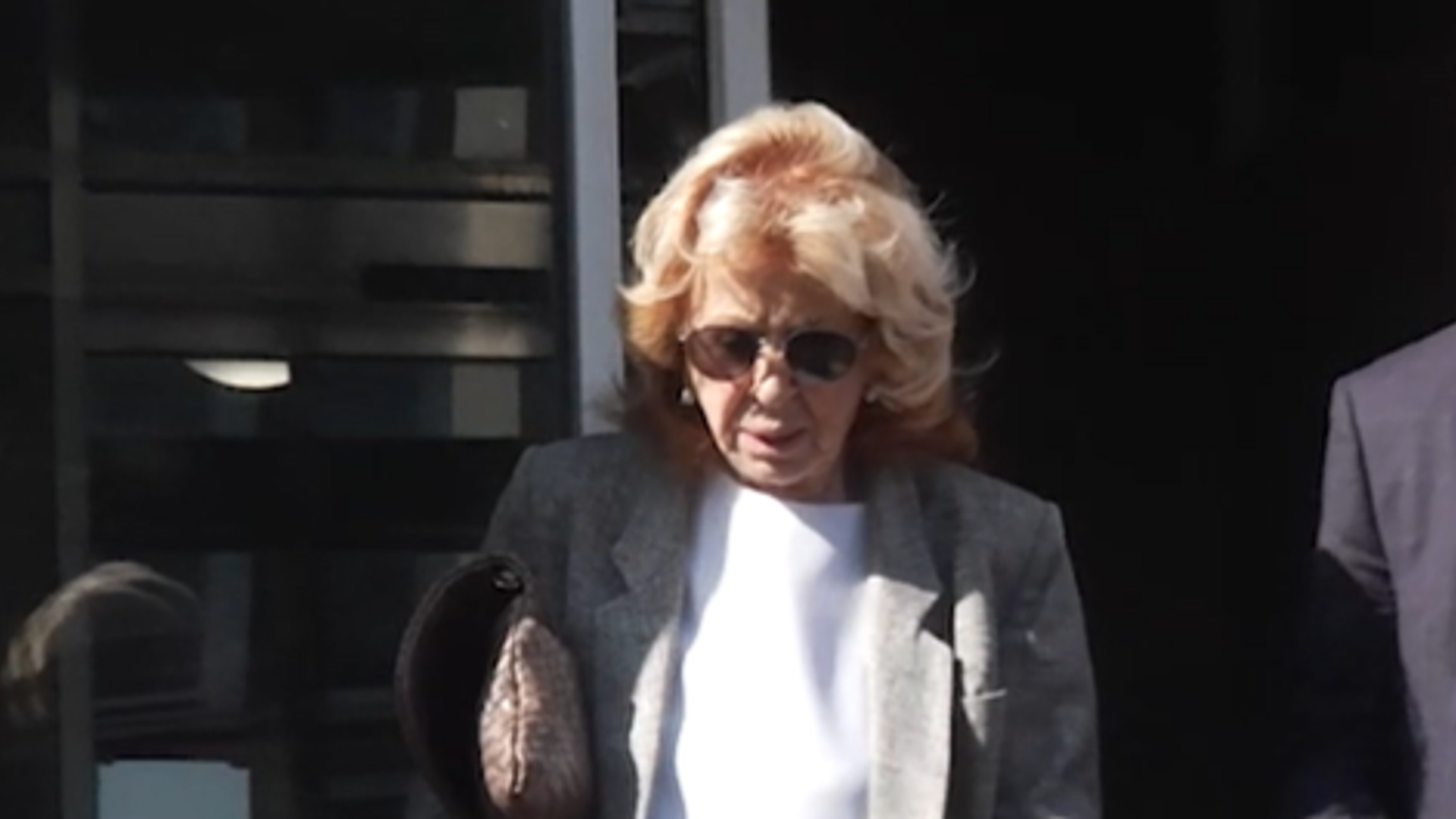
The flashing lights of Ventura County aren't always from a paparazzi’s lens. Sometimes, they are the rhythmic, clinical strobe of a cruiser. On a quiet stretch of road under the vast California sky, the world’s most scrutinized woman found herself, once again, at the center of a different kind of frame. Britney Spears—a name that functions less like a person’s identity and more like a global Rorschach test—was arrested. Then, she was released.
The paperwork is thin. The sheriff’s records are hauntingly brief. They don't capture the smell of the night air or the weight of a legacy that has been dissected by every courtroom and tabloid in the Western world. They just show a name, a time, and a vague reference to a charge that remains shrouded in the kind of ambiguity that usually fuels a week of cable news cycles.
We live in a culture that treats Britney Spears as a piece of public property. We watched the girl with the pom-poms become the woman in the red latex suit, and then we watched the woman in the red suit become a prisoner of her own success. When we see a headline about an arrest, the collective instinct isn't concern. It’s a craving for the details. We want to know the "what" and the "why" because we’ve been conditioned to believe we are entitled to every piece of her.
But consider the silence.
The fact that the charge wasn't immediately broadcast to every corner of the internet is a rarity in the age of instant information. Usually, the "gotcha" moment is the entire point. Here, the vacuum of information creates a different kind of tension. It forces us to look at the person behind the pop-star veneer. What does it feel like to have your every movement recorded by the state after spending thirteen years under a legal thumb that dictated when you could drink a soda or see your children?
Freedom is a heavy thing. It isn't just the absence of a conservatorship; it is the presence of consequence. For someone who was denied the right to make her own mistakes for over a decade, a run-in with the law is a strange, distorted milestone. It is a sign of a life being lived on its own terms, even if those terms are messy, confusing, or legally fraught.
The records in Ventura County provide the skeleton of the story. They tell us she was taken into custody. They tell us she was released. They don't tell us about the exhaustion of being a symbol for "freedom" while still being trapped by the expectations of an audience that wants her to be either a perfect victim or a tragic cautionary tale. We demand a specific narrative arc from her. We want her to heal on a schedule that fits a documentary’s runtime.
When the news broke, the digital world moved with its usual, predatory speed. Fans theorized. Detractors sneered. The "invisible stakes" here aren't about a traffic violation or a minor misdemeanor. They are about the human right to be imperfect without it being a referendum on one’s sanity.
If a neighbor gets pulled over and detained, it’s a bad Tuesday. If Britney Spears is detained, it’s a global event.
Think about the sheer sensory overload of that experience. You are sitting in a car. The interior lights are dim. Outside, the world is a blur of black asphalt and dry brush. Suddenly, there is the siren. The request for identification. The realization that within twenty minutes, your name will be pinging on the phones of millions of people who don't know you, but have decided they know exactly what you’re going through.
The ambiguity of the charge is the most telling part of this entire episode. In an era where "sources close to the situation" are usually falling over themselves to leak details to the press, the silence suggests a protective barrier that wasn't there before. Or perhaps, it suggests that the "crime" is so mundane that it doesn't fit the explosive narrative the world wants to write for her.
We often forget that she is a woman in her forties trying to navigate a world that changed entirely while she was locked away in a legal simulation of adulthood. The technology changed. The social norms changed. Even the way we consume celebrity changed. She is a time traveler from 2008 trying to plant her feet in 2026.
The legal system sees a file number. The public sees a headline.
But there is a middle ground. It’s the space where a person sits in a room, waiting for paperwork to be processed, wondering why the world won't let her just exist in the shadows for a single night. This arrest isn't a plot point in a comeback story. It isn't a "downward spiral" as the more cynical outlets will inevitably claim.
It is a moment of friction between a person and the state.
When the iron bars of the conservatorship were lifted, many expected a Disney ending. We wanted the "Happily Ever After" where she releases an album, does a residency, and smiles for the cameras with a staged, glossy perfection. We didn't want the reality: that trauma doesn't evaporate just because a judge signs a paper. It lingers. It manifests in the way one interacts with authority, the way one drives a car, the way one breathes.
The sheriff’s records are a cold, hard mirror. They show us that she is no longer "protected" by the walls of a legal cage, but she is also no longer shielded from the mundane machinery of the law. This is what she fought for. The right to be treated like anyone else, even if that means being processed, booked, and released in the middle of the night.
But she will never be like anyone else.
The invisible cost of being Britney Spears is that your worst days are archived. They are searchable. They are debated by people who have never met you. While the charges remain unclear, the impact is certain. It reinforces the idea that she is perpetually on the brink, a narrative that ignores the resilience it takes to survive what she has survived.
Imagine the quiet after the release. The drive home. The sound of the tires on the road. For the rest of the world, the story was just beginning, a fresh piece of meat for the social media meat-grinder. For her, it was likely just another night in a life where the line between private struggle and public spectacle has been permanently erased.
We don't need to know the charge to understand the tragedy. The tragedy isn't the arrest. The tragedy is our obsession with it. We are the ones who keep the cage illuminated, waiting for her to pace, waiting for her to stumble, waiting for her to prove that our collective voyeurism was justified all along.
The California night eventually gave way to dawn. The records were updated. The news cycle moved on to the next crisis, the next scandal, the next person to dismantle. But the image remains: a woman standing in the fluorescent glare of a station, caught between the ghost of who we think she is and the reality of who she is trying to become.
She was released. But in a world that refuses to look away, one has to wonder if she will ever truly be free.