The air in the Vatican carries a specific kind of silence. It is heavy with two thousand years of prayer, incense, and the muffled footsteps of history. It is a place where time is measured in centuries, not news cycles. Then there is the air around Donald Trump. That air crackles. It smells of jet fuel, expensive hairspray, and the electric friction of a constant, restless fight.
When these two worlds collide, it isn't just a meeting of two men. It is a collision between the ancient and the immediate.
The friction began when the Pope, a man who took his name from a saint who talked to birds and embraced lepers, looked at a map of the American border. He didn't see a strategic line. He saw a wound. Francis suggested that anyone who thinks only of building walls is "not Christian." It was a theological strike delivered with the softness of a prayer.
Trump didn't pray back. He swung.
He stood before the cameras, the bright lights reflecting off his signature gold-toned surroundings, and called the Pope’s comments "disgraceful." But beneath the insult was a deeper, more revealing argument. Trump told the world that the Pope needed to "understand the real world." In Trump’s reality, the world is a giant chessboard where the pieces are made of oil, steel, and nuclear intentions. In that world, mercy is a luxury that the powerful cannot always afford.
The Architect and the Shepherd
To understand the weight of this spat, you have to look at the tools each man uses to shape reality.
Donald Trump views the world through the lens of the deal. Everything is a negotiation. Security is a commodity. Peace is something you buy with strength or secure with a barrier. When he speaks about the "real world," he is talking about the grit of the street and the cold calculations of the boardroom. He sees a threat in Iran that he believes the Vatican is too holy, or perhaps too naive, to acknowledge. To Trump, Iran isn't a theological puzzle; it’s a ticking clock.
He wants the Pope to realize that the "real world" involves people who do not play by the rules of the Beatitudes. He views the Vatican’s diplomatic openness as a crack in the armor of the West.
On the other side of the Atlantic, Francis sits in a room where the walls are covered in frescoes of the apocalypse and the resurrection. His "real world" is one of suffering, migration, and the soul. While Trump looks at a map and sees borders to be reinforced, Francis looks at the same map and sees a single, fragile human family. He isn't interested in the "real world" of geopolitical posturing because he believes that world is a temporary illusion. For him, the only reality that matters is how we treat the "least of these."
This isn't just a disagreement over policy. It is a fundamental dispute over what it means to be a human being in the twenty-first century.
The Ghost of Iran
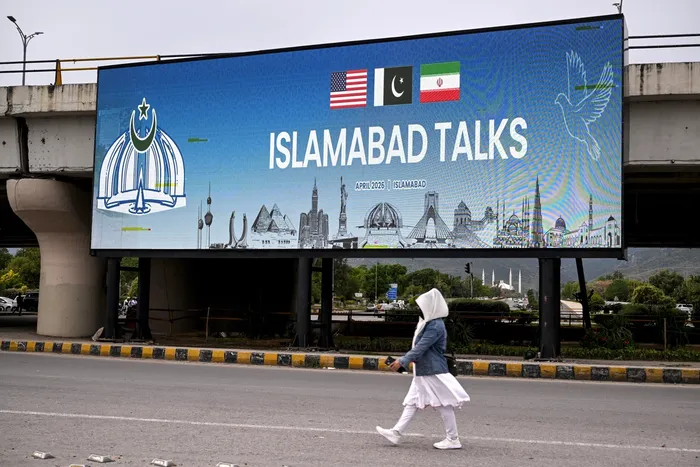
The tension tightened when the conversation shifted toward Tehran. Trump has long framed Iran as the ultimate predator in a forest of shadows. He believes that the Vatican’s preference for dialogue over Sanctions—for the olive branch over the sword—is a dangerous fantasy.
Imagine a hypothetical village. On one side, a guard stands with a rifle, watching the horizon for a group he knows is coming to burn the houses down. On the other side, a monk sits at the gate, insisting that if they just invite the attackers to tea, the violence will dissolve.
Trump is the guard. He is convinced the monk’s tea party will end in a massacre.
"The Pope," Trump argued, "would have been very happy if I was president during the time of the ISIS threat, because I ended it."
He was staking a claim on the physical safety of the Church itself. His logic is blunt: the Vatican only exists in its peaceful, meditative state because men like him are willing to be "un-Christian" in the trenches. He is telling the Pope that the marble throne is protected by the gilded tower.
But the Pope’s silence on certain geopolitical specifics isn't necessarily a lack of understanding. It is a different kind of strategy. The Vatican has survived empires, caliphates, and world wars not by having the biggest army, but by being the only door that stays open when everyone else slams theirs shut. Francis isn't blind to the threat of Iran; he just believes that adding more heat to the fire only makes the world burn faster.
The Invisible Stakes
Why does this matter to a person sitting in a coffee shop in Ohio or a flat in London? Because we are all caught in the middle of these two philosophies every day.
We live in a time of walls. We build them in our politics, on our borders, and in our social media feeds. We are told that the "real world" is a place of scarcity and danger, where we must protect what is ours at all costs. This is the Trumpian gospel. It is practical. It is visceral. It feels like common sense when you are afraid.
But we also feel a nagging, quiet pull toward the Franciscan ideal. We want to believe that there is more to life than the "deal." We want to believe that human dignity isn't something that stops at a border crossing or a religious difference.
When Trump tells the Pope to get real, he is asking all of us to grow up and accept a world of iron and ego. When the Pope tells Trump to build bridges, he is asking us to remain children at heart—vulnerable, hopeful, and perhaps a bit foolish.
The "war of words" isn't about whether the Pope is a good Christian or whether Trump is a good leader. It’s a struggle for the steering wheel of Western civilization.
If Trump is right, then the world is a cage where the strongest survive, and the Pope’s idealism is a threat to our safety. If the Pope is right, then our walls and our weapons are just expensive ways of hiding from our own shadows, and Trump’s "real world" is actually a nightmare of our own making.
The Sound of the Slamming Door
There is a specific kind of sound a door makes when it is closed in a room with high ceilings. It echoes. It lingers.
The rhetoric between these two men is that echoing sound. It isn't a conversation; it’s a series of proclamations issued from two different mountain peaks. Trump speaks from the peak of the present, where the winds of public opinion and economic data howl. Francis speaks from the peak of the eternal, where the wind is the breath of the spirit.
They are using the same words—peace, security, humanity—but they are speaking different languages.
One man measures success by the height of a wall and the strength of a military budget. The other measures it by the length of a table and the depth of a welcome. The tragedy of their conflict isn't that one of them is lying. The tragedy is that both of them believe they are the only ones telling the truth.
As the sun sets over the Potomac and the Tiber, the distance between the two remains unchanged. The guard continues to polish his rifle, convinced the enemy is at the gate. The monk continues to set the table, convinced the guest is coming.
The rest of us are left to decide which world we actually want to live in—the one that protects us, or the one that transforms us. We are looking for a path that acknowledges the wolf at the door without losing the soul inside the house.
The gilded tower offers us safety. The marble throne offers us a mirror. In the end, the "real world" is rarely found in the extremes of either; it is the messy, blood-stained, beautiful territory that lies between the two, where we are forced to be both guardians of our homes and shepherds of our brothers.
The fight continues because the question remains unanswered: can a man of God survive in a world of men, and can a man of power ever truly find God in the eyes of his enemy?
The silence of the Vatican remains. The noise of the campaign continues. Somewhere in the middle, the truth is waiting to be heard, if only the shouting would stop.