The night air in Melville, New York, usually carries a quiet predictability in late autumn. The rustle of dry leaves along suburban streets, the distant hum of traffic on the Long Island Expressway, the crisp chill that signals winter is waiting in the wings. But on a Tuesday night in October 2024, just days before the sacred warmth of Navratri was set to fill the halls of the BAPS Swaminarayan Mandir, predictability fractured.
It sounded like thunder, except thunder does not leave jagged holes in stained glass.
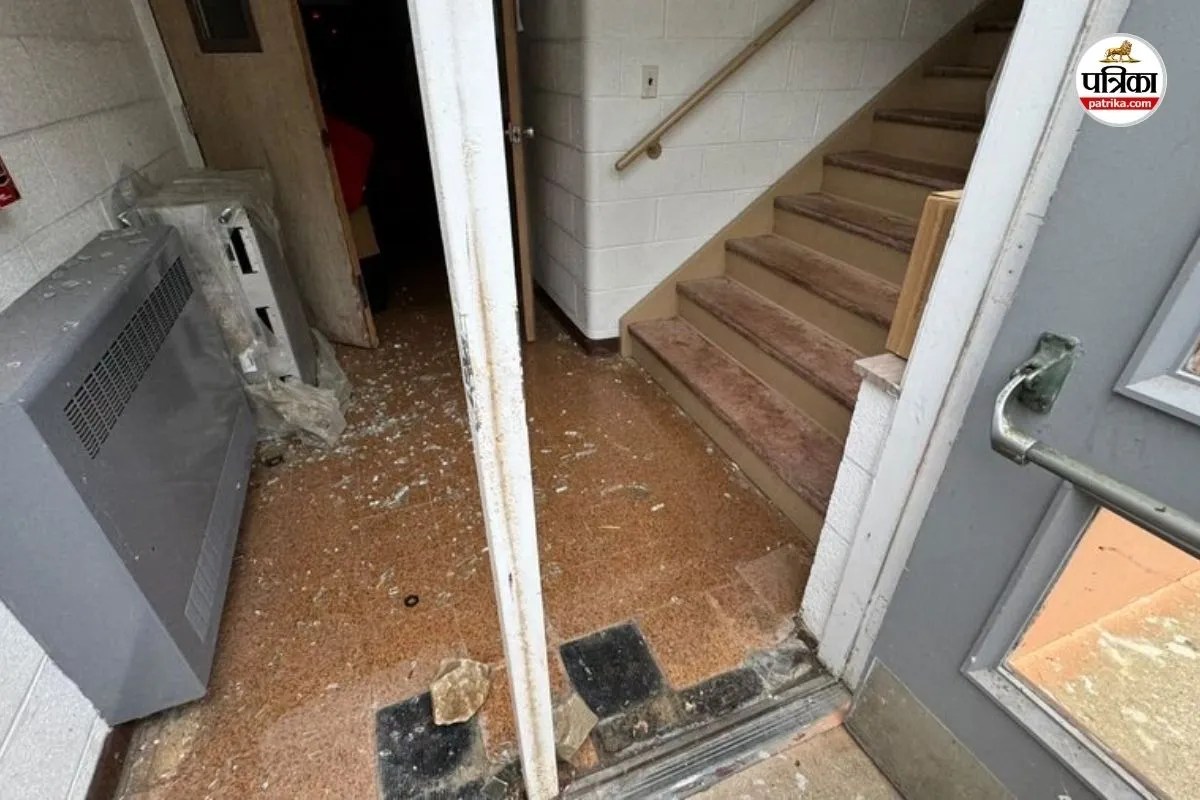
Stones. Bricks. Shards of glass cascading onto carpeted floors where children sit cross-legged to learn languages, where elders fold their hands in evening prayers, where strangers become family over shared plates of prasad.
Imagine walking into a sanctuary that your community built with bare hands and pooled savings, only to find the windows bashed in and spray-painted graffiti defacing the sign outside. I use the word imagine, but for the families who pulled up to the temple parking lot the next morning, no imagination was required. The reality was raw, sharp, and smelling faintly of fresh vandalism and old, enduring hostility.
The Hindu American Foundation (HAF) would later label it what it bore all the hallmarks of being: a potential hate crime. Law enforcement arrived, measuring footprints, dusting for fingerprints, taking statements. Tape went up. Headlines flickered across cable news tickers for an hour, maybe two, before the news cycle churned on to the next political squabble or celebrity scandal.
The news cycle always moves on. The people who pray there do not.
To understand why a brick thrown at a brick wall in suburban New York sends shockwaves from Queens to Gujarat, you have to understand what a mandir actually is in the diaspora. It is not just a building with ornate domes and marble shrines. It is an anchor.
When you move ten thousand miles away from home—leaving behind the cacophony of street vendors, the scent of jasmine and woodsmoke, the familiar cadence of your mother tongue—you live in a state of cultural vertigo. Everything is loud, fast, and relentlessly foreign. You learn to swallow your accent in boardrooms. You learn to explain your dietary restrictions like an apology.
Then, you walk into a mandir.
Suddenly, the air smells of ghee and marigolds. You take off your shoes at the threshold, shedding the armor you wear to survive the outside world. Your shoulders drop. You are home.
When someone throws a rock through that glass, they are not just breaking a window. They are telling you that your sanctuary has an expiration date. They are whispering—or shouting—that your peace is provisional.
This is the invisible tax of immigration. You pay it in microaggressions at the office, in the casual mispronunciation of your surname, and, on the worst nights, in the crunch of safety glass under a heavy boot.
Local leaders rallied quickly. Police stepped up patrols. Interfaith allies sent messages of solidarity. These gestures matter. They are the scaffolding that keeps a community from collapsing inward under the weight of fear.
Yet, the anxiety does not evaporate with a press release.
A mother sitting in the prayer hall weeks later catches herself glancing nervously at the newly repaired windows whenever a car backfires outside. A teenager checking his phone wonders if the next viral video will feature his place of worship mocked or targeted. This is how fear metastasizes. It turns a place of refuge into a perimeter to be defended.
Navratri arrived that year, as it always does, on the pivot of the lunar calendar. Nine nights of dance, devotion, and feminine divine energy. The drums beat out their ancient rhythms. The garba circles spun in vibrant, dizzying blurs of color.
The vandals had hoped to empty those halls. They wanted silence. They wanted hesitation.
They got the opposite.
The parking lot overflowed. The drumming was louder. The saris were brighter. The community understood a fundamental truth that no headline captured: faith in exile is an act of quiet rebellion. Every time you show up to pray after someone tells you you don’t belong, you are writing a new definition of resilience.
We talk endlessly about national security, border policies, and political polarization as if they are abstract data points on a macroeconomic spreadsheet. We treat hate crimes as statistical anomalies, footnotes in annual FBI reports.
We forget the sound of glass hitting a prayer room floor.
We forget that a broken window takes hours to fix, but a cracked sense of security takes generations.
As the autumn chill deepens and another year turns the wheel of seasons, the lights inside the Melville mandir stay on. The stones were cleared away. The glass was replaced, clearer and stronger than before. But the lesson remains etched in the foundation: belonging is never a given. It is something you claim, protect, and pass down, one unbroken song at a time.