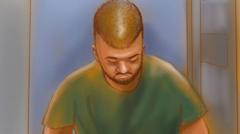
The courtrooms in Sydney are often cold, but not because of the air conditioning. It is the sterile, unyielding chill of the law, where lives are reduced to case numbers and human suffering is measured in legal precedents. In one such room, a battle was fought over the most fragile of human assets: a name.
Most of us treat our surnames like old coats. We wear them without thinking, occasionally proud of the lineage they represent, sometimes indifferent to their origin. But for the family of the man accused of the Bondi Junction tragedy, their name had become a brand of fire. They wanted to hide. They wanted to pull the curtains shut and exist in the anonymity of the crowd. They asked the court to suppress their identities, to keep their names out of the headlines that were already screaming with the details of their relative’s alleged crimes.
The court said no.
This decision was not made out of cruelty. It was made because of a fundamental, jagged truth about the society we have built: the public’s right to see must outweigh a family’s need to hide. It is a brutal trade-off. To understand why this matters, we have to look past the legal jargon and into the eyes of a community trying to make sense of the senseless.
The Weight of a Shared Bloodline
Think of a family tree as a circuit board. When one wire shorts out in a spectacular, horrific flash, the rest of the board feels the surge. We like to believe in individual responsibility. We tell ourselves that every person is an island, responsible for their own choices and their own wreckage.
But the world doesn’t work that way.
When a name is linked to a tragedy like the one at Bondi, that name becomes a heavy stone that every person sharing it must carry. The sister, the father, the distant cousin—they all wake up to find their identity has been hijacked by an event they did not choose and could not prevent. Their request for suppression was a plea for a shield. They were asking the law to grant them a ghost-like existence so they could mourn, or perhaps simply survive, without the glare of the flashbulbs.
The judge, however, sat at the intersection of private pain and public duty. In the legal system, there is a concept known as "open justice." It is the idea that the doors of the courtroom must remain open, the records must remain readable, and the actors in the drama must be named. If we start hiding names to protect feelings—even valid, agonizing feelings—the transparency of the law begins to cloud over.
Once the glass becomes opaque, trust shatters.
The Invisible Stakes of the Open Court
Why does the public need to know the names of a family who did nothing wrong?
On the surface, it feels like voyeurism. It feels like we are feeding a hunger for gossip. But the legal logic runs deeper. Open justice serves as a check on power. It ensures that the person being tried is the person the state says they are. It prevents secret trials where people disappear into the machinery of the state without a trace. By refusing to suppress the names of the family, the court reinforced the idea that this tragedy belongs to the record of history, not to a redacted file.
Consider the alternative. If the court had granted the suppression, it would have created a precedent where anyone related to a high-profile crime could claim a right to anonymity. Suddenly, the public record would be full of holes. We would be living in a landscape of "Person A" and "Witness B," a sterilized version of reality that hides the human connections that define us.
There is a visceral necessity in knowing. We are a storytelling species. We need to see the whole picture to process the trauma. When a community is wounded, it looks for the edges of the wound to understand how to heal. Hiding the names of those connected to the accused doesn't just protect the family; it denies the community a full accounting of the reality they are forced to inhabit.
The Myth of the Clean Break
We often talk about "moving on" or "getting closure" as if these things are items we can pick up at a store. They aren't. They are slow, messy processes.
For the family in that Sydney courtroom, the denial of their suppression bid was a confrontation with the reality that there is no clean break from tragedy. You cannot scrub the blood off a family name with a court order. The law can protect you from physical harm, and it can punish those who break the peace, but it cannot legislate away the social consequences of a relative's actions.
This is the hidden cost of our interconnectedness. We are bound to one another by more than just law; we are bound by reputation, by history, and by the shared labels we inherit at birth. The court’s refusal to hide these names was a recognition that we cannot use the legal system to rewrite social reality.
The Mirror in the Courtroom
The Bondi Junction incident left a scar on the collective psyche. People were shopping. They were drinking coffee. They were living the mundane, beautiful moments of an ordinary Saturday when the world broke. In the aftermath, there is a desperate search for "why."
When we look at the family of the accused, we are often looking for a mirror. We want to see if they are like us. We want to know if there were signs, if there was a history, or if this was a bolt from the blue. By keeping the names public, the court allows that inquiry to remain honest. It prevents the creation of a "shadow family" that exists only in rumors and whispers.
Whispers are always more dangerous than facts. When the truth is suppressed, the vacuum is filled with speculation, and speculation is a wildfire that burns much hotter than the cold reality of a name on a page.
The family argued that their mental health and safety were at risk. These are not small things. They are significant, heavy concerns that any person with a shred of empathy can understand. The fear of a knock on the door, the fear of a shouted insult in the street—these are real terrors. Yet, the law is a blunt instrument. It is designed to uphold the structure of society, even when that structure presses down painfully on the individuals within it.
The Architecture of Accountability
The legal system is built on the belief that sunlight is the best disinfectant. It assumes that if we see everything—the evidence, the accused, the witnesses, and the context—we can reach a state of justice.
This particular court bid was a test of that architecture. Had the judge wavered, the message would have been that the discomfort of the innocent is a valid reason to obscure the proceedings of the law. But the law doesn't care about discomfort. It cares about the integrity of the record.
We live in an era where information is both a weapon and a currency. To deny the public the names of the family would be to withdraw a piece of the story from circulation. It would suggest that some parts of a tragedy are too sensitive for the public record. But who gets to decide where that line is drawn? Today it is the family of a man accused of a horrific crime. Tomorrow, it might be a politician's relative, or a wealthy donor’s child.
The slope is not just slippery; it is a cliff.
By standing firm on the principle of open justice, the court ensured that the rules remain the same for everyone, regardless of the emotional weight of the case. It is a cold comfort for a family in mourning, but it is the bedrock of a society that values truth over convenience.
The reporters left the courtroom that day with their notebooks full. The names remained on the documents. The family went home to a world that now knew exactly who they were. It is a heavy burden, an unfair inheritance, and a price they did not choose to pay.
Justice is rarely gentle. It is a bright, unflinching light that illuminates the wreckage as clearly as it illuminates the heroics. We want it to be a scalpel, precise and careful, but often it is a sledgehammer, breaking down the walls we try to build around our private lives.
The names are out there now. They belong to the history of a dark day in Sydney. And as much as we might wish for the power to erase the parts of the story that hurt the most, we are reminded that a story with holes in it is no story at all. It is just a lie by omission.
The truth stays. The names stay. The light stays on.


