The mainstream media has its script, and it plays it beautifully.
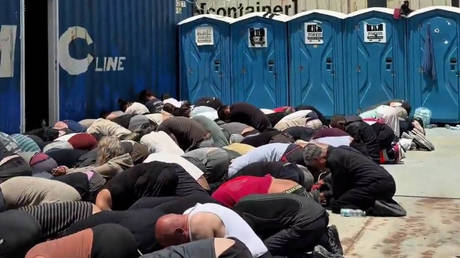
The current headline loop is entirely predictable: the Global Sumud Flotilla tries to break the naval blockade of Gaza, Israeli forces intercept the 41 boats, detentions follow, and National Security Minister Itamar Ben-Gvir posts an aggressively provocative video of bound activists kneeling face-down. Cue the synchronized geopolitical outrage. From Ottawa, Foreign Affairs Minister Anita Anand and Prime Minister Mark Carney issue fiery condemnations of "appalling abuse" and "grave mistreatment," demanding independent investigations. From the alternative press, activists recount harrowing, brutal accounts of systematic dehumanization. If you found value in this piece, you should read: this related article.
Everyone is reacting precisely how they were engineered to react.
If you are looking at this incident through the narrow lens of a human rights violation or a standard maritime border enforcement action, you are asking the wrong questions. You are falling for the lazy consensus. This entire episode is not a breakdown of international norms; it is a highly calculated, symmetric piece of asymmetric warfare where both sides got exactly what they wanted. The outrage isn't a byproduct of the event—it was the core product. For another look on this development, see the latest update from NPR.
The Flotilla Was Never a Humanitarian Mission
Let’s dismantle the foundational myth of the activist fleet. The narrative spun by organizers is that 420 individuals braved the Mediterranean to deliver vital aid to a besieged population.
I have spent years analyzing maritime security logistics and asymmetric flashpoints. Let's look at the hard operational math. A disorganized convoy of 41 small-to-medium vessels carrying a "symbolic amount of aid" is the least efficient, most expensive way to transport civilian supplies. If the objective were purely logistics, the capital spent on acquiring, fueling, insuring, and manning those boats would have yielded ten times the caloric and medical delivery if routed through established, verified international land corridors or UN-sanctioned drops.
The organizers knew this. The term "symbolic aid" is a rhetorical shield. The flotilla was a kinetic public relations operation designed to force a sovereign state into a lose-lose choice: either yield its declared naval blockade (forfeiting sovereign deterrence) or enforce it violently on camera.
The activists did not set sail to deliver food; they set sail to harvest footage.
The Mirage of Canadian Diplomatic Clout
When Mark Carney calls Israel’s actions "abominable" and demands an independent probe, the domestic audience nods along, feeling a surge of middle-power moral superiority. But inside the rooms where foreign policy is actually executed, these statements are recognized as empty currency.
Canada’s modern foreign policy operates on a deficit of leverage. For decades, Ottawa has relied on the illusion that its moral standing equates to geopolitical weight. It does not. Summonsing Israeli Ambassador Iddo Moed to Global Affairs Canada makes for a great press release, but it alters nothing on the ground.
Consider the strategic reality: Israel views the naval blockade as an existential necessity to prevent the maritime smuggling of advanced weaponry to Hamas. No state will compromise what it perceives as its core survival architecture because a G7 nation thousands of miles away is upset about the treatment of twelve of its radicalized citizens who voluntarily inserted themselves into a militarized zone.
By demanding an independent investigation that it has zero power to enforce, Canada merely highlights its own diplomatic irrelevance. It is geopolitical posturing disguised as principle.
Ben-Gvir and the Activation of Symmetric Radicalization
The real tactical failure of this event does not lie in Israel’s decision to intercept the vessels. Any state enforcing a blockade will use kinetic force to stop non-compliant hulls. The failure lies in the total surrender to optical trap-setting, epitomized by Itamar Ben-Gvir.
When Ben-Gvir published the video taunting bound, kneeling activists, he did not do it by accident, nor did he do it out of a lack of discipline. He did it for the exact same reason the activists launched the boats: domestic political consumption.
To his base, the imagery of absolute dominance over foreign agitators signals strength. But strategically, it gave the flotilla organizers the exact prize they were angling for. It converted a routine maritime interdiction into an international scandal, alienating core Western allies like France, Italy, and the Netherlands.
This is the mechanics of symmetric radicalization:
- The Activists: Need a villain to justify their funding, visibility, and narrative of absolute oppression.
- The Far-Right Ministers: Need an enemy to show their constituency that they are unyielding and brutal against external threats.
- The Result: A perfectly choreographed loop where both extremes feed off each other, leaving zero room for rational, state-level diplomacy.
The Cost of the Game
The downside to exposing this theater is that it forces us to look at the collateral damage of cynicism. While the Israeli Prison Service denies the allegations of systematic abuse as "false and entirely without factual basis," and activists counter with claims of extreme duress, the truth becomes an early casualty.
When international law—specifically the Vienna Convention, cited by Anand regarding consular access—is deployed purely as a rhetorical weapon rather than an enforceable standard, the entire framework of international law degrades. It becomes a tool used exclusively to scold enemies while being ignored when inconvenient.
Stop looking at the Gaza flotilla as a humanitarian crisis interrupted by military aggression. Start looking at it for what it actually is: a highly sophisticated, multi-layered media asset deployed by non-state actors, countered by a politically motivated security apparatus, and exploited by domestic politicians in Ottawa looking for a risk-free moral victory.
The boats have been cleared, the activists are back in Turkey, and the ambassadors have been lectured. The theater is over for now, but the script for the next act is already being written.