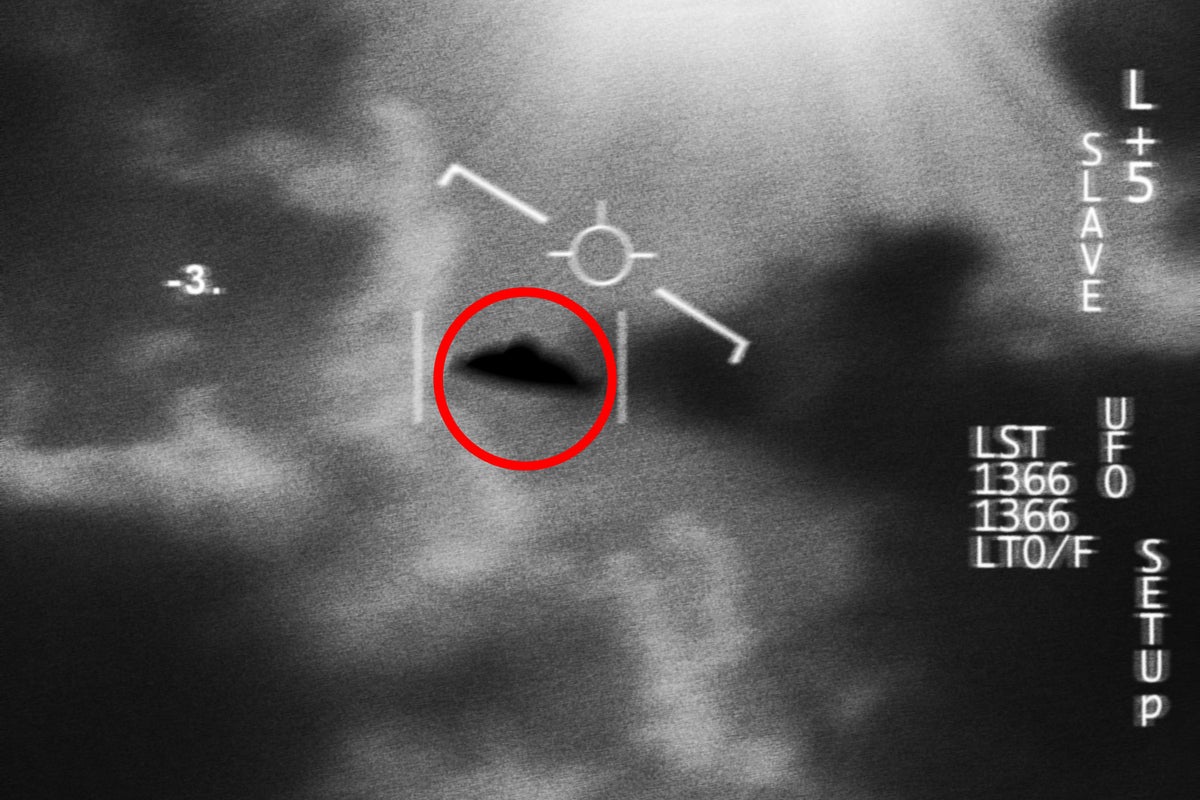
The federal government just snagged a domain name that sounds like it belongs in a 1950s sci-fi flick. It’s official. Aliens.gov is now part of the United States government's digital portfolio. If you’re expecting a leaked video of a Grey being interrogated in a basement, you’re going to be disappointed. But if you’re interested in how the bureaucracy is finally reacting to the massive surge in public interest regarding Unidentified Anomalous Phenomena (UAP), this is a huge signal.
The Department of Defense and the Office of the Director of National Intelligence haven't been this busy since the Cold War. For decades, the word "alien" was a career-killer in D.C. Now, it’s a line item in the budget. This domain registration isn't just a random IT task. It's a branding move. It’s about control. When the public starts asking questions about what’s flying in our restricted airspace, the government wants to be the one providing the answers—or at least the one managing the narrative.
The All-domain Anomaly Resolution Office gets a home
The real force behind this isn't a secret cabal. It’s the All-domain Anomaly Resolution Office, or AARO. This office was established to synchronize efforts across the DoD and other agencies to identify objects of interest. Basically, they're the people you call when a pilot sees a tic-tac shaped craft doing 3,000 miles per hour without any visible means of propulsion.
Up until recently, finding official information on these sightings was like navigating a digital maze. You had to dig through convoluted Pentagon press releases or obscure legislative filings. By securing Aliens.gov, the government is creating a "front door" for this data. It’s a recognition that the old "swamp gas" explanations don't work anymore. People are smarter now. They have high-resolution cameras. They have flight tracking software. They have questions that require more than a shrug.
I’ve seen how these agencies operate. They don't do anything by accident. Registering a domain as provocative as Aliens.gov serves a dual purpose. It makes the information accessible, but it also allows the Pentagon to "own" the keyword. If you search for "aliens" in 2026, the feds want their landing page to be the first thing you see, not a conspiracy forum or a grainy YouTube video from a guy in his garage.
Why the terminology is shifting from UFO to UAP
You’ll notice the government almost never uses the term UFO anymore. They’ve pivoted hard to UAP. This isn't just semantics. It’s a tactical rebranding. "UFO" carries the baggage of little green men and tinfoil hats. "UAP" sounds clinical. It sounds like a national security concern. It sounds like something that requires a multi-billion dollar sensor array to track.
The Aliens.gov domain is a bit of an outlier here because it leans back into the pop-culture term. It shows a rare moment of self-awareness from the D.C. elite. They know what the public is typing into Google. They know that "Unidentified Anomalous Phenomena" isn't a "sexy" search term. By grabbing the "Aliens" domain, they’re meeting the public where they are.
Security vs Transparency
There's a constant tug-of-war happening inside the Pentagon right now. On one side, you have the old guard who believes everything related to UAPs should be classified to protect our own sensor capabilities. If we tell the world how we saw something, we’re telling our adversaries what our radars can do. On the other side, you have a new wave of whistleblowers and lawmakers demanding transparency.
The creation of a centralized hub on Aliens.gov suggests the transparency side is winning a few rounds. Or, at the very least, they’re being given a sandbox to play in. Don't expect the "smoking gun" to appear on this site next Tuesday. Expect highly curated reports, declassified sensor footage that has been scrubbed of any sensitive data, and a lot of "inconclusive" findings.
What this means for the average skeptic
If you’ve spent your life thinking this was all nonsense, the government's recent actions should give you pause. They don't set up offices and register domains for things that don't exist. They might not be "aliens" in the sense of biological entities from Zeta Reticuli, but there is something in the sky that the most advanced military in history cannot identify.
That’s the core of the issue. Whether it’s foreign drone technology, atmospheric phenomena we don't understand, or something truly "other," it represents a gap in our knowledge. For the military, a gap in knowledge is a vulnerability. That’s why Aliens.gov matters. It’s the public face of a very serious, very expensive effort to close that gap.
I've talked to researchers who have been screaming into the void for thirty years about this. They’re stunned. The stigma is evaporating in real-time. We’ve gone from "don't ask, don't tell" to "here is the official portal for reporting sightings." It’s a massive cultural shift masquerading as a boring IT update.
How to use the new resources
When the site fully populates, it won't just be for reading. It’s designed as a reporting tool for government personnel and, eventually, the public. This is about crowdsourcing data. If we have millions of "sensors" (people with smartphones) across the country, why not use them?
- Check the reporting trends: Look for clusters of sightings in specific geographic areas.
- Analyze the declassified media: Use the site to download raw files rather than compressed social media versions.
- Read the annual reports: These are mandated by Congress and provide the most sober, data-driven look at what the AARO is actually finding.
Don't wait for a press conference with a silver disk behind the podium. That’s not how this works. The truth is being leaked in drips and drabs through domain registrations, legislative amendments, and bureaucratic reshuffling. Aliens.gov is just the latest drip. It’s time to stop treats this like a joke and start looking at the data.
Go to the official AARO site and sign up for their updates. Read the 2024 and 2025 UAP reports to see the patterns for yourself. The information is out there, and for the first time, it’s coming from a .gov address. Use it.



