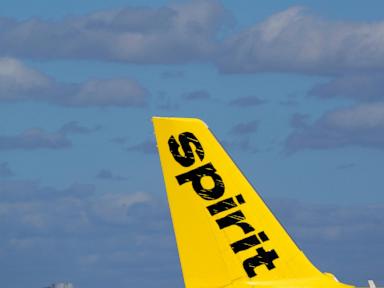
The begging bowl is officially out. Spirit Airlines wants a federal lifeline, and the standard pundits are already clutching their pearls about "essential competition" and "market stability." They argue that a Spirit collapse would spike ticket prices and leave budget travelers stranded. They are wrong.
Asking the U.S. government to subsidize Spirit isn’t an act of economic preservation; it’s an act of industrial taxidermy. We are being asked to sew together a carcass and pretend it can still fly. The "lazy consensus" suggests that more airlines equals more competition. In reality, propping up a failing business model with taxpayer cash actually stifles the very innovation that creates affordable travel. Meanwhile, you can find similar events here: The Morning the Blue Lights Flickered Out.
If Spirit can’t survive on its own merits, it deserves the graveyard. Here is why the bailout narrative is a lie.
The Myth of the Low Cost Protector
The primary argument for a Spirit bailout is that their presence keeps the "Big Four"—Delta, United, American, and Southwest—honest. The theory goes: if Spirit disappears, the legacy carriers will immediately double their fares because the "price floor" has been removed. To explore the complete picture, check out the detailed analysis by The Wall Street Journal.
This ignores how airline economics actually function. Spirit didn't invent low fares; they popularized a specific, predatory version of unbundling that has already been absorbed by the giants. Basic Economy exists because the legacy carriers realized they could segment their cabins to compete with the yellow planes.
If Spirit exits, the planes don’t vanish into a black hole. They are assets. They will be bought at fire-sale prices by JetBlue, Frontier, or even a well-capitalized startup. These new owners will operate those same routes with lower debt loads and better management. By bailing out the current leadership, the government would be preventing those assets from moving into more capable hands. We aren’t saving flights; we’re saving bad CEOs.
Bankruptcy is an Engine Not a Dead End
The word "bankruptcy" scares people who don't understand Chapter 11. In the airline industry, bankruptcy is practically a rite of passage. Almost every major carrier has used it to shed pension obligations, renegotiate predatory labor contracts, and dump expensive aircraft leases.
Spirit’s problem isn't just a "tough market." It’s a structural failure.
- Engine reliability issues: They are burning cash while planes sit on the tarmac.
- Bloated cost structures: The gap between "Low Cost Carriers" (LCCs) and legacy airlines has shrunk to a sliver.
- The Pratt & Whitney nightmare: Their fleet is plagued by technical setbacks that a check from Uncle Sam won't fix.
A bailout provides a cushion that delays the necessary, painful restructuring. It allows management to avoid the hard choices that a judge would force upon them. If we want a healthy budget sector, we need the creative destruction of the market to flush out the rot.
The High Cost of Cheap Tickets
Let’s talk about the "experience" we are supposedly saving. Spirit’s model relies on a friction-filled relationship with the customer. It is a system built on "gotcha" fees and a total lack of operational redundancy. When a Spirit flight is canceled, you aren't rebooked on a partner airline; you are stuck for three days because their network is a house of cards.
I have watched companies burn through billions trying to "pivot" while surviving on government handouts. It never works. It creates "zombie companies"—entities that exist only to service their debt and lobby for more protection.
The False Equivalence of 2020
Proponents of a bailout will point to the CARES Act as a precedent. "We saved them during the pandemic, why not now?"
The difference is fundamental. In 2020, the entire world stopped. It was an external, "black swan" event that hit every player regardless of their balance sheet. Today? People are traveling in record numbers. Delta and United are printing money. The "travel boom" is real, yet Spirit is still hemorrhaging cash.
When you lose money during a gold rush, the problem isn't the market. The problem is you. Using public funds to offset private incompetence during a period of record demand is a perversion of capitalism. It signals to every other airline that they don't need a viable business plan as long as they are "too big to fail."
Breaking the Cycle of Perpetual Dependency
If the government steps in, they set a floor for failure. Imagine a scenario where every mid-tier carrier knows that if they play a high-risk game with their fleet and lose, the Treasury Department will act as their backstop. This creates "moral hazard"—the incentive to take massive risks because the downside is socialized while the upside remains private.
We are told that Spirit provides "essential service" to secondary markets. Look at the data. Most of Spirit’s routes are heavily overlapped by other carriers. Where they aren't, a vacuum is created. In a capitalist system, a vacuum is an opportunity. Allegiant, Sun Country, and Avelo are waiting in the wings. They are leaner, smarter, and currently being crowded out by Spirit’s subsidized corpse.
Stop Asking if Spirit Should Survive
The real question isn't whether Spirit survives. The question is: why are we so afraid of a business failing?
Failure is the feedback mechanism of a healthy economy. It tells us that a specific combination of service, price, and management isn't working. By blocking that signal, the government ensures that the airline industry stays stagnant, expensive, and fragile.
Spirit Airlines' financial woes are a symptom of a model that has reached its expiration date. The seats are too small, the fees are too high, and the balance sheet is too thin. We don't need a "competitive landscape" filled with failing companies. We need a market that rewards efficiency and punishes the unable.
Let the market work. Let the planes be sold. Let the routes be contested. If you want to save the American traveler, stop trying to save the airlines that fail them.
Burn it down and let something better grow in the ash.