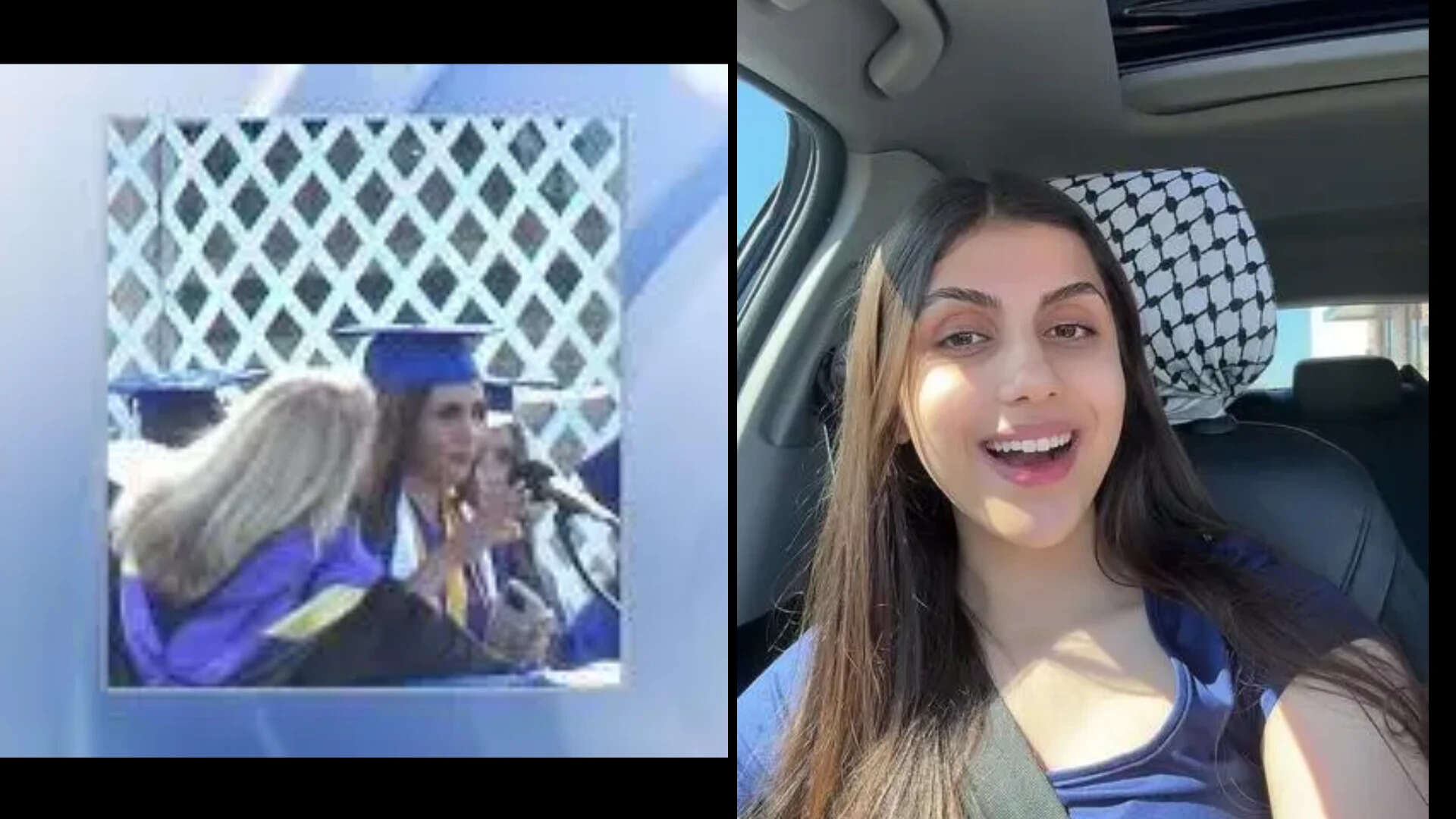
Every spring, like clockwork, the media industry coordinates a collective gasp over the latest graduation ceremony "martyr."
The script is wearyingly familiar. A student gets handed a microphone for a welcome address. They pivot from the pre-approved, boilerplate text about "the future" to deliver a fiery, unvetted manifesto on geopolitical conflicts, immigration enforcement, or global suffering. The administration cuts the mic or pauses the diploma payout. The internet explodes with outrage, and the student is instantly canonized as a free-speech hero fighting systemic oppression.
We saw it play out when a student at Clayton High School in Missouri went rogue to blast ICE and foreign policy, and we saw it when an NYU graduate pulled a bait-and-switch to rail against military actions overseas.
But the mainstream media narrative completely misses the underlying pathology. This isn't a battle for the First Amendment. It is a symptom of extreme, unchecked Main Character Syndrome. And it is ruining the only institutional ritual left that is supposed to belong to everyone, not just the loudest voice in the room.
The Contractual Lie Behind the Rogues
Let us dispense with the legal illiteracy dominating this debate. No one has a constitutional right to highjack a school-sponsored podium to deliver a personal political monologue.
When a student accepts the honor of being a commencement speaker, they sign an explicit administrative contract. They agree to submit their text for review. They promise to represent the collective student body. Sneaking a hidden script onto the stage isn't a brave act of civil disobedience; it is a cheap breach of contract.
Imagine a corporate setting where a mid-level director is selected to present a new product rollout to stakeholders. Instead of discussing the software, they seize the microphone to lecture the audience on union rights or carbon offsets. They would be escorted out of the building before they hit their third bullet point.
Why? Because the platform belongs to the institution, not the individual.
Schools are not public parks where you can pitch a soapbox and scream at passersby. They are structured environments. When administrators hold back a diploma pending a disciplinary hearing, they are not practicing authoritarian censorship. They are enforcing basic behavioral standards on a group that thinks rules are only for the unexceptional.
The Theft of Collective Accomplishment
The media loves to frame these events as David versus Goliath. What they ignore is the collateral damage left in David's wake.
A graduation ceremony is a hyper-finite piece of cultural real estate. It lasts two to three hours. It represents thousands of cumulative hours of hard work, financial sacrifice, and endurance by hundreds of families packed into those bleachers.
- The working-class parents who pulled double shifts to pay tuition.
- The first-generation students who overcame systemic hurdles just to cross the stage.
- The families who flew across continents to watch their child get their five seconds of recognition.
When a speaker unilaterally decides to turn a welcome address into a personal political rally, they steal that moment from everyone else. They force a captive audience of parents, grandparents, and peers to participate in their private moral crusade.
If you want to protest ICE or foreign policy, do it on the quad. Organize a march. Launch a digital campaign. Write an op-ed. Those avenues require real organizational skill and sustained labor. Highjacking a graduation ceremony requires nothing more than a microphone and a severe lack of empathy for your peers. It is the absolute lazy path to political activism.
The Myth of the Neutral Platform
The counter-argument usually goes something like this: "By suppressing these speeches, institutions are taking a political stance."
This is backward logic. By forcing the ceremony to stick to its intended, neutral purpose, an administration ensures that the graduation remains an inclusive space for a diverse student body. The moment a school permits a speaker to utilize a mandatory, institutional event to broadcast a highly polarizing worldview, the school implicitly alienates every student and parent who holds a different perspective.
A graduation ceremony cannot function as a free-speech free-for-all. If administrators allowed absolute freedom at the podium, they would logically have to permit speeches defending the border wall, speeches advocating for military interventions, or speeches promoting fringe religious dogmas.
The result? The total disintegration of a shared civic ritual into a chaotic, hyper-partisan shouting match.
The High Cost of the Martyr Complex
I have spent years watching organizations, corporate boards, and academic bodies fold under the pressure of performative outrage. The standard playbook for administrators caught in a graduation scandal is to issue a mealymouthed apology, endure 48 hours of bad press, and quietly mail the diploma anyway.
This cowardice teaches young people the worst possible lesson about the real world: that if you yell loudly enough and wrap yourself in a righteous cause, you are exempt from the consequences of your own deception.
Admitting the downside of an aggressive disciplinary stance is simple: it turns self-absorbed rule-breakers into permanent internet victims. It gives them a media platform far larger than they ever deserved. But the alternative—total capitulation—is far worse. It signaling that professional integrity, institutional boundaries, and the shared rights of a community mean absolutely nothing when stacked against an individual's desire for social media clout.
The era of applauding the graduation highjack needs to end. If you lie to get the microphone, expect to have it cut. If you break the contract, expect the diploma to stay on the desk. Stop treating narcissism as if it were heroism.