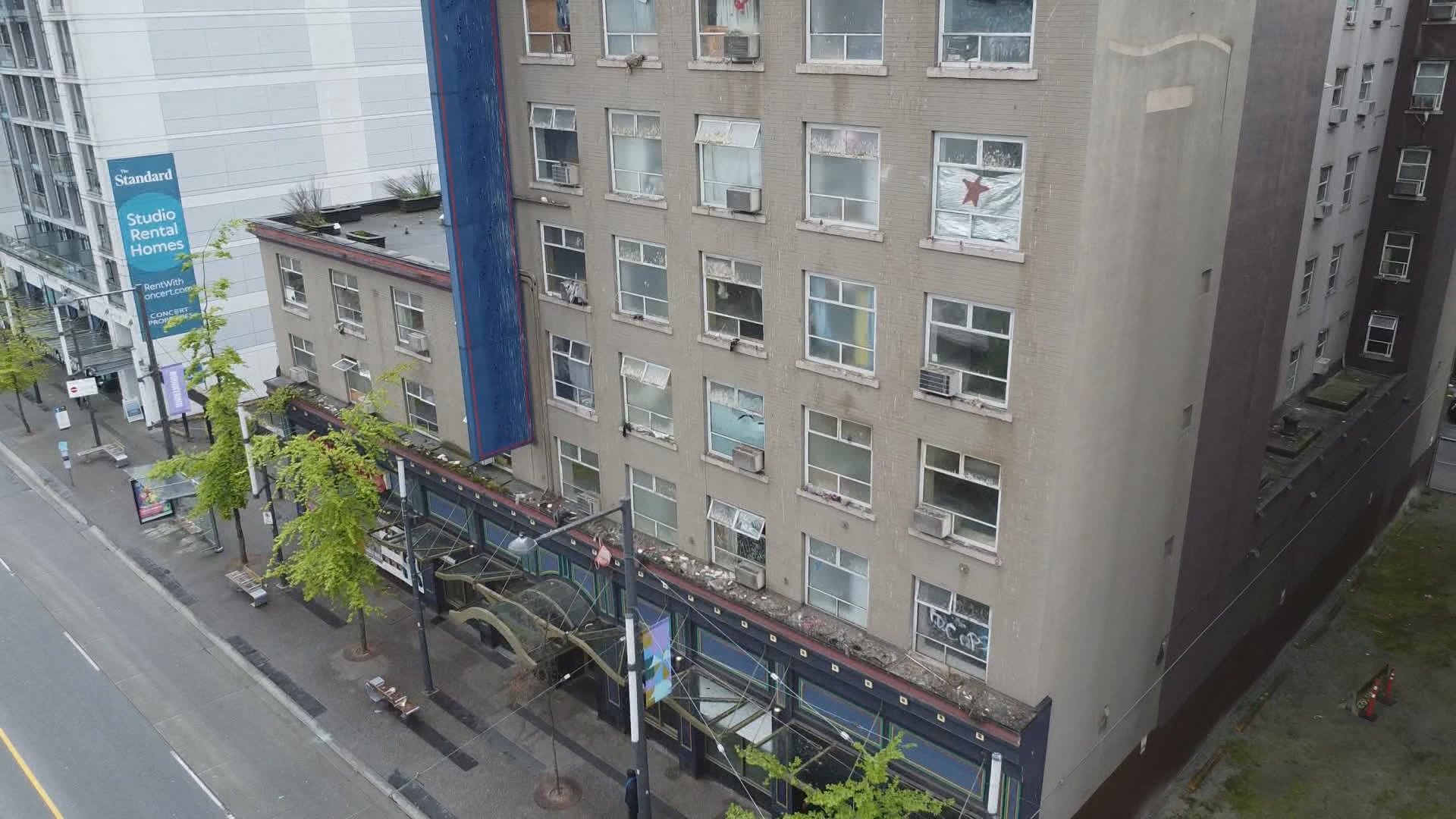
Granville Street is usually known for neon lights and overpriced drinks. But walk into a Single Room Occupancy (SRO) hotel there today and you’ll see a different world. It’s a world of rotting drywall, shattered windows, and hallways that smell like a mix of bleach and neglect. One resident recently opened his doors to show the public exactly what happens when a building is basically destroyed in less than a year. It isn't just about bad tenants or old plumbing. It's about a systemic failure that traps vulnerable people in "housing" that’s often less safe than the sidewalk.
Living in an SRO isn't a choice for most. It’s the final safety net. When that net is full of holes, people fall through. You’ve probably seen the headlines about the Downtown Eastside, but Granville Street is seeing the same decay. The speed of the destruction is what’s truly terrifying. We're talking about buildings that were supposedly "renovated" or "refreshed" and then descended into chaos in months.
Why Granville Street SROs Are Falling Apart So Fast
If you think this is just about "wear and tear," you’re wrong. It’s a toxic combination of zero maintenance and high-intensity living. When a resident at a Granville SRO shows you a bathroom where the floor is literally soft from water damage, they aren't complaining about a small leak. They’re talking about months of ignored work orders.
Management often points the finger at the residents. Sure, some tenants struggle with mental health or addiction issues that make upkeep hard. But the real culprit is often the lack of on-site support. You can’t just put someone with complex needs into a 10-by-10 room and expect everything to stay pristine. Without 24/7 staffing that actually does something, these buildings turn into pressure cookers.
The residents I’ve talked to are fed up. They’re tired of being told they should be "grateful" to have a roof. A roof that leaks doesn't count for much. A door that doesn't lock is a safety hazard, not a home. The city keeps promising better standards, but the enforcement is a joke. Fines are just a cost of doing business for some of these landlords.
The Myth of Renovated Social Housing
We see the press releases. The government announces millions for "housing solutions." They buy a building on Granville, paint the walls, and call it a win. Then, six months later, the elevators are broken and the heat is a memory.
This "lipstick on a pig" approach is failing everyone. Real renovation means replacing the guts of the building. It means plumbing that can handle the load. It means security that actually keeps non-residents out of the hallways. When a resident says their place was destroyed in less than a year, they mean the systems failed. The physical structure gave up because it was never properly reinforced for the reality of SRO life.
Let’s be real. If this happened in a condo in Yaletown, there’d be lawsuits and 24-hour news coverage. Because it’s Granville Street, it’s treated as an inevitability. It’s not. It’s a policy choice. We choose to let these conditions persist because the people living there are easy to ignore. They don't have lobbyists. They just have cameras on their phones and a desire for some basic dignity.
The Security Gap No One Mentions
Security in these buildings is a mess. It’s often just one person behind a plexiglass window who isn't allowed to leave their post. This lets "guests" roam the halls, stripping copper wire or kickin' in doors. Residents live in fear not just of the conditions, but of who’s in the hallway. You shouldn't have to navigate a gauntlet of strangers just to use a communal toilet.
Most SROs are over a century old. They weren't built for modern electrical needs or the density they’re currently packed with. When you add a lack of accountability for operators, you get a recipe for the squalor we see today. The city’s "Standards of Maintenance" bylaw exists, but it’s rarely used with enough force to change the behavior of bad-faith operators.
What Real Accountability Looks Like
Stop issuing warnings. If a building is falling apart, the city needs to step in and do the repairs themselves, then bill the owner. It’s a power they already have, but they’re too timid to use it.
We also need to stop pretending that every non-profit operator is doing a good job. Some are fantastic. Others are overwhelmed and underfunded. We need to distinguish between the two. If an operator can't keep a building safe and clean, they shouldn't be running it. Period.
Residents are taking photos and videos because it's their only weapon. They want the public to see the mold, the pests, and the broken fixtures. They want you to feel the same disgust they feel every time they walk through their front door. It’s a wake-up call that most of us keep hitting snooze on.
Fix the Buildings or Close Them
There’s a growing argument that the SRO model itself is dead. Maybe it is. A small room with a shared bathroom is a Victorian solution to a 21st-century crisis. But until we have enough self-contained social housing, these rooms are all people have. If we're going to use them, they have to be livable. "Better than nothing" isn't a housing policy. It's an insult.
Publicly shaming the owners and the city is a start. But we need to move toward a system where housing inspections are proactive, not reactive. Don't wait for a tenant to call 311. Go in there every month. Check the pipes. Check the locks. If it’s not fit for a human, don't let it stay open without a massive overhaul.
The reality on Granville Street is a mirror of our priorities. If we’re okay with people living in these conditions, we’ve lost the plot. The residents are showing us the truth. The question is whether anyone with the power to fix it is actually looking.
Start by demanding a public registry of SRO inspections. We should know exactly which buildings are failing and why. Pressure your local reps to enforce the bylaws already on the books. If a landlord can't provide a safe environment, they shouldn't be a landlord. It’s that simple. Get involved with local tenant advocacy groups like the Vancouver Area Network of Drug Users (VANDU) or the Tenant Resource and Advisory Centre (TRAC). They’re on the front lines while City Hall is stuck in meetings. Stop accepting the decay as part of the "urban grit." It's not grit. It's a crisis.