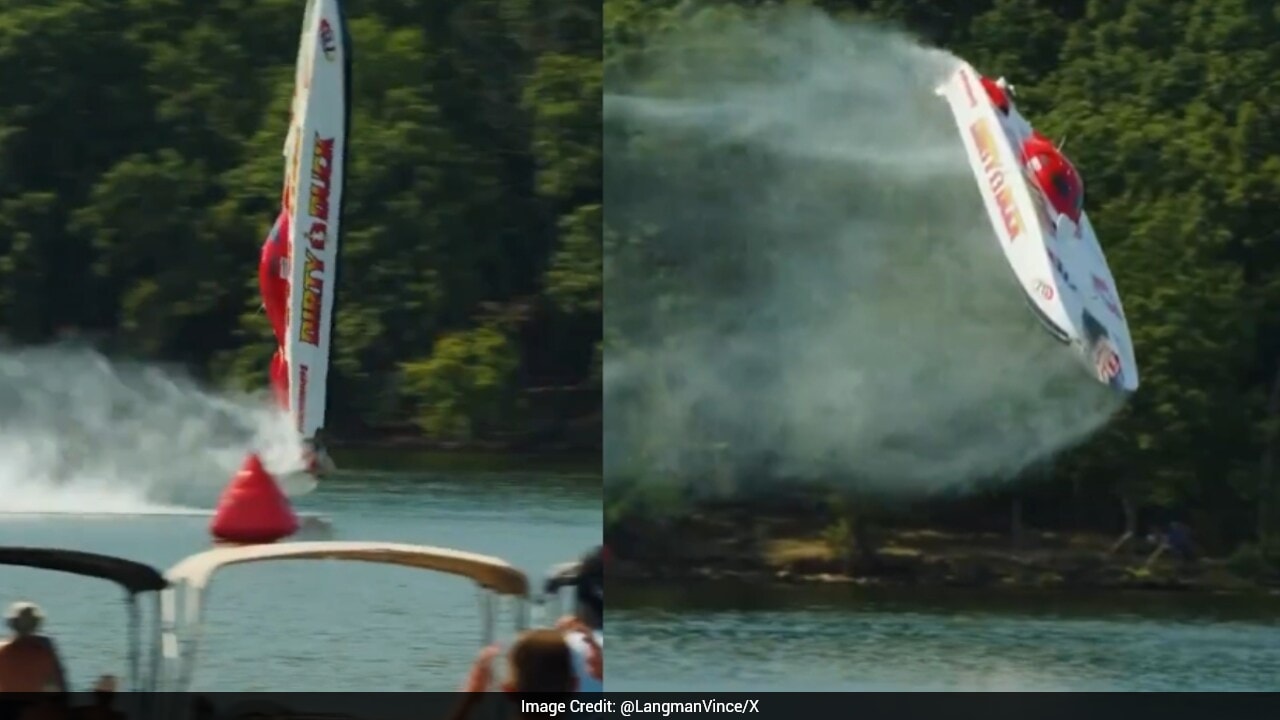
The water does not care about your horsepower.
To the untrained spectator on the shore, standing behind a chain-link fence with a lukewarm can of soda and a pair of cheap sunglasses, offshore powerboat racing looks like pure, unfiltered adrenaline. You hear them before you see them—a concussive, chest-rattling roar that vibrates through the soles of your shoes. Then they appear, tearing across the surface of the lake or ocean like low-flying missiles, throwing massive white rooster tails of mist into the air. It looks effortless. It looks like mastery.
It is actually an ongoing, high-stakes negotiation with physics, and physics always wins in the end.
I have stood in the pits before a race, smelling the sharp, unmistakable tang of high-octane aviation fuel mixed with heated oil. I have watched mechanics run gloved hands over hulls crafted from carbon fiber and Kevlar, materials designed to absorb impacts that would shatter a conventional vessel. These are not pleasure cruisers. They are extreme performance hydroplanes and offshore catamarans, engineered for a singular purpose: to extract every possible fraction of a knot from the water.
When you push a hull past one hundred miles per hour, the water ceases to act like a liquid. It behaves more like concrete.
Consider the mechanics of the catastrophe. In high-speed powerboat racing, aerodynamic lift is both a blessing and a curse. Designers want the bow to rise slightly to reduce drag, allowing the boat to ride on a cushion of air trapped beneath the tunnel of a catamaran or the planing surface of a mono-hull. But when a gust of wind catches the deck at the wrong angle, or when the boat hits a rogue wake at an awkward yaw, that lift multiplies exponentially.
The nose lifts. Then it keeps lifting.
In a fraction of a second, the aerodynamic profile transforms the boat from a watercraft into an airplane. Except it has no wings, no ailerons, and no pilot trained to recover from a stall at zero altitude. Once the angle of attack exceeds a critical threshold, the air rushes underneath the deck, catches the cockpit canopy, and flips the entire machine backward in a violent, terrifying rotation.
The crowd gasps. The cameras flash. The safety boats immediately throttle up, churning white water as they race toward the floating wreckage.
We live in a culture that fetishizes the highlight reel. We consume these heart-stopping moments on our phones, scrolling past a looping three-second clip of a boat going airborne and flipping backward during a race in the United States, marveling at the sheer shock value of it. We treat it as spectacle. We ask whether the driver walked away, and once we get our reassurance, we swipe to the next video.
We rarely pause to think about what is happening inside that cockpit.
Imagine strapping yourself into a carbon-fiber survival cell. You are wearing a multi-point restraint harness, a heavy helmet equipped with a head-and-neck support system, and an inflatable life vest. You are wedged tightly into a cramped space surrounded by digital gauges, throttle levers, and the hum of a massive engine screaming just inches behind your spine. You cannot hear the crowd. You can barely hear your own thoughts over the mechanical fury.
And then, in less time than it takes to blink, the world goes upside down.
Up becomes down. The horizon vanishes, replaced by a churning wall of dark water crashing through the shattered canopy. The safety cell does its job—it is engineered to protect the occupant from the initial crushing impact—but the disorientation is absolute. Water floods the compartment. The harness holds you tight against gravity while you hang suspended upside down, lungs burning for oxygen, waiting for the safety divers to slice through the straps or for the onboard air supply to kick in.
This is the hidden cost of speed. Every record broken, every checkered flag waved, is paid for by the willingness to dance on the razor's edge of disaster.
The National Safe Boating Council and various racing sanctioning bodies spend millions of dollars studying these incidents. Every backward flip, every blowout, and every catastrophic blow-over is meticulously deconstructed. Engineers analyze telemetry data, high-speed camera footage, and hull damage to rewrite safety protocols. Cockpit designs evolve. Canopy ejection systems improve. Air throttle cut-offs are refined so that the moment a boat leaves the water, the engine instantly dies, preventing the propeller from over-revving and tearing the drive train apart mid-air.
Yet, the risk remains. It has to. Without risk, the sport loses its gravity.
We are drawn to these events not because we want to see disaster, but because we are captivated by those who stare it down. We look at drivers who strap themselves into floating missiles and we see a reflection of our own desire to push boundaries, to go faster, to see what lies just beyond the horizon. We want to believe that human ingenuity can conquer the elements.
The shattered hull being towed back to the dock is a humbling reminder that we are only ever temporary visitors on the water.
As the sun dips below the horizon, the trailers are loaded, the tools are packed away into aluminum cases, and the roaring pit falls silent. The water returns to its natural state, smooth and indifferent, leaving no trace of the violence that played out across its surface just hours before. Only the silence remains, heavy and profound, waiting for the next time someone decides to test the sky.