The metal did not just fall. It shrieked. Imagine the cockpit of an Il-76, a beast of a machine designed to swallow tanks and carry them across the vast, frozen indifference of the Russian steppe. Inside, the air is thick with the smell of hydraulic fluid and the rhythmic hum of four massive engines. Then, the hum breaks. Fire blossoms where there should be propulsion. In that sudden, violent transition from flight to physics, the hierarchy of a superpower begins to fray.
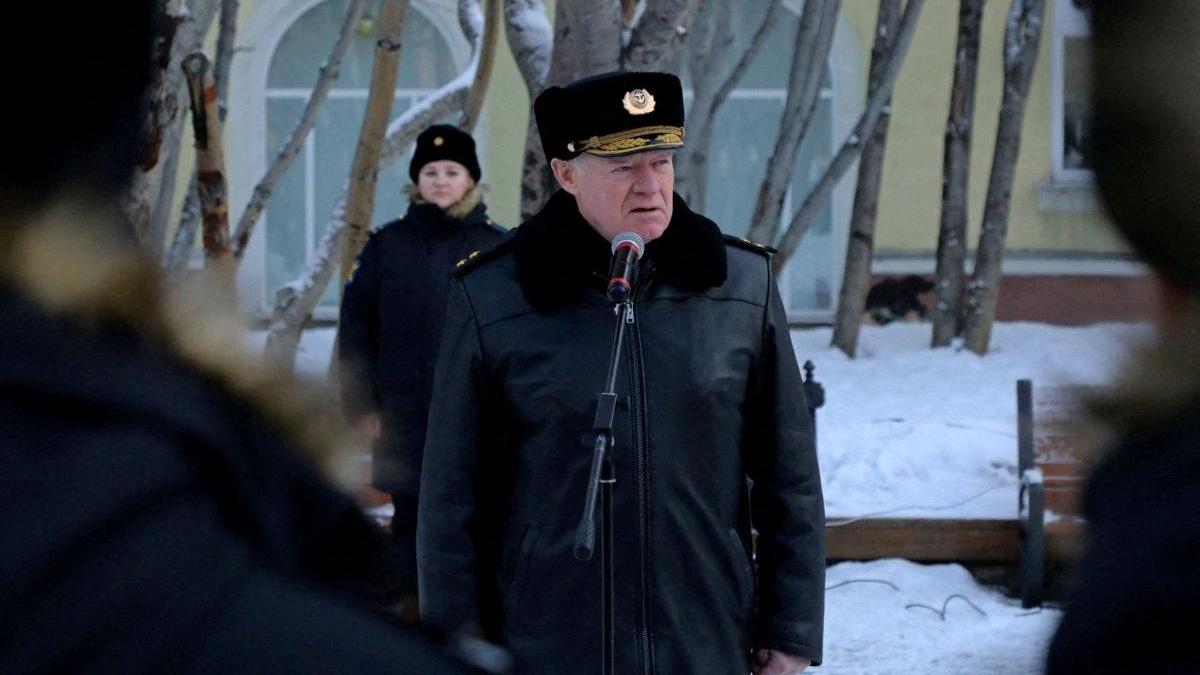
Alexander Otroshchenko was not just a name on a manifest. He was a pillar. As a senior commander in the Russian military, specifically within the elite structures of the Ivanovo-based transport aviation, he represented the literal connective tissue of a nation at war. When his plane clawed at the air and ultimately lost the argument with the earth near Ivanovo in March, the impact was felt far beyond the scorched crater in the soil. It was a tremor felt in the Kremlin.
The Weight of the Invisible
War is often measured in territory gained or lost, in the shifting lines of a digital map. But the true cost is often found in the specialized, irreplaceable human capital that keeps those lines moving. Otroshchenko was a master of logistics and command, a man whose career was spent ensuring that the massive, clunky machinery of the Russian state actually arrived where it was told to go.
Transport aviation is the unsung backbone of any empire. It is the blood flow. If the infantry is the muscle and the artillery is the fist, men like Otroshchenko are the circulatory system. When a senior commander of his stature is erased from the board, the system doesn't just lose a body. It loses a library of intuition. It loses decades of "know-how" that cannot be taught in a manual or replaced by a fresh-faced lieutenant.
Silence followed the crash. For weeks, the official channels remained as cold as the Russian winter. This is the nature of the machine: to admit a loss is to admit a vulnerability. It took time for the reality to filter through the layers of bureaucracy, finally confirmed by local officials who could no longer hide the mourning of a community.
The Mechanics of a Disaster
The Il-76 is a workhorse, but even the strongest horses break under the strain of constant, high-stakes exertion. Reports suggest an engine caught fire shortly after takeoff.
Consider the sequence of events. The plane is heavy, loaded with fuel and perhaps cargo destined for the front. One engine fails. In a perfect world, the other three take the strain. But the world is rarely perfect during a "special military operation" that has stretched into a grueling marathon of attrition. Maintenance schedules are compressed. Parts are cannibalized. Stress becomes the baseline.
When that engine disintegrated, it likely sent shrapnel through the wing, severing the delicate veins of the fuel and hydraulic systems. In those final seconds, Otroshchenko and his crew weren't just fighting a fire. They were fighting the accumulated exhaustion of an entire military infrastructure pushed to its breaking point.
A Growing List of Empty Chairs
This wasn't an isolated tragedy. The Russian officer corps has been thinning at an alarming rate. It is a mathematical problem that eventually becomes a political one.
When you lose a general in a trench, it is a tragedy of tactics. When you lose a senior commander like Otroshchenko in an air crash—far from the front lines—it is a tragedy of systems. It suggests that the danger isn't just coming from the enemy’s drones or missiles. The danger is internal. It is the structural fatigue of a nation that has been running its engines at redline for too long.
Think of the institutional memory that vanished in that fireball. Otroshchenko knew the pilots. He knew which planes were reliable and which were held together by spite and wire. He knew the shortcuts through the bureaucracy. That kind of knowledge is the grease that keeps the gears of war from seizing up. Now, there is only friction.
The Human Shadow
Beyond the strategic implications lies the quiet, domestic horror. Ivanovo is a city deeply tied to the sky. The residents there know the sound of the Il-76 engines like a heartbeat. When that heartbeat stopped, the silence was deafening.
Otroshchenko was a hero of Russia, decorated and respected. In the official narratives, he will be a martyr, a stoic face in a gold-framed photograph. But for those who served under him, he was the guy who made the impossible logistics of the last two years work. He was the one who answered the phone at 3:00 AM when a transport was grounded in a blizzard.
The official confirmation of his death by local leaders—specifically the head of the Eniseysk district where he was born—serves as a rare crack in the facade. It reminds us that even in a conflict defined by grand geopolitical moves, the ultimate price is paid in the currency of individual lives.
The Ripple Effect
The loss of the Il-76 and its high-ranking passengers creates a vacuum. In the short term, missions are delayed. Safety inspections are mandated, slowing down the flow of supplies. Fear creeps into the cockpits of other crews. They look at their own engines with a new, sharper anxiety.
In the long term, the Russian military must find someone to fill Otroshchenko’s boots. They will find a replacement, certainly. But they cannot replace the time it took to forge him. You can build a new plane in a factory. You cannot manufacture twenty-five years of command experience in a crisis.
The crash in Ivanovo was a message written in smoke across the Russian sky. It said that no one is untouchable. It said that the machinery of war is fragile. And it said that the most dangerous part of a long conflict is often the moment when the things you rely on most—your planes, your engines, your leaders—simply give up.
As the investigation concludes and the headlines fade, the crater in the ground near Ivanovo will eventually be covered by grass. But the gap in the command structure remains. It is a hole that cannot be patched with steel or filled with rhetoric. It is the weight of a fallen star, pulling the rest of the constellation just a little bit closer to the dark.
The fire is out, but the cold has moved in to stay.