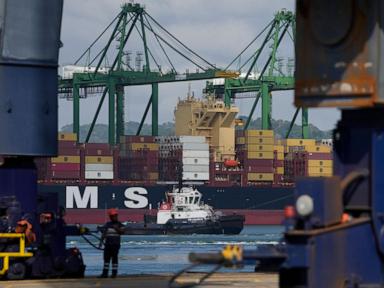
The diplomatic spat between Washington and Beijing over the Panama Canal has reached a fever pitch, but the noise masks a much deeper shift in global logistics. Beijing recently dismissed American concerns regarding Panamanian sovereignty as hypocritical, pointing to the United States' own century-long history of controlling the waterway. While the rhetoric sounds like standard geopolitical theater, it signals a definitive break from the era where a single superpower dictated the terms of trade in the Western Hemisphere. Panama is no longer a passive backdrop for American policy; it has become the primary site of a bidding war that will determine how goods move across the planet for the next fifty years.
For decades, the United States viewed the Panama Canal as an extension of its own borders. That era ended officially in 1999, but the psychological tether remained strong. Now, China is moving in with massive infrastructure investments and port management contracts, forcing a confrontation that has little to do with abstract sovereignty and everything to do with who controls the physical valves of global capitalism.
The Myth of the Neutral Waterway
Diplomatic neutrality is a convenient fiction. The Panama Canal is governed by the 1977 Neutrality Treaty, which technically ensures the canal remains open to all nations. However, the United States retains a unilateral right to use military force to defend the canal's neutrality—a provision that Beijing frequently cites as the ultimate irony when Washington warns about foreign interference.
The current friction centers on the presence of Chinese state-linked firms, specifically Hutchison Ports, which operates terminals at both ends of the canal. To Washington, this is a strategic beachhead. To Beijing, it is a legitimate commercial expansion. To Panama, it is a chance to finally play the two largest economies against each other for the highest possible price.
The Debt Trap Versus the Big Stick
The American critique of Chinese involvement usually revolves around "debt-trap diplomacy," the idea that Beijing uses predatory loans to seize control of critical infrastructure when a country defaults. It is a potent narrative, but it often falls flat in Latin America. Leaders in the region remember the "Big Stick" policy and the era of military interventions quite clearly. When China arrives with checkbooks and engineering blueprints, they aren't met with suspicion by default; they are met with open arms by governments tired of the strings attached to Western aid.
Panama’s decision to sever ties with Taiwan in 2017 in favor of Beijing was the first major domino to fall. It wasn't an emotional choice. It was a cold, calculated move based on the reality that China is the second-largest user of the canal. Following the money is a universal language, and right now, the money speaks Mandarin.
Why the Port of Balboa Matters
Control over the Port of Balboa isn't just about collecting docking fees. It is about data and visibility. In the modern shipping world, knowing what is moving, where it is going, and who owns it provides a level of intelligence that traditional spying can’t match. If Chinese firms manage the flow of containers through the canal’s Pacific and Atlantic gateways, they gain a granular view of the American supply chain.
- Logistics Intelligence: Real-time tracking of dual-use technologies or sensitive materials.
- Economic Leverage: The ability to prioritize or deprioritize specific carriers during a crisis.
- Infrastructure Integration: Building 5G networks and digital "Smart Ports" that rely on Chinese hardware.
This is the "sovereignty" the US is actually worried about. It isn't worried that Panama will lose its independence; it is worried that the US will lose its monopoly on influence. The hypocrisy charge sticks because the US has historically expected Panama to align its security interests with Washington’s without offering the same level of direct infrastructure investment that Beijing currently provides.
The Water Crisis No One Can Buy Their Way Out Of
While the superpowers bicker over who gets to manage the ports, the canal itself is facing an existential threat that ignores all political boundaries. Drought. The Panama Canal relies on freshwater from Gatun Lake to operate its locks. Every ship that passes through flushes millions of gallons of freshwater into the sea. Recent climate shifts have led to record-low water levels, forcing the Panama Canal Authority to slash the number of daily transits and limit the draft of vessels.
This environmental bottleneck creates a zero-sum game. When there are fewer slots available for ships, the competition for those slots becomes fiercer. This is where the geopolitical tension turns into an economic brawl. If a Chinese-operated port can ensure priority access for Chinese-flagged vessels, the competitive advantage is massive.
Shipping Routes and the Search for Alternatives
The vulnerability of the Panama Canal has reignited interest in "Land Bridges" and the potential for an Arctic passage. Mexico is currently developing the Interoceanic Corridor, a rail link between the Pacific and Atlantic oceans designed to compete directly with the canal. Meanwhile, the melting of Arctic ice is opening the Northern Sea Route, which could bypass the Americas entirely for trade between Asia and Europe.
Beijing is investing in all of these. They aren't putting all their eggs in the Panamanian basket. This diversification makes the US position even more precarious. If the US loses its grip on Panama while failing to secure a stake in the emerging alternatives, it finds itself isolated from the very trade routes it once pioneered.
The Private Equity Factor
Lost in the state-versus-state narrative is the role of private capital. Wall Street and global shipping conglomerates like Maersk or MSC care little about sovereignty and a great deal about throughput. They want the most efficient route at the lowest cost. If China provides the most efficient cranes, the fastest digital processing, and the most reliable dredging services, the private sector will push the Panamanian government to accept Chinese bids, regardless of protests from the State Department.
The US government is trying to counter this through the "Build Back Better World" initiative and various regional partnerships, but these programs often move at the speed of bureaucracy. China’s Belt and Road Initiative moves at the speed of an authoritarian mandate. This speed gap is the primary reason why the US is losing ground.
Navigating the Two-Master Reality
Panama’s current administration is attempting a delicate balancing act. They need the security umbrella and consumer market of the United States, but they need the infrastructure and investment of China. It is a dangerous game. In the past, countries that tried to play both sides often found themselves crushed in the middle.
However, Panama is not a small, powerless actor in this scenario. They hold the world’s most important geographic choke point. By framing the American warnings as an attack on their sovereignty, Panamanian officials can deflect US pressure while extracting better terms from Chinese investors. It is the ultimate leverage play.
The reality on the ground is that the Panama Canal is no longer an American lake. It is a global utility. The hypocrisy that China points to is real, but it is also a distraction. The real story is the transition from a unipolar world to a fragmented one, where geographic choke points are up for grabs by whoever is willing to build the bridges—or dig the trenches—first.
Washington needs to stop lecturing Panama on sovereignty and start offering a better deal. If the US cannot compete on an economic level, no amount of diplomatic finger-wagging will stop the shift toward Beijing. The era of assuming loyalty based on proximity is over. In the new world order, loyalty is bought, sold, and shipped in twenty-foot equivalent units.
The focus must move away from the rhetoric of the Cold War and toward the cold reality of the supply chain. If the water runs dry or the ports become too expensive, the sovereignty of the canal won't matter because the world will have moved on to other routes. Panama knows this. China knows this. It remains to be seen if Washington can learn it fast enough to stay in the game.