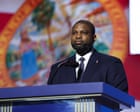
Political realignments rarely arrive with a thunderclap. More often, they slip in through the side door, disguised as mundane administrative updates or quiet website revisions. In the sun-baked suburbs and conservative strongholds of Florida, a distinct behavioral shift is underway among right-of-center candidates. The very figures who built their early career on unalloyed fealty to Donald Trump are scrubbing their digital footprints, muting their rhetoric, and executing a calculated pivot away from the MAGA branding that once served as an infallible political golden ticket.
This is not a sudden ideological conversion. It is a cold, calculated survival mechanism forged in the crucible of changing electorate dynamics and legislative exhaustion. If you liked this post, you might want to check out: this related article.
To understand why certain high-profile Republican contenders in historically safe districts are suddenly developing selective amnesia regarding the former president, one must look past the national television soundbites and examine local precinct data. For years, conventional wisdom dictated that maximalist populism was the only viable currency in deep-red Florida. Primary challengers weaponized proximity to Mar-a-Lago like a medieval relic, using endorsements as absolute proof of conservative purity. But the political marketplace is maturing, and the return on investment for aggressive, personality-driven grievance politics is beginning to yield diminishing returns among crucial suburban voting blocs.
Consider the mechanics of modern legislative positioning. A candidate running in a deeply conservative Florida district faces a unique structural trap. Lean too heavily into fiery rhetoric, and you secure the base while alienating the independent voters and high-propensity retirees who actually decide down-ballot margins and municipal bond referendums. Tone it down entirely, and you risk a primary insurgency from an ideological purist waving a digital flyer of your past statements. The solution deployed by strategists this cycle has been surgical omission. Websites are quietly pruned. Campaign bios are scrubbed of national lightning rods. Speeches pivot aggressively toward property insurance rates, coastal erosion, and local economic development. For another angle on this development, see the latest coverage from BBC News.
The strategy exposes a deeper friction point within the conservative coalition. While the national party remains tethered to a singular gravitational center, local races are governed by the brutal physics of grocery bills, skyrocketing homeowner insurance premiums, and municipal infrastructure strain. When voters walk into a grocery store or open their mail to find another triple-digit increase on their property insurance policy, abstract national grievances lose their administrative appeal. Candidates who insist on fighting cultural proxy wars while the roof leaks face a growing, silent rebellion from voters who simply want competent management.
The quiet distancing also reflects a broader institutional fatigue. For a decade, local Republican machines functioned as auxiliary units of a national perpetual-campaign apparatus. Every county commission race, every school board election, and every congressional primary was forced through the sieve of nationalized culture war debates. That dynamic created hyper-mobilized primaries but produced governance deficits once officials took office. Legislators discovered that shouting about national headlines does not fix sewer systems, pave roads, or lower the cost of reinsurance.
What happens when a mega-MAGA contender stops talking about Trump in a deep-red district? Paradoxically, they often unlock a new tier of pragmatic support from traditional business conservatives who had grown alienated by the constant theater of Washington politics. By shifting the focus back to local bread-and-butter issues, these candidates are attempting to decouple their electoral viability from the volatile daily whims of national media cycles. They are betting that the average voter is exhausted by the exhaustion.
Yet, this balancing act is fraught with hazard. Grassroots activists keep meticulous digital ledgers. Every deleted tweet, every missing photo from a past rally, and every repurposed stump speech is cataloged by rival campaigns looking for evidence of apostasy. The candidates attempting this tightrope walk must project ironclad conservative credentials on core cultural and economic issues while simultaneously signaling to weary independents that they are pragmatic problem-solvers rather than professional provocateurs.
The underlying tension reveals a Republican party in Florida that is grappling with its own internal stratification. The populist fervor that reshaped the state's political map over the past eight years has successfully conquered the apparatus, but the subsequent challenge of governance has exposed the limits of perpetual agitation. When candidates start hiding their most potent branding badges, it is a sign that the political weather is changing. The slogans that thrill a packed arena do not necessarily solve the structural crises of a growing, strained state.
As campaigns enter their final stretches, the success or failure of this deliberate quietness will serve as a bellwether for the rest of the country. If candidates can successfully shed the albatross of perpetual national outrage and pivot back to regional competency without losing their base, expect to see a nationwide template emerge for the post-populist era. If they get caught between a suspicious base and an unconvinced middle, the great conservative rearguard action will collapse under the weight of its own contradictions. The silence from the podium is deafening, and the voters are listening closely to what is left unsaid.