Twelve months have passed since the second Trump administration declared its "liberation day," a sweeping overhaul of federal oversight and trade policy designed to cement American dominance. But for the global investment community, the honeymoon ended long before the first anniversary. What was marketed as a definitive era of American exceptionalism has instead triggered a quiet, systematic withdrawal. The "America First" premium is evaporating, replaced by a risk-adjusted reality where the United States is increasingly viewed as just another volatile emerging market, albeit one with a larger military and a reserve currency.
Money is moving. It isn't a panicked flight, but a calculated recalibration. The numbers reflect a growing skepticism toward the long-term stability of the dollar-based order. When the rule of law becomes secondary to executive whim, the predictability that capital craves vanishes. Investors are no longer asking how much they can make in the U.S. market; they are asking how much they can afford to lose if the institutional guardrails continue to buckle. You might also find this related story interesting: The Gilded Ghost of the American Dream.
The Erosion of the Predictability Premium
For decades, the United States commanded a unique position in global finance. It wasn't just about the size of the economy. It was about the perceived permanence of its institutions. You could park ten billion dollars in Treasury bonds or New York real estate and sleep soundly, knowing that the rules of the game wouldn't change overnight because of a social media post or a sudden tariff hike.
That certainty is gone. The liberation day policies—which stripped away layers of the civil service and replaced career technocrats with political loyalists—have hollowed out the very departments that provided market stability. When the Department of Commerce or the Treasury becomes an arm of a specific political agenda rather than an independent arbiter of economic data, the data itself loses value. As discussed in latest articles by The Wall Street Journal, the implications are worth noting.
Global fund managers in London, Tokyo, and Zurich are now pricing in "political risk" for U.S. assets in a way they previously only did for developing nations. This isn't a theoretical exercise. We are seeing it in the widening spreads and the diversification of sovereign wealth funds away from the dollar. They are looking for jurisdictions where the judiciary remains independent and where trade agreements aren't treated as disposable suggestions.
Tariff Fatigue and the Death of Low Inflation
The cornerstone of the current administration’s economic strategy has been the aggressive use of universal baseline tariffs. The logic was simple: force manufacturing back to American shores by making imports prohibitively expensive. In practice, the result has been a persistent inflationary pressure that the Federal Reserve is struggling to contain.
Domestic manufacturing does not appear out of thin air. Building a factory takes years. Developing a skilled workforce takes longer. In the interim, American companies and consumers are footing the bill for the trade war. The "liberation" of the economy from foreign competition has effectively become a tax on every link of the global supply chain.
Consider a hypothetical electronics firm based in Ohio. Under the new trade regime, its components—formerly sourced from a variety of Asian partners—now face a 20% entry fee. The firm cannot simply switch to an American supplier because those suppliers don't exist yet, or they are already at maximum capacity. The Ohio firm raises its prices. The consumer buys less. The "exceptional" growth promised by the administration turns into a stagflationary grind.
Investors see this bottleneck. They recognize that while a few specific industries might benefit from protectionism, the broader economy is being choked. The S&P 500, once the undisputed king of global equities, is starting to look bloated and vulnerable compared to diversified portfolios that include heavy weights in Southeast Asia and parts of Europe that have maintained more stable trade ties.
The Federal Reserve Under Siege
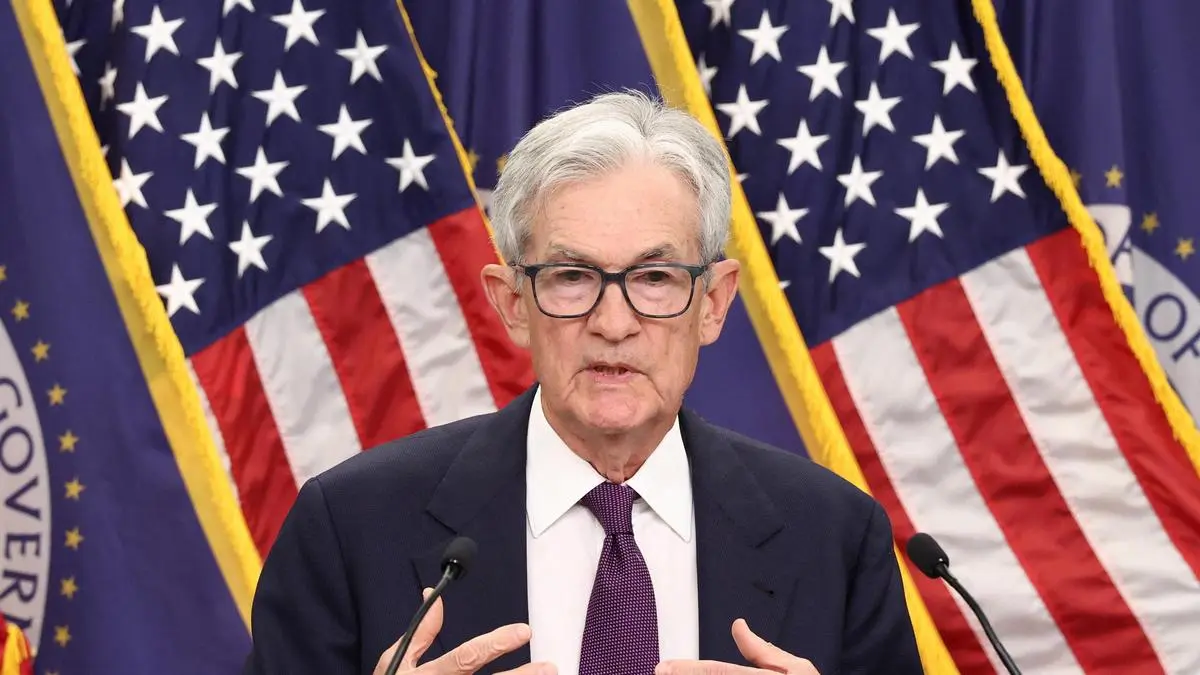
Perhaps the most significant factor driving the rethink of American exceptionalism is the mounting pressure on the Federal Reserve. Central bank independence is the bedrock of a stable currency. However, the current administration has made no secret of its desire to have a direct hand in interest rate policy.
When the executive branch publicly browbeats the Fed chair, it sends a signal to the world that the dollar is no longer a neutral store of value. It becomes a political tool. If the world perceives that the Fed will keep rates low to juice the stock market before an election, regardless of inflation, then the dollar’s status as the global reserve currency is in jeopardy.
We are seeing the beginning of a "de-dollarization" that is no longer limited to America's geopolitical rivals. Even allies are exploring alternative payment systems and increasing their gold reserves. This shift is subtle but profound. It increases the cost of borrowing for the U.S. government, which is already grappling with a deficit that shows no signs of shrinking. The math is becoming increasingly difficult to ignore.
The Talent Exodus and the Hollowing of Innovation
American exceptionalism was always built on a foundation of human capital. The U.S. was the place where the brightest minds from around the world came to build the future. The current administration’s restrictive immigration policies and the general climate of isolationism have turned that flow into a trickle.
Silicon Valley and the Research Triangle are feeling the chill. Venture capital is starting to follow the talent. If a software engineer from Bangalore or an AI researcher from Berlin feels unwelcome or faces insurmountable visa hurdles in the U.S., they will simply go to Toronto, Singapore, or London.
This loss of "brain gain" is a long-term economic disaster disguised as a short-term political win. You cannot maintain a technological edge while simultaneously closing your doors to the people who create that technology. The narrative of an "America liberated" ignores the fact that the country is increasingly isolating itself from the global pool of innovation.
The Myth of Deregulatory Growth
The administration's massive push for deregulation was supposed to trigger a surge in business investment. The idea was that by removing the "shackles" of the EPA and the SEC, corporations would be free to innovate and expand at unprecedented speeds.
The reality is more complicated. Large-scale institutional investors actually prefer clear, consistent regulations to a chaotic "free-for-all." Regulatory certainty allows for long-term planning. When environmental standards are slashed one day and then tied up in court for the next three years, businesses don't invest—they wait.
Furthermore, the rollback of transparency requirements in the financial sector has made the U.S. markets more opaque. For a global investor, transparency is a form of protection. When you reduce the amount of information companies are required to disclose, you increase the risk of fraud and mismanagement. The U.S. is starting to look less like a gold-standard market and more like a "buyer beware" environment.
The Shift Toward Multi-Polar Portfolios
What does this look like on the ground? It looks like a pension fund in Norway deciding to cap its U.S. exposure at 40% instead of 60%. It looks like a family office in Singapore shifting its focus toward regional trade blocs in Asia.
These aren't ideological moves. They are pragmatic responses to a changing world. The era where you could just "buy America" and forget about it is over. The U.S. is now a market that requires active, intense management and a constant eye on the political horizon.
The "liberation" of the American economy has, in many ways, liberated global capital from its dependence on the United States. The world has discovered that it can function without the U.S. as the sole engine of growth. Other centers of power and stability are emerging, and they are becoming increasingly attractive as the American experiment takes a more erratic turn.
Institutional Decay is a One-Way Street
The most dangerous aspect of the current situation is the speed at which institutions can be dismantled compared to the decades it takes to build them. Trust is the most valuable commodity in the financial world, and once it is broken, it cannot be easily restored by a new election cycle or a change in rhetoric.
The "rethinking" of American exceptionalism isn't a temporary trend. It is a fundamental shift in the global economic order. The U.S. is no longer the "safe haven" by default; it must now compete for that status against a backdrop of its own making. The volatility, the protectionism, and the political interference in economic policy have created a new "America Risk" that every serious investor must now account for in their models.
The cracks are visible in the currency markets, in the bond yields, and in the boardroom discussions of the world's largest banks. The U.S. might still be a superpower, but its status as an exceptional, untouchable economic force is a relic of a pre-liberation past.
Stop looking at the stock market tickers as a measure of national health. The real story is in the capital that is quietly moving toward the exits, looking for a place where the rules still matter and the future isn't subject to the daily whims of a single office. Diversification is no longer just a strategy; it is a survival mechanism for a world that has realized the American anchor is no longer holding.