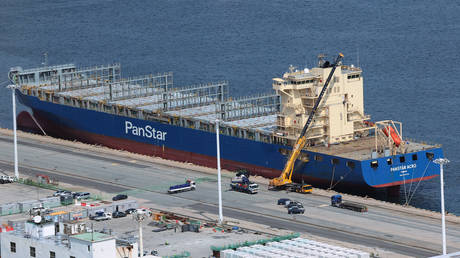
The mainstream maritime press is currently celebrating a supposed breakthrough. They want you to believe that the European Union and India are finally locking arms to clean up the dirty world of shipbreaking. The narrative is neatly packaged: three Indian ship recycling yards in Alang are reportedly on the verge of securing formal approval under the European Union Ship Recycling Regulation (EU SRR). Brussels gets to claim it is exporting its pristine environmental standards, New Delhi gets to brag about industrial modernization, and shipowners get a shiny new stamp of corporate social responsibility.
It is a comforting bedtime story. It is also a complete illusion. You might also find this related coverage interesting: Why India and Thailand Need a UPI and PromptPay Integration Right Now.
This celebrated alignment is not a triumph of environmental diplomacy. It is a masterclass in regulatory theater. For over a decade, the EU SRR has operated less as a shield for global ecosystems and more as a protectionist racket designed to shield European yards from market realities, while simultaneously ignoring how the global shipping industry actually functions. By forcing South Asian yards to jump through arbitrary, eurocentric hoops to earn a spot on the "EU Approved" list, Brussels is not cleaning up the ocean. It is merely subsidizing a paper trail that allows European shipowners to feel virtuous while the actual mechanics of global ship disposal remain as messy and evasive as ever.
The Myth of the Level Playing Field
The fundamental flaw of Western maritime regulation is the belief that you can govern an ultra-mobile, hyper-capitalist global asset class using regional, land-bound decrees. As reported in recent articles by Bloomberg, the results are significant.
Under the EU SRR, EU-flagged commercial vessels must be recycled at facilities that appear on an exclusive European list. These yards are expected to meet stringent criteria, including the full containment of pollutants, impermeable floors, and medical infrastructure that rivals municipal hospitals.
On paper, this sounds noble. In practice, it ignores the basic geography and economics of maritime salvage.
The vast majority of the world's end-of-life vessels are dismantled in South Asia—primarily in India, Bangladesh, and Pakistan. They use the intertidal beaching method. This process utilizes natural 10-meter tides to ground massive ships onto coastal mudflats, where they are systematically disassembled. Western regulators have long treated "beaching" as an inherent sin, demanding that ships only be broken down on solid slipways or inside dry docks, which happen to be how underutilized European yards operate.
I have spent years analyzing the balance sheets and operational flows of maritime logistics. I have seen companies throw millions of dollars at compliance consultants just to discover that the regulations they are trying to satisfy were written by bureaucrats who have never stepped foot on an active mudflat. The demand for total impermeability in an intertidal zone is a conceptual mismatch. You cannot pour a concrete slab over miles of shifting tidal sands without creating an ecological and engineering disaster of a different kind.
The three Indian yards currently being paraded as "ready" for EU recognition have achieved this status by investing millions in heavy cranes, impermeable concrete tracking areas for block cutting, and sophisticated waste treatment facilities. They deserve credit for upgrading their infrastructure. But let us be brutally honest about what happens next. If these yards are granted EU approval, they will not spark a massive wave of green recycling across the subcontinent. They will simply become an exclusive, high-cost boutique service for a tiny fraction of the global fleet, while the remaining 95% of the industry continues business as usual right next door.
The Flag of Convenience Escape Hatch
Why will this grand cooperation fail to transform the global industry? Because the entire regulatory framework relies on a premise that the shipping industry dismantled fifty years ago: the sanctity of the flag state.
The EU SRR only applies to ships flying the flag of an EU member state. If a ship flies the flag of Malta, Greece, or Germany, it must follow the rules. But a ship is not a building anchored to the earth. It is a floating corporate entity. Changing its nationality requires nothing more than a digital filing, a processing fee, and a couple of hours.
When a ship reaches the end of its commercial life, it is rarely owned by the high-minded European conglomerate that operated it for twenty years. It is sold to a cash buyer—a specialized middleman whose sole purpose is to purchase the vessel, strip it of its operational identity, and sail it to a beach in South Asia for maximum scrap value.
The first thing a cash buyer does is swap the flag.
- Step 1: The vessel lowers the flag of a European nation.
- Step 2: The vessel registers with a non-EU registry, typically a cash-buyer favorite like Palau, Comoros, St. Kitts & Nevis, or Tuvalu.
- Step 3: The ship ceases to exist under EU law.
This is not a rare loophole. It is the standard operating procedure for the global merchant fleet. According to data from the NGO Shipbreaking Platform, hundreds of ships owned by European companies are broken on South Asian beaches every year, yet almost none of them do so under an EU flag. They de-flag months before their final voyage.
By the time a hull touches the mud at Alang, it is legally a non-European entity. The EU SRR has zero jurisdiction over it. Therefore, expanding the EU's list of approved yards to include three facilities in India does absolutely nothing to stop the flow of ships to unapproved, less regulated yards. The European Union is building a pristine, hyper-compliant front door while leaving the entire back wall of the house completely missing.
The Economic Hypocrisy of Western Greenwashing
Let us look at the raw math that drives this business. Ship recycling is not a waste disposal service where the owner pays to get rid of trash. It is a commodity purchase. The shipbreaker buys the ship from the owner because the ship contains tens of thousands of tons of valuable structural steel.
The price of a end-of-life vessel is determined by the local market rate for scrap steel. Because South Asian economies rely heavily on recycled ship steel to feed their domestic construction booms, yards in India and Bangladesh can offer between $500 and $600 per light displacement ton (LDT).
A European dry dock facility, burdened by massive labor costs, stringent hazardous waste disposal fees, and a lack of local demand for re-rolled steel, can barely afford to offer $150 to $200 per LDT.
For a standard Capesize bulk carrier of 25,000 LDT, that structural reality creates an economic chasm:
$$\text{South Asian Return: } 25,000 \text{ LDT} \times $550 = $13,750,000$$
$$\text{European Return: } 25,000 \text{ LDT} \times $175 = $4,375,000$$
No board of directors, no fiduciary duty to shareholders, and no corporate sustainability report can survive a $9 million penalty for being environmentally polite. Expecting shipowners to voluntarily choose an EU-approved yard when a non-EU alternative offers triple the payout is financial delusion.
The EU's insistence on maintaining its own separate, highly restrictive registry rather than fully backing the global standard—the IMO's Hong Kong International Convention for the Safe and Environmentally Sound Recycling of Ships—is pure protectionism. The Hong Kong Convention entered into force globally in 2025. It provides a realistic, scalable baseline for upgrading yards across South Asia without demanding that they transform into Western-style dry docks overnight.
By holding out for its own idiosyncratic standard, the EU has spent years paralyzing progress. They forced Indian yards to invest millions to chase a European certification that may never come, or that will apply to so few ships that the return on investment will never materialize.
The Real Cost of Regulatory Isolation
When you force an industry into an unnatural economic corner, you do not eliminate the negative externality. You merely displace it to a darker room.
The hyper-regulation of ship recycling in Europe has not resulted in a massive boom for green European shipyards. Instead, European yards remain empty of large commercial vessels, focusing instead on small government hulls and local oil rigs. Meanwhile, the actual recycling happens exactly where it always did, but with an added layer of corporate secrecy and legal gymnastics.
If Brussels sincerely wanted to clean up the shipbreaking industry, it would stop focusing on where the ship is cut up and start focusing on who profits from the ship while it is alive.
Instead of creating an exclusive club of three Indian yards that can handle a tiny trickle of compliant tonnage, regulators should enforce financial guarantees at the time of a vessel’s initial registration. Imagine a system where every ship operating in European waters must contribute to an escrow fund throughout its operational life. If the ship is recycled at a facility that meets global Hong Kong Convention standards, the fund pays out a premium to the owner, offsetting the financial temptation of unregulated yards.
But that would require European ports to take a financial hit and would force Western financial institutions to police their own loan portfolios. It is far easier to sign a memorandum of understanding, release a press release about "advancing cooperation," and pretend that three compliant yards in Gujarat solve a systemic global crisis.
The current celebration of EU-India cooperation is not a step forward. It is the codification of a two-tier system. It creates a small, expensive, green-certified island for the public relations departments of major European lines, while ensuring that the actual, gritty work of global industrial recycling remains starved of the broad, systemic investment that only a unified global standard can provide. Stop celebrating the certificate. Start looking at the flags on the sterns of the ships actually hitting the beaches.