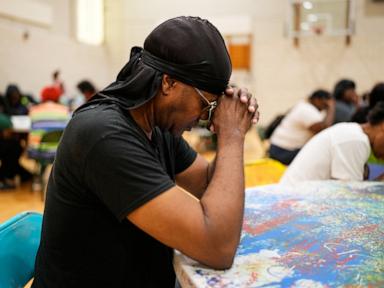
The narrative currently circulating about northwest Indiana is a masterclass in deflection. We are fed stories of "unprecedented" storms, crumbling infrastructure, and helpless citizens trapped in "survival mode" for nine days. The media paints a picture of a community held hostage by fate and a utility company, NIPSCO, that is supposedly doing its best under impossible circumstances.
Stop buying the lie. Expanding on this theme, you can find more in: The Mountain That Swallowed Thirteen Dreams in Colombia.
The crisis in Gary isn't the storm. The crisis is a decade-long failure of individual and municipal agency. When you anchor your entire existence to a centralized electrical grid that relies on ancient, above-ground transmission lines, you aren't a victim of weather. You are a victim of your own refusal to modernize.
Every time a storm rolls through and the lights go dark for a week, we see the same performative outrage. Neighbors trade stories of spoiled groceries, and experts offer platitudes about "community resilience." It is a cycle of insanity. We treat the electrical grid like it’s a law of nature, an immutable force that should just "work." In reality, it is a fragile, aging, and inefficient system. The fact that thousands of people remain tethered to this system without a single layer of independent power redundancy in 2026 is an indictment of modern planning, not just a weather-related misfortune. Experts at NBC News have provided expertise on this situation.
Imagine a scenario where the homeowners of Gary treated their electricity like they treat their insurance—as a risk to be mitigated. If you spend $500 on groceries, you have the financial awareness to protect them. But the prevailing culture suggests that the utility company owes you a seamless experience. They don't. They owe you a service, and when that service inevitably fails—because poles will always fall in high winds—you are left holding the bag.
The "survival mode" language is designed to extract sympathy. It’s effective, but it’s destructive. It reinforces the idea that you are helpless without a corporate connection to a power plant. The truth is, distributed energy resources—home batteries, solar arrays, and high-efficiency portable generators—are more accessible today than ever. The barrier isn't technology; it's the psychological reliance on the grid. We have been conditioned to believe that energy must be piped in like water. It doesn’t.
I’ve seen businesses blow millions on "recovery" efforts after disasters, only to rebuild the exact same failure-prone infrastructure they had before. They call it "restoration." I call it stupidity. If your power goes out for nine days, don’t blame the storm. Blame the fact that you haven't taken ownership of your own utility.
You might argue that low-income residents don't have the capital to invest in off-grid solutions. That is a valid, systemic challenge. But the public discourse focuses entirely on waiting for the utility to "fix it," rather than demanding municipal energy independence. Why are we not talking about localized microgrids? Why are we not subsidizing community-level storage instead of merely passing out boxed lunches?
When NIPSCO says "no storm is created equal," they are telling you the truth. They are telling you that they are not equipped to handle reality, and they expect you to sit in the dark until they decide to flip the switch back on. If you are sitting in a house in 2026 without a backup power strategy, you aren't a victim of the storm. You are a volunteer for the outages.
The reliance on state-provided electricity creates a feedback loop of incompetence. Because the public expects 100% uptime, utilities focus on the cheapest possible maintenance to keep the lights on for 99% of the year, then scramble to fix the disaster when the 1% event hits. It’s a race to the bottom that every consumer loses.
You want to stop "survival mode"? Stop treating the grid as a utility provider and start treating it as a backup for your own internal systems. The moment you take responsibility for your own power is the moment you stop being at the mercy of a fallen tree or a faulty line.
Stop waiting for the light at the end of the tunnel. Build your own.