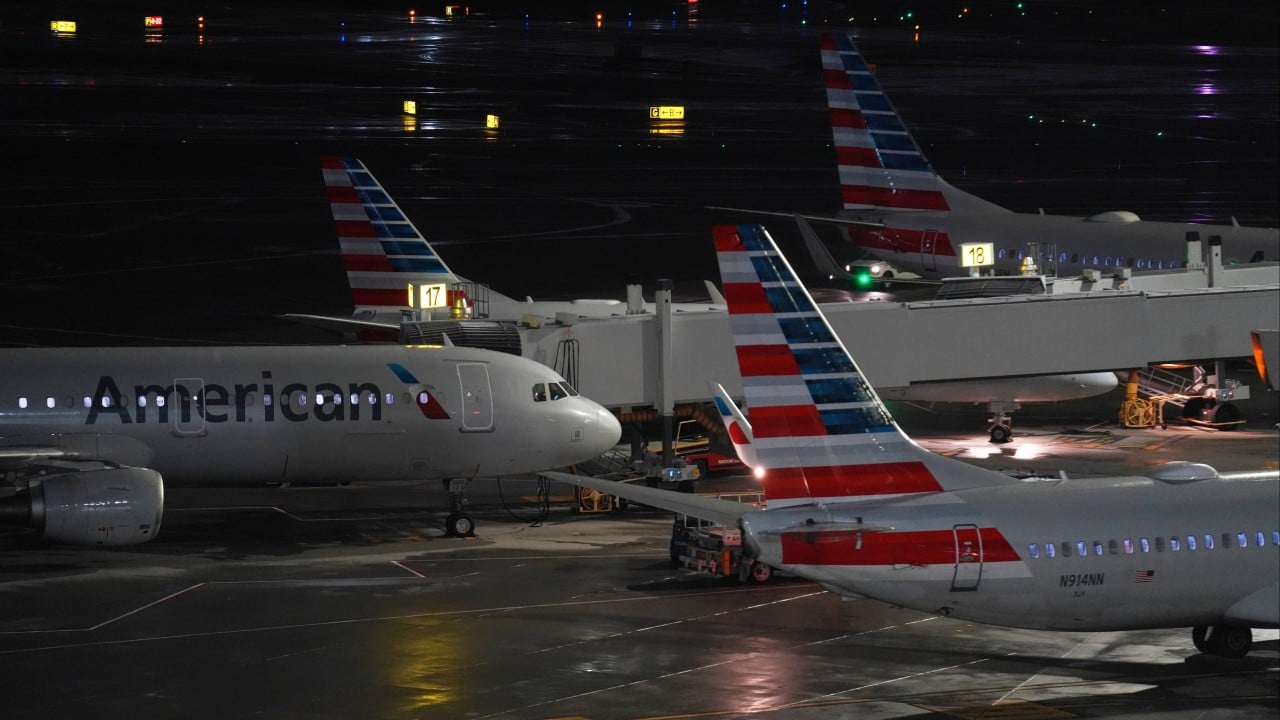
A ground stop hits. Headlines scream that communications failed. A homeland security official steps to a microphone and makes it sound like the sky went blind.
Wrong. Dead wrong.
If you buy the lazy consensus that "all US flights grounded due to communication issues" means airplanes lost their ability to fly safely or controllers lost sight of traffic, you missed the real story. Commercial aviation does not run on a single fragile chat wire. When a nationwide ground stop happens over communications or flight-planning systems, the danger is rarely a midair collision caused by silence. The real hazard is cascade paralysis: thousands of aircraft parked, crew duty clocks ticking down, gates gridlocked, and a safety-first halt turning into a multi-day operational bruise.
I have spent years inside aviation operations, airspace command centers, and mission-critical telecom architecture. I have watched airlines and agencies blow millions chasing silver-bullet upgrades while ignoring the boring plumbing that actually keeps planes moving. When a communications outage grounds flights across the United States, the loudest voice in the room is usually the least qualified to diagnose why the traffic stopped.
The Lazy Consensus Around Ground Stops
Standard press coverage treats a nationwide ground stop like a light switch turning off the entire sky. One broken link, and suddenly every 737, A321, and regional jet from JFK to LAX is helpless.
That framing sells clicks. It also misleads travelers, lawmakers, and executives.
In real operations, a ground stop is a traffic-flow management tool. Air traffic control uses it to hold departures at their origin airports when downstream capacity, weather, or system anomalies cannot safely absorb new arrivals. A ground stop is not an emergency landing order for planes already cruising at 35,000 feet. A plane already airborne does not drop out of the sky because a ground-based data feed hiccups.
Why do officials still reach for dramatic "communication issues" language? Because bureaucracy loves a single, neat cause—and homeland security framing naturally elevates routine technical disruptions into national-security theater. Once a security official frames a telecom or data-distribution glitch as a communications failure, everyone starts hunting for saboteurs or single-point cables instead of fixing brittle software handoffs and overloaded human workflows.
Consider a thought experiment. Imagine a scenario where a regional database that distributes flight-plan clearances to tower consoles freezes for twenty minutes on a busy Friday morning. No radio frequency goes dead. No primary radar dish stops spinning. Pilots can still speak to controllers on VHF radio. Yet if automated clearance strips do not populate cleanly, pushing hundreds of departures into congested airspace creates workload spikes that controllers refuse to accept. Holding planes on the ground is the rational choice. Calling it "all US flights grounded due to communication issues" turns a clearance-distribution bottleneck into a horror story.
How Airspace Actually Stays Safe When Wires Falter
To understand what actually breaks during a nationwide ground stop, you have to separate tactical flight safety from strategic traffic flow.
Tactical safety relies on layered redundancies:
- Voice radio and transponders: Pilots and controllers use dedicated VHF and UHF voice channels alongside Automatic Dependent Surveillance-Broadcast and secondary radar. Even if a digital data link degrades, voice readbacks and radar returns remain core survival tools.
- Onboard collision avoidance: Modern airliners carry Traffic Collision Avoidance System hardware that interrogates nearby transponders independently of ground computers.
- Procedural separation: When automation slows down, controllers widen spacing and rely on proven manual procedures. Safety margins expand by slowing volume, not by guessing.
Strategic flow is where fragile modern infrastructure trips. Moving roughly 45,000 flights a day across the National Airspace System requires constant coordination among the Federal Aviation Administration, airline dispatchers, airport ramp towers, and weather models.
| System Layer | What It Actually Does | What Happens When It Glitches | Why Headlines Misread It |
|---|---|---|---|
| VHF/UHF Voice & Radar | Direct pilot-controller talk and position tracking | Backup frequencies and sector handoffs absorb load | Rarely the sole cause of a nationwide halt |
| Flight-Plan & NOTAM Feeds | Distributes routes, weather, and airspace notices | Dispatchers and crews cannot verify legal release data | Sounds like "communications went out" to lay readers |
| Traffic Flow Management | Meters departures to match arrival/sector limits | Ground stops hold planes at gates before takeoff | Looks like total shutdown, actually controlled metering |
| Airline Crew & Gate Ops | Matches legal pilots/flight attendants to tail numbers | Rolling delays snowball even after system recovery | Blamed on the initial outage long after fix |
I have seen carriers spend tens of millions on flashy dashboard software while leaving legacy messaging queues and manual crew-scheduling workarounds held together by duct tape. When a central feed stutters, the outage lasts thirty minutes, but the schedule hangover lasts three days because crews time out under duty limits and aircraft end up on the wrong coast.
The Real Villain Is Brittle Coupling, Not Silence
Heavy hitters in aviation safety—from human-factors researchers at MIT and NASA to veteran airline chief dispatchers—have warned for decades about tight coupling in complex socio-technical systems. When every downstream step depends on an automated message arriving in exact sequence without human workarounds, a minor hiccup in one node ripples everywhere.
Modern aviation is far safer per mile flown than it was thirty years ago. Yet it is also more brittle when information pipelines stall. Paper strips and grease pencils were slow, messy, and labor-intensive, but they did not crash across a whole continent because an API timed out. Today, speed and automation give us higher daily throughput—right up until a shared data bus locks up and forces everyone to hit the brakes at once.
Homeland security officials often view infrastructure through an adversarial lens: threats, vulnerabilities, and perimeter defense. That lens is useful for guarding critical facilities against physical or cyber attack. It is terrible for explaining everyday operational fragility. Most major disruptions stem from software defects, configuration drift, capacity limits, or uncoordinated maintenance—not a cinematic communications blackout.
Even when a cyber incident or telecom cut does occur, the core question for anyone running an airline or flying on one is not "Who said what?" It is "Can we safely release flights, track positions, and recover the network without creating secondary hazards?"
Answering the Questions People Actually Type Into Search
When a ground stop hits the news, people rush to search engines asking the wrong questions. Here is the unfiltered truth behind the most common ones.
Why are all US flights grounded right now?
Usually not every single flight in every corner of the sky is frozen in place—media shorthand exaggerates "nationwide" into "all." A nationwide ground stop halts departures or restricts flow across affected centers so controllers do not launch planes into an information blind spot or an unverified flight-plan queue. If you are sitting at a gate, the system is protecting margins by keeping you on the ground rather than improvising in midair.
Are communication issues a sign of a cyberattack?
Not automatically. Assuming every technical failure is a cyberattack is lazy thinking dressed up as vigilance. Routine software bugs, expired certificates, network routing errors, and database locks cause far more disruptions than nation-state intrusions. Treating every glitch as an attack wastes investigative bandwidth and inflames public panic before engineers even pull the logs.
Is it still safe to fly after a communications-related ground stop?
Yes—provided dispatchers, crews, and air traffic control follow standard release and separation rules before pushing back. In fact, a ground stop exists because regulators and controllers refuse to fly blind. The risk after a stop is rarely a sudden midair hazard; it is fatigue, rushed turnarounds, and bad connections as airlines try to dig out of a backlog.
What should travelers and operators do differently next time?
Stop refreshing breaking-news alerts that scream "communications failure" and check FAA national airspace status advisories and your specific airline's operational updates instead. If you run operations, stop buying shiny monitoring tools that admire the problem while ignoring degraded-mode drills. Practice running dispatch, gate allocation, and crew recovery when primary data feeds are slow or offline.
Where My Contrarian Stance Can Bite You
Being skeptical of alarmist "communications outage" narratives has a real downside if you take it too far.
If you assume every ground stop is just a benign software hiccup, you can underestimate a genuine, fast-moving telecom or cyber disruption that degrades backup channels too. A dismissive attitude can make an ops team slow to escalate when an anomaly actually crosses from routine glitch into security incident.
There is also a human cost to treating ground stops as "just traffic management." When a family misses a once-in-a-lifetime funeral or a critical medical appointment because a ground stop cascaded into canceled connections, academic distinctions between tactical safety and strategic flow feel cold. Being right about system architecture does not make a five-hour tarmac wait pleasant.
Actionable Steps That Actually Work
If you fly regularly, manage logistics, or lead technical operations, skip the panic and execute these concrete moves:
- Book the earliest nonstop flight you can. Morning flights face fewer accumulated delays and give you more rebooking options if a ground stop hits later in the day.
- Keep a paper or offline copy of itineraries and confirmation codes. When airline apps and airport Wi-Fi choke during a disruption, offline records save hours at customer service desks.
- Audit your own "degraded-mode" playbooks. If you run any business system, test how your team operates when primary messaging or cloud tools lag—before a single outage forces a scramble.
- Demand root-cause postmortems, not soundbites. Push leaders and vendors for exact failure modes, recovery timelines, and architectural fixes rather than vague talk about "communication issues."
Ground stops prove the sky is guarded by caution, not that aviation hangs by a thread—so stop falling for the loudest siren and fix the brittle plumbing underneath.