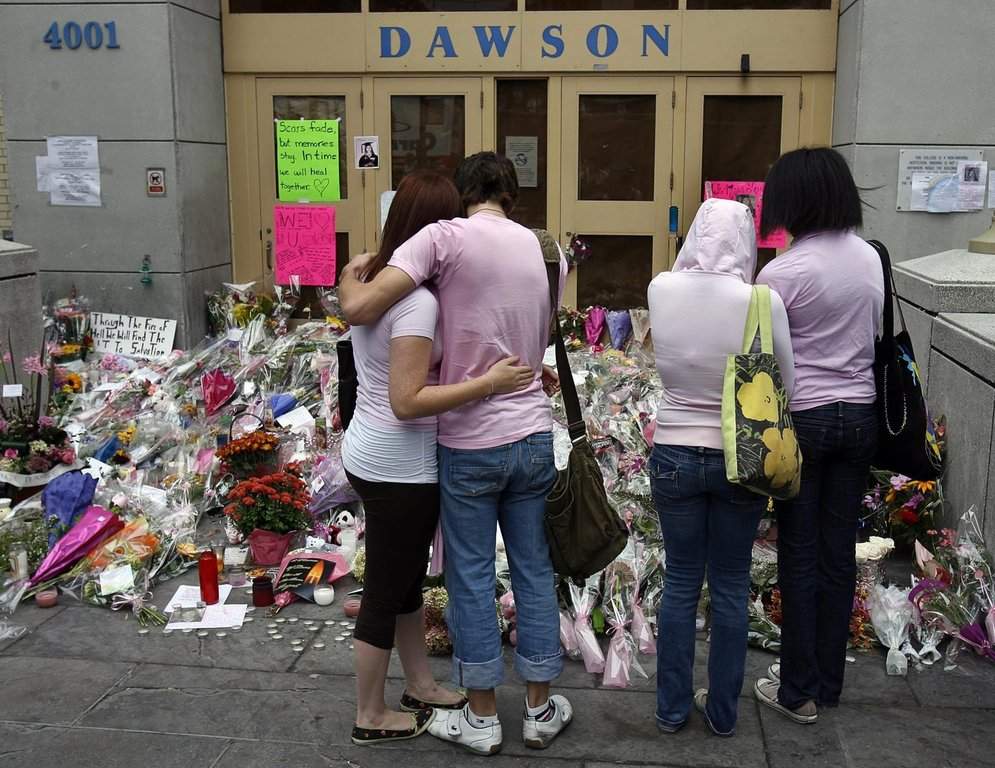
Every time a grim anniversary rolls around, the playbook is completely predictable. Families grieve, politicians crowd microphones, and the default demand echoes through the press corps: Ottawa must legislate tougher gun laws. The emotional weight of these tragedies is undeniable, but the policy reaction is intellectually lazy. For decades, the public debate has treated firearms legislation as a master switch for public safety. It is not.
Focusing exclusively on statutory restrictions misses the mechanics of violence entirely. I have spent years looking at public safety data, and the uncomfortable truth is that tightening restrictions on paper rarely changes the behavior of those determined to cause harm. We keep running the same legislative playbook expecting a different result, while ignoring the operational realities of institutional security, mental health intervention, and active threat response.
The Fallacy of Legislative Deterrence
The lazy consensus in Ottawa is that every tragedy can be legislated out of existence. If a rule is strict enough, the logic goes, bad actors simply vanish. This ignores a fundamental baseline of criminology. Laws constrain law-abiding citizens. By definition, a perpetrator willing to commit mass murder has already opted out of the legal framework.
When advocates demand stronger federal statutes on the anniversary of the Dawson College shooting, they are pointing the finger at the instrument rather than the vulnerability of the target. A sign prohibiting weapons at an entrance does not build a physical barrier. A paperwork restriction on firearm acquisition does not train a security team to neutralize a threat in under sixty seconds.
Imagine a scenario where Parliament bans every single category of firearm currently legal in Canada. Does that stop an individual intent on mass violence from acquiring an illicit firearm smuggled across an unmonitored border, or using an alternative method of destruction? Law enforcement agencies already know the answer. Criminals do not shop at licensed retail counters. They source hardware from the black market, entirely insulated from parliamentary debates.
Where the Real Defense Happens
Real safety is boring, expensive, and operational. It has nothing to do with what a politician signs into law on Capitol Hill or Parliament Hill. It relies on architectural hardening, access control, and behavioral threat assessment.
Educational institutions and public spaces are historically soft targets. For decades, administrators treated campuses as open sanctuaries, allergic to visible security measures because they ruined the aesthetic of an open society. That is a luxury we can no longer afford.
- Access Control: Hardening a building means reducing ingress points. If a facility has forty unlocked doors, no law in the world will keep a determined intruder out.
- Early Intervention: Violence rarely erupts in a vacuum. Perpetrators almost always exhibit behavioral markers long before an attack. Systems that capture and act on these signals save lives; penalty increases for possession do not.
- Response Timelines: In an active threat scenario, every second wasted waiting for distant municipal police departments to arrive is measured in casualties. Immediate on-site response capability changes the math of survival.
Critics of this approach claim that hardening spaces turns them into prisons. That argument crumbles under scrutiny. Airports are heavily secured, yet millions of travelers navigate them daily without feeling incarcerated. We prioritize security where the stakes are highest. Treating schools and public centers with the same operational seriousness is a matter of administrative will, not legislative fiat.
The Cost of Emotional Policymaking
Politicians love gun control debates because they are cheap. Passing a bill costs virtually nothing in capital expenditure, and it allows leaders to stand in front of cameras looking decisive. Upgrading infrastructure, hiring trained security personnel, and overhauling mental health tracking systems require hard budgets and administrative grit.
By channeling all national grief and public pressure into the legislative arena, we starve the actual security conversation of oxygen. Families demanding action deserve better than a political prop disguised as a safety statute. They deserve systemic reforms that actually alter the security landscape on the ground.
Stop looking to Ottawa for salvation. Start looking at the doors, the cameras, the warning signs, and the response protocols in your own backyard. Safety is engineered, not legislated.