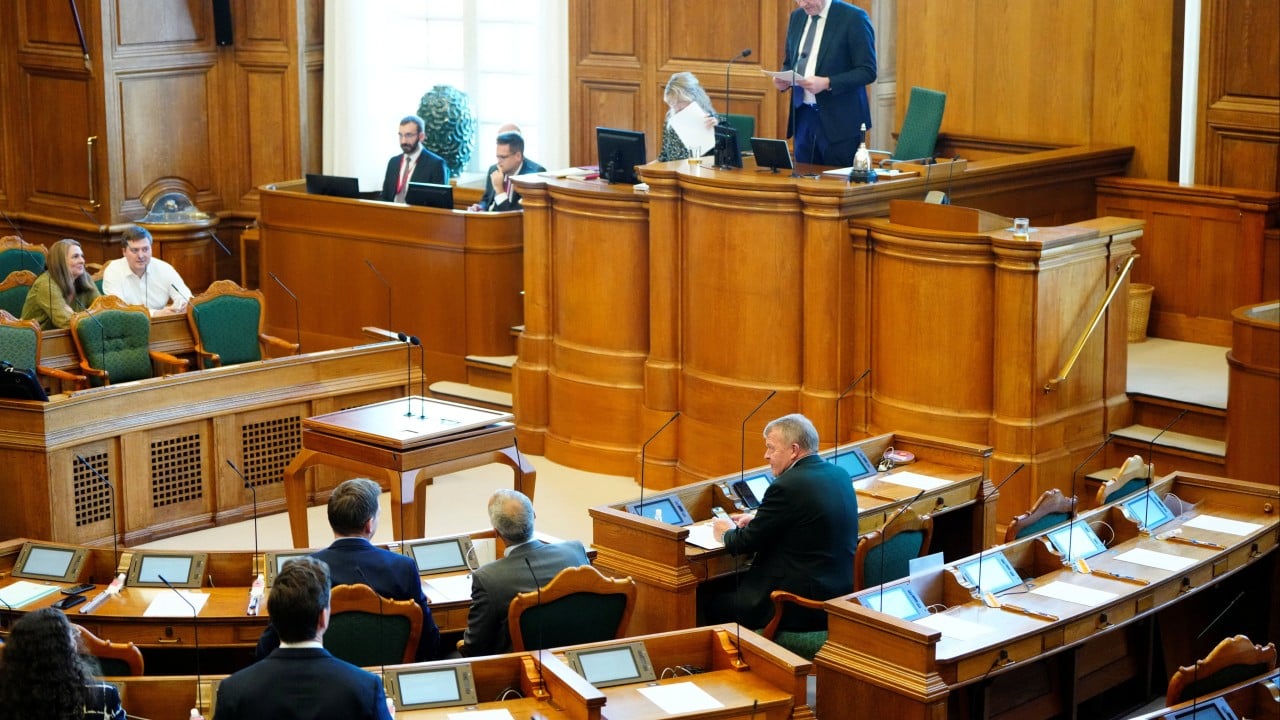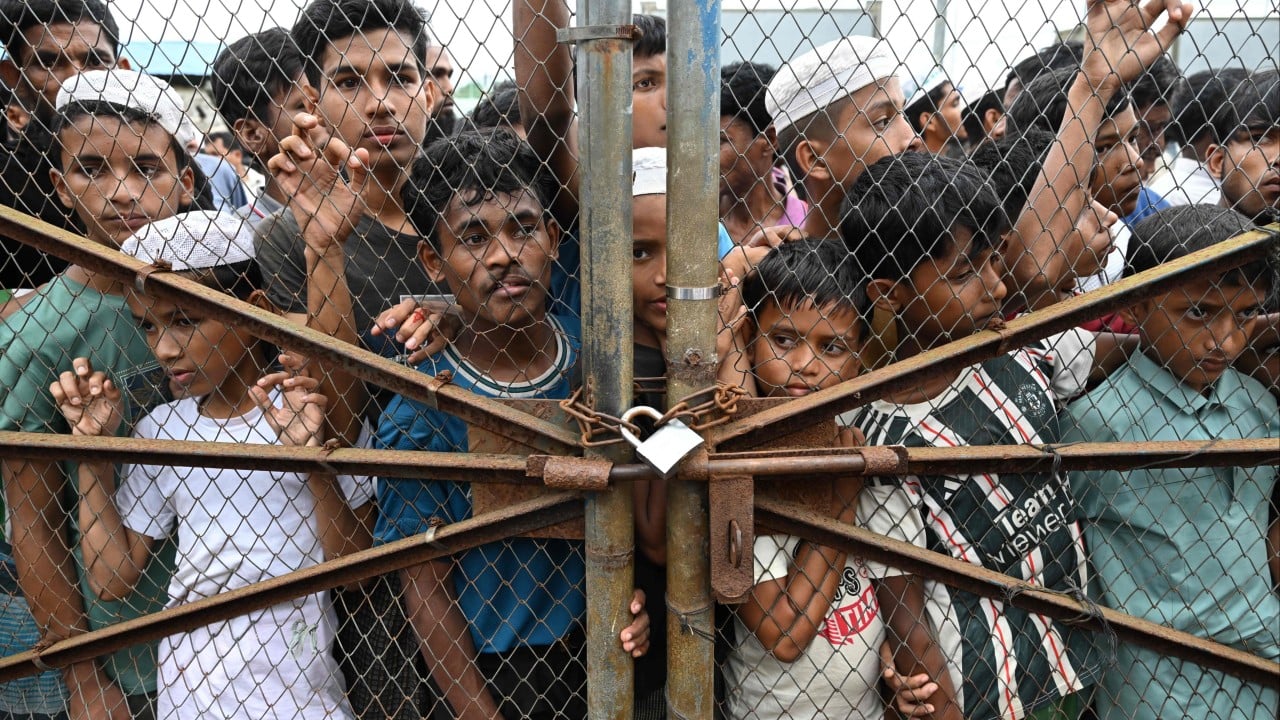
The International Court of Justice has ruled that Myanmar committed genocide against the Rohingya, formally recognizing the mass atrocities, systematic killings, and forced displacement of more than 700,000 Muslims from Rakhine State in 2017 as violations of the 1948 Genocide Convention. For survivors living in the sprawling refugee camps of Cox's Bazar in neighboring Bangladesh, the judgment delivers long-awaited legal vindication after years of diplomatic evasion. Yet beneath the historic headlines from The Hague lies a stark reality. The world's highest court holds no police force, no army, and no mechanism to compel a defiant military junta to surrender power or pay reparations.
Legal clarity has arrived nearly a decade too late for the dead.
When Gambia first filed the landmark case in November 2019 on behalf of the 57-member Organisation of Islamic Cooperation, skeptical diplomats in Western capitals privately questioned the strategy. A tiny West African nation, separated from the Bay of Bengal by thousands of miles, was invoking universal legal standing to hold a Southeast Asian military regime accountable. Lawyers argued that because the Genocide Convention represents an obligation owed to the international community as a whole, any signatory state possesses the legal right to bring a violator before the International Court of Justice. The judges agreed, clearing jurisdictional hurdles in 2022 before moving to the grueling merits phase that culminated in this definitive ruling.
Proving Specific Intent Behind Closed Doors
Genocide is the hardest crime to prove in international law. Prosecutors and state legal teams cannot simply point to mass graves, burned villages, or satellite imagery of razed neighborhoods, though Rakhine State offered all three in abundance. Under Article II of the Genocide Convention, the accusing state must establish dolus specialis, the specific intent to destroy, in whole or in part, a national, ethnical, racial, or religious group as such.
Military regimes rarely leave written memos outlining plans for extermination. Instead, Myanmar's generals relied on a familiar playbook of bureaucratic erasure and plausible deniability, framing their August 2017 "clearance operations" as a proportional counter-terrorism response to attacks by the Arakan Rohingya Salvation Army. To dismantle that defense, Gambia's legal team had to piece together a mosaic of state action spanning decades.
The court examined the systematic stripping of citizenship under Myanmar's 1982 Citizenship Law, which rendered the Rohingya stateless in their own homeland. Judges reviewed severe restrictions on movement, marriage, and childbirth, alongside state-sponsored hate speech amplified across social media platforms. When the military launched its offensive in 2017, the pattern of violence—mass executions, systematic sexual violence used as a weapon of war, and the deliberate burning of hundreds of villages to prevent return—crossed the legal threshold from ethnic cleansing into genocidal intent.
The Architecture of State Denial
To understand how Myanmar reached the dock in The Hague, one must look past the uniformed generals to the civilian leadership that once shielded them. In December 2019, Aung San Suu Kyi, the Nobel Peace Prize laureate who spent years under house arrest as an icon of democracy, traveled to the Netherlands to personally defend the military's actions before the court.
Her appearance shocked Western admirers, yet it reflected a cold domestic calculation. Suu Kyi was attempting to protect a fragile power-sharing arrangement with the Tatmadaw, Myanmar's armed forces, ahead of national elections. She argued that the court lacked jurisdiction and insisted that Myanmar's domestic military justice system was capable of investigating any isolated excesses committed by soldiers.
History quickly exposed the hollowness of that defense. In February 2021, the very generals Suu Kyi defended in The Hague staged a coup, ousting her government, imprisoning her, and plunging the entire country into a brutal civil war. Subsequent hearings at the International Court of Justice saw junta-appointed representatives take Myanmar's seat, recycling the same legal objections while their troops bombed civilian populations across the nation. The court's final judgment strips away every layer of that institutional cover, establishing an indisputable historical record that neither the junta nor any future civilian administration can legally erase.
Why a Historic Verdict Cannot Empty the Camps
Walk through the bamboo-and-tarpaulin shelters of Kutupalong in Cox's Bazar, and the distance between international jurisprudence and daily survival becomes immediately obvious. More than a million Rohingya refugees remain stranded in southern Bangladesh, entirely dependent on dwindling international food rations and barred from formal employment or unrestricted movement.
The International Court of Justice settles disputes between states; it does not put generals in prison cells. Individual criminal prosecution falls under the separate mandate of the International Criminal Court, which has been pursuing its own investigation into forced deportation and persecution, alongside universal jurisdiction cases filed in national courts like Argentina. Even when the top UN court orders provisional measures or final reparations, enforcement rests entirely with the United Nations Security Council.
That is where international accountability routinely hits a brick wall.
The Security Council Veto Trap
Any binding resolution to enforce an ICJ ruling—whether through targeted arms embargoes, asset freezes, or peacekeeping mandates—requires approval from the Security Council's five permanent members. China and Russia have repeatedly shielded Myanmar's military from sweeping Security Council action, viewing the country through the lens of strategic infrastructure corridors, arms sales, and non-interference doctrines.
Without Security Council backing, an ICJ judgment relies on diplomatic pressure, bilateral sanctions, and the willingness of third-party states to isolate the offending regime. For a military junta already sanctioned by the United States and the European Union, and currently fighting for its own survival against an alliance of ethnic armed organizations and pro-democracy resistance forces inside Myanmar, a legal rebuke from The Hague carries little immediate deterrent weight.
The Changing Reality on the Ground in Rakhine
The geopolitical terrain inside Rakhine State has also shifted dramatically since the 2017 atrocities. The Myanmar military no longer exercises undisputed control over the borderlands with Bangladesh. The Arakan Army, an ethnic Rakhine insurgent force fighting for autonomy from the central government, has seized vast swaths of territory across the state, pushing junta forces out of key townships and border posts.
This creates a bitter irony for the Rohingya. The court in The Hague has ruled that the Myanmar state committed genocide against them, yet the state apparatus itself is fracturing on the ground. Safe, voluntary, and dignified repatriation—the stated goal of Bangladesh, the United Nations, and the refugees themselves—now requires negotiating not just with a discredited junta in Naypyidaw, but with an armed ethnic movement on the ground whose own historical relationship with the Rohingya community remains deeply fraught and marked by recent cycles of localized violence and forced conscription.
What Happens to Global Accountability Now
Despite its enforcement limits, dismissing the International Court of Justice ruling as purely symbolic misses its profound impact on international law and global diplomacy. By affirming that a non-injured state like Gambia can successfully prosecute a genocide case to its conclusion, the court has permanently lowered the barrier for future accountability efforts.
States can no longer hide behind the absence of a directly affected neighboring country willing to file suit. The legal precedent established in the Myanmar case has already reshaped how nations approach conflicts from Eastern Europe to the Middle East, proving that the Genocide Convention is an active, enforceable legal instrument rather than a dusty post-World War II relic.
For donor nations, multilateral banks, and foreign corporations still operating in Southeast Asia, the ruling raises the legal and reputational cost of engagement with Myanmar's military. Doing business with state-owned enterprises controlled by a regime formally adjudged guilty of genocide invites intense scrutiny under international human rights due diligence standards. Furthermore, the evidentiary record compiled by the UN Independent Investigative Mechanism for Myanmar and validated by the court provides a ready-made blueprint for prosecutors pursuing individual war criminals in domestic courts worldwide whenever junta officials travel abroad.
The Burden Left on Bangladesh and the World
Justice in The Hague does not put rice on the table in Cox's Bazar. Bangladesh, which opened its border in 2017 and has borne the overwhelming economic, environmental, and security costs of hosting over a million refugees, faces growing donor fatigue as global crises compete for humanitarian funding.
With repatriation blocked by active warfare inside Rakhine State and international aid agencies forced to cut food voucher values in recent years, the international community faces a stark test of political will. Expanding third-country resettlement programs, funding education and livelihood initiatives inside the camps so an entire generation is not lost to idleness, and enforcing comprehensive global arms and aviation fuel embargoes against the junta are concrete steps governments can take today without waiting for a Security Council vote.
The International Court of Justice has fulfilled its mandate by naming the crime without equivocation. Whether that legal truth translates into actual protection and a future for the Rohingya people depends entirely on whether world leaders choose to act on the verdict or file it away as another solemn monument to atrocities they failed to stop.