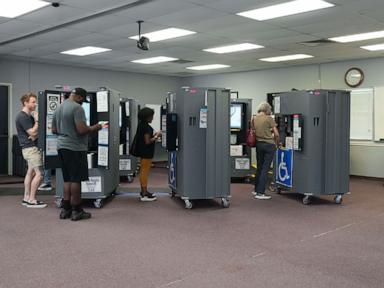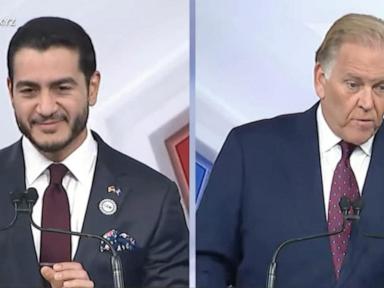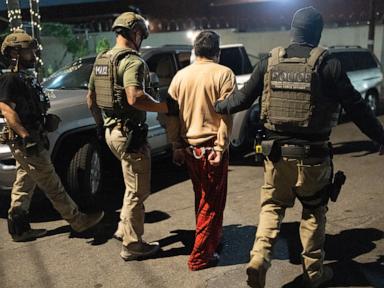
The Core Friction: Federal Enforcement vs. State Election Administration
A federal district judge in California ordered the Trump administration in late October 2026 to halt investigations across nine states into whether noncitizens were registered to vote, exposing a sharp clash between executive enforcement priorities and state-level election administration. A competitor headline framing the ruling simply as a halt to an investigation captures the surface event, yet misses the deeper institutional mechanics at play: federal agencies deploying investigative resources into state voter-roll territories right before an election, plaintiffs alleging voter intimidation and improper targeting of naturalized citizens, and appellate courts weighing temporary injunctive relief while related federal litigation unfolds.
To analyze this dispute rigorously, it helps to separate verified legal and procedural facts from educated hypotheses about administrative and political incentives. Verified facts come from public court actions and reporting around the October 2026 injunction and subsequent appellate and post-election developments. Educated hypotheses involve how federal agencies weigh enforcement trade-offs, how database mismatches create false positives among naturalized citizens, and how pre-election enforcement actions affect voter confidence and administrative workloads.
When reading coverage of a court order like this one, three analytical dimensions matter most:
- Jurisdictional and Procedural Boundaries: How federal courts evaluate preliminary injunctions, emergency stays, and administrative authority when an investigation reaches into state-administered election processes.
- Data Fidelity and Targeting Mechanics: How agencies identify suspected noncitizens, why naturalized citizens or lawful voters can get swept into screening lists, and what operational risks arise when armed or visible enforcement tactics intersect with civic activity.
- Temporal and Post-Election Dynamics: Why timing in the weeks before an election heightens legal stakes, and how court rulings and voluntary dismissals shape enforcement trajectories after ballots are cast.
Deconstructing Competitor Logic and Identifying Missing Cause-and-Effect
A standard news report on a court order typically follows a familiar sequence: state the ruling, identify the administration's stated goal, summarize the plaintiffs' objections, and note whether an appeal is expected. That structure informs the reader quickly, yet it leaves several cause-and-effect chains implicit rather than explicit.
What Standard Coverage Often Leaves Implicit
First, standard reporting often treats an "investigation" as a single monolithic action rather than a multi-stage operational pipeline. In practice, an enforcement effort moves from data matching and lead generation to field inquiries, subpoenas or document requests, and potential referrals or prosecutions. Halting the broader investigation interrupts all downstream stages simultaneously, changing both immediate field operations and longer-term case building.
Second, competitor framing frequently treats "noncitizen voting" and "voter registration" as interchangeable terms, even though they represent distinct legal and administrative events. Being listed on a roll, receiving a ballot or registration notice, attempting to register, and casting a ballot each involve different statutes, evidentiary standards, and state versus federal responsibilities. Conflating them blurs where actual legal violations—if any—occur and where administrative errors or database lags explain discrepancies.
Third, cause-and-effect relationships around deterrence and error rates are easy to overlook. When an enforcement campaign relies on imperfect citizenship records or broad screening criteria, two countervailing effects can emerge simultaneously:
- Over-inclusion risk: Eligible or naturalized citizens whose citizenship status is not yet reflected across every federal or state database can be misidentified as suspects or targets of inquiry.
- Chilling and friction effects: Even lawful voters or community organizers who are not breaking the law may alter their behavior if they perceive visible enforcement or intimidating tactics near voting or voter-outreach activities.
Known Facts vs. Educated Hypotheses
Maintaining strict separation between established record and analytical inference prevents overclaiming where public records are incomplete:
- Known Facts: A federal judge in California issued an order in October 2026 directing the Trump administration to halt investigations in nine states into noncitizen voter registration. Litigation and reporting around the effort—referenced in filings and reports alongside the "Unlawful Voter Initiative" and federal agency involvement—highlighted concerns over investigations reaching naturalized citizens and tactics involving armed agents or intimidating activity. Subsequent appellate activity and post-election developments also saw courts rule on emergency requests and the Justice Department move to dismiss certain election-related actions.
- Educated Hypotheses: Federal officials likely viewed proactive pre-election inquiries as a way to deter unlawful registration or voting before ballots were tabulated, while challengers likely viewed late-stage federal probes as disruptive to state election administration and potentially coercive toward minority or immigrant communities. Without granular internal agency logs or complete case dockets in public view, exact error rates across all nine states remain an analytical inference based on documented disputes over list accuracy and citizen inclusion.
The Three Pillars of Election Enforcement Friction
Any high-stakes dispute over federal voter-roll or noncitizen voting investigations can be mapped across three structural pillars: Statutory & Constitutional Authority, Information Asymmetry & Error Rates, and Operational Timing & Institutional Trust.
Pillar 1: Statutory and Constitutional Authority
Elections in the United States operate through a layered division of power. States hold primary responsibility for administering elections and maintaining voter rolls under constitutional and statutory frameworks, while Congress and federal executive agencies operate within specific statutory grants—such as federal criminal statutes barring noncitizens from voting in federal elections and federal immigration or homeland security authorities.
Friction intensifies when federal investigative tools are applied to questions intertwined with state voter registration lists and voter qualifications. A court reviewing a request for a preliminary injunction does not resolve every underlying constitutional question on the merits overnight; instead, it assesses threshold factors such as likelihood of success on the merits, irreparable harm, balance of equities, and the public interest. When plaintiffs argue that federal investigative methods infringe on protected rights or sweep in lawful citizens without sufficient justification, courts scrutinize whether the executive branch's means match its lawful mandate.
Pillar 2: Information Asymmetry and Error Rates
In data-driven enforcement, accuracy depends on record linkage across systems that were not originally built as a single real-time citizenship ledger. Citizenship status changes over time—most notably through naturalization—while voter registration databases are updated continuously by state and local officials.
If a screening workflow relies on stale records, partial name/date-of-birth matches, or outdated agency extracts, false positives become a structural hazard rather than a rare fluke. A naturalized citizen who voted legally after taking the oath of citizenship can appear anomalous if a dataset still reflects prior noncitizen status. Conversely, a genuine error or unlawful act can be obscured by noisy data if investigators lack verified, up-to-date records before taking intrusive action.
From a practitioner's standpoint, an enforcement program with high false-positive exposure faces a severe precision-versus-scale trade-off: expanding the net across nine states increases the raw volume of flagged records, but unless verification filters tighten proportionally, the share of benign or lawful cases rising to investigative attention grows alongside it.
Pillar 3: Operational Timing and Institutional Trust
Timing transforms routine administrative friction into acute institutional conflict. Conducting broad investigations or visible enforcement operations in the final weeks before an election compresses the window for error correction, legal review, and public clarification.
When an investigation occurs right before voting concludes, three operational consequences follow:
- Administrative diversion: State and local election officials must divert staff time and legal resources to respond to inquiries, verify records, and address public questions during peak election operations.
- Reputational volatility: Disputes over accuracy and tactics quickly spill into public debate, eroding confidence regardless of which side a voter favors.
- Litigation compression: Parties seek rapid emergency relief—temporary restraining orders, preliminary injunctions, and appellate stays—forcing courts to make consequential rulings under tight pre-election deadlines.
The Cost Function of Pre-Election Enforcement Probes
Rather than treating an enforcement halt as a simple win or loss on a scorecard, an analyst can evaluate the cost function faced by both executive enforcers and election administrators. Every enforcement action imposes direct and indirect costs across several variables:
- Direct Enforcement Cost ($C_{\text{exec}}$): Personnel hours, task-force deployment, inter-agency coordination, data processing, and litigation defense when actions are challenged in court.
- Error and Redress Cost ($C_{\text{err}}$): The administrative and legal burden of investigating, questioning, or flagging eligible citizens—and the institutional damage when lists contain inaccuracies.
- Deterrence and Friction Cost ($C_{\text{det}}$): Potential chilling effects on lawful participation or civic outreach if voters fear scrutiny, mistaken identity, or heavy-handed tactics.
- Non-Enforcement Risk Cost ($C_{\text{risk}}$): The risk that genuine statutory violations go unaddressed if oversight or verification mechanisms are weak.
A rational enforcement architecture seeks to minimize total expected cost while keeping error rates low and due-process protections intact. When an agency pushes high-volume or high-visibility field actions immediately before an election using contested lists, $C_{\text{err}}$, $C_{\text{det}}$, and litigation costs can spike sharply—prompting judicial intervention to pause the activity while legal and factual claims are tested.
Consider a stylized operational scenario. Suppose an investigative unit compiles a multi-state list of individuals flagged for potential noncitizen status and dispatches field agents ahead of an election. Even if a small fraction of flagged individuals actually violated the law, every mistaken contact with a naturalized citizen or lawful voter generates intense legal pushback and public controversy. A court stepping in to halt the probe effectively re-prices that cost function in real time, forcing a pause until authority, data reliability, and operational limits are clarified.
Answering Core Questions Through Structural Mechanics
Why Would a Federal Judge Halt an Investigation Across Nine States?
A federal court halts an ongoing executive activity via an injunction when plaintiffs make a sufficient threshold showing that continuing the activity during litigation threatens legally cognizable harm that cannot easily be undone later, and that the balance of equities favors a pause. In disputes over federal voting probes, courts examine both scope and method: whether the government has statutory authority for the specific investigative steps taken, whether lawful citizens or protected activities are being swept in unnecessarily, and whether less intrusive verification methods exist.
How Do Naturalized Citizens or Lawful Voters Get Caught in Noncitizen Probes?
Citizenship is not a static attribute in administrative records; individuals transition from noncitizens to naturalized citizens, and data synchronization across agencies or jurisdictions can lag. In addition, broad automated matching rules—such as matching on limited demographic fields without cross-checking recent naturalization or current registration updates—can misclassify eligible voters. When investigative protocols treat a database discrepancy as probable cause or a trigger for aggressive outreach rather than a prompt for careful record verification, lawful citizens bear the brunt of the mismatch.
What Happens After a Preliminary Injunction or Appeals Ruling?
A preliminary injunction freezes challenged conduct temporarily while the case proceeds rather than serving as a permanent final judgment on every underlying legal issue, and injunctions can carry specific duration terms or face appellate review. After an injunction is entered or appealed, the parties typically litigate stay requests, evidentiary discovery, and underlying statutory or constitutional arguments—or, as seen in related election litigation, the government may reassess or move to dismiss specific claims as procedural posture and post-election timelines shift.
Tactical Evaluation Framework for Policymakers, Litigators, and Analysts
To assess any future enforcement initiative or judicial ruling in this domain systematically, apply a five-step operational diagnostic:
- Audit the Statutory Hook First. Identify the exact federal statute or constitutional provision invoked for each investigative step, separating criminal enforcement, civil or administrative inquiries, and immigration authorities. Do not assume authority for one function automatically covers another.
- Trace the Data Lineage and Match Logic. Examine how target lists are built, how recently citizenship and registration records were updated, and what verification steps occur before any voter contact or public action. Treat unverified list matches as hypotheses requiring confirmation, not conclusive proof.
- Separate Registration Anomalies from Unlawful Voting. Distinguish clerical mismatches, inactive or outdated registrations, and uncompleted applications from actual unlawful ballot casting. Mixing these categories distorts both risk assessment and public reporting.
- Evaluate Tactics Against Proportional Risk. Assess whether investigative methods—such as field visits, written notices, subpoenas, or agency task forces—are calibrated to the evidence at hand and avoid unnecessary intimidation or disruption to lawful voters and civic participants.
- Map the Procedural Timeline. Track whether an action occurs during active voting, immediately post-election, or during routine off-cycle administration. Procedural posture heavily shapes judicial receptiveness to emergency stays, evidentiary burdens, and settlement or dismissal decisions.
Limitations and Failure Modes of Any Strategy
No enforcement posture or judicial rule eliminates friction entirely. Aggressive federal enforcement without tight data hygiene risks wrongful targeting, court injunctions, and credibility loss. Conversely, relying solely on slow, fragmented record checks without clear inter-agency protocols can delay legitimate investigations into actual unlawful conduct. Courts themselves face institutional limits when issuing rapid pre-election orders: incomplete records can create tension between appellate panels or district courts across different circuits.
Strategic Play for Institutional Actors
Federal agencies pursuing eligibility or election-integrity enforcement should shift from late-stage, broad-net field operations to pre-election data reconciliation and targeted, evidence-verified case building conducted well outside peak voting windows—pair every flagged record with multi-source citizenship and registration verification before any voter contact occurs, publish clear evidentiary standards for referrals, and build formal coordination protocols with state election officials so legitimate investigations withstand judicial scrutiny without turning routine record mismatches into courtroom defeats and public flashpoints.