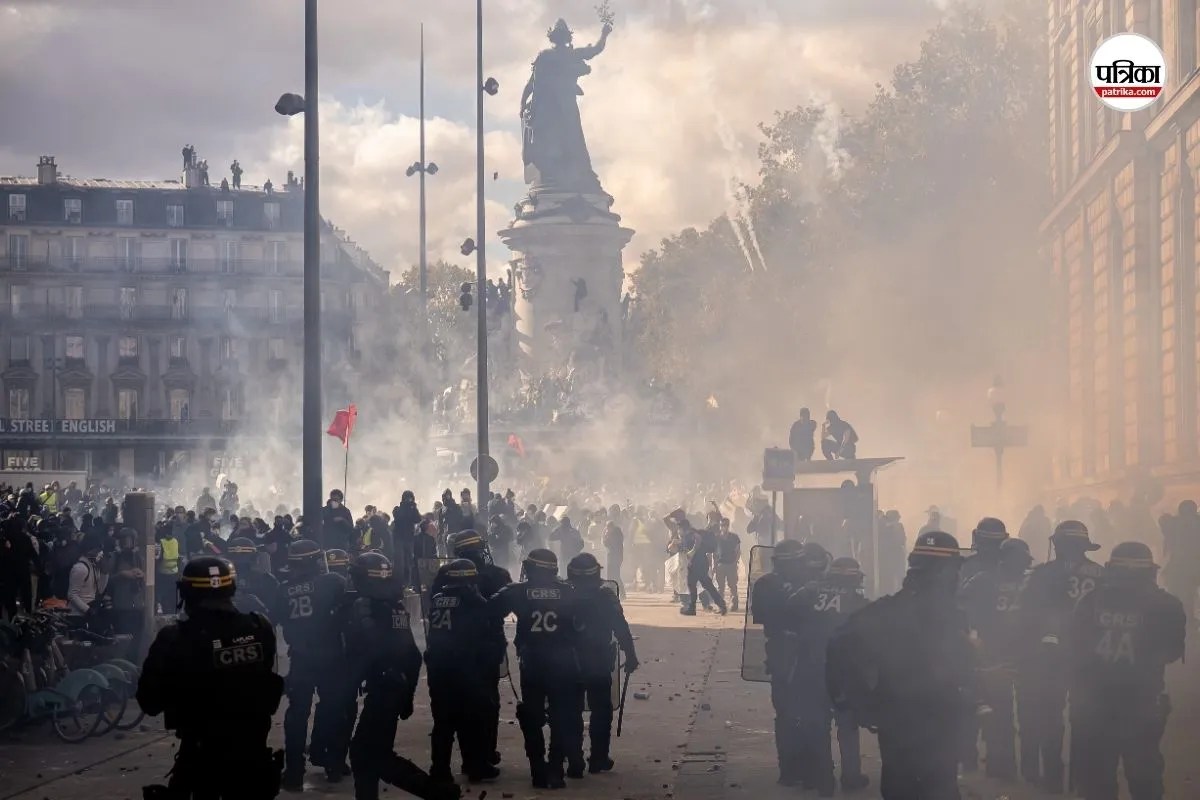
Acetic acid burns the back of the throat first. Before you even hear the percussion of a flash-ball or see the orange flare of a burning scooter through the plane trees, your eyes begin to water and your chest tightens as if someone just pulled the oxygen out of the avenue.
Smoke.
It drifts under wrought-iron balconies, clings to wet cobblestones, and makes a familiar neighborhood feel like a movie set nobody ordered. I have stood on the edge of that haze more than once—watching shopkeepers lower steel shutters with shaking hands while sirens wail from three directions at once—and what always strikes me isn't the noise. It's the silence that follows a shattered window. A quiet, heavy pause where everyone wonders what, exactly, just broke.
When headlines report that the French government is in crisis mode after a weekend of riots, they usually hand you a ledger. So many arrested. So many vehicles torched. So many emergency meetings called inside gilded ministries while markets watch from afar. Useful? Maybe. Complete? Not even close. A ledger tells you the tally of damage; it rarely tells you why a country reaches a boiling point over a single weekend, or what happens inside the rooms where ministers try to hold a state together while the street refuses to listen.
The Morning After the Smoke Clears
Picture a hypothetical character—let's call her Nadège—opening a bakery in Lyon at 5:30 a.m. on a Monday morning. She is purely a composite for the sake of this story, built from dozens of small-business owners I've spoken with after volatile weekends in France, though the dough rising in her ovens is real enough.
Her front glass is intact. That is already a small mercy. Two blocks over, a bus shelter is twisted metal and scattered glass, and the smell of scorched rubber still hangs low in the damp air. Nadège wipes down the counter, flips on the espresso machine, and turns her small radio low. A government spokesperson is speaking in calm, measured French about "restoring republican order," "targeted responses," and "dialogue with elected officials."
Nadège listens for ten seconds and switches it off.
To her, the crisis isn't an abstract constitutional puzzle or a cable-news chyron. It's the delivery van that couldn't get through on Sunday night. It's the teenage apprentice who lives in a housing block on the edge of town and arrived twenty minutes late because the tram line was halted. It's the nagging dread that if things flare up again next Saturday, her livelihood becomes collateral damage in a war she didn't start.
Why do weekend riots in France so quickly tip the entire government into crisis mode?
Because in France, street unrest rarely stays confined to the street. A spark in one city or one neighborhood doesn't just test local policing; it tests the legitimacy of the central bargain. France has long operated on a centralized, high-stakes social contract: citizens accept strong state authority and heavy taxation in exchange for public services, social protection, and a sense that the republic looks out for its own. When that bargain feels frayed—whether over economic strain, policing tensions, living costs, or perceived political deafness—a violent weekend becomes a mirror held up to the presidency and the prime minister. Suddenly, every ministry is scrambling not just to clear barricades, but to prove the state is still steering.
Inside the Pressure Cooker
To understand the panic inside government offices after a turbulent weekend, think of a pressure cooker whose valve has been jiggling for weeks. (This is a metaphor—a way of visualizing how accumulated grievances build force behind closed doors before blowing outward.) You can tighten the lid and turn down the burner a fraction, hoping the steam settles quietly. What you cannot do is pretend the pressure isn't there.
In Paris, crisis mode looks deceptively tidy on paper. Emergency security briefings. Calls to prefects across affected departments. Debates over deploying extra mobile gendarmerie units, reinforcing public transit hubs, or convening opposition leaders and mayors. Ministers weigh two competing fears at once: looking weak if unrest spreads, or looking heavy-handed if aggressive tactics inflame a second wave of anger.
That tightrope is brutal. Move too slowly, and critics accuse the government of losing control of the territory. Move too hard, and every viral video of a scuffle becomes fuel for people who already believe the system is stacked against them.
Meanwhile, out in the neighborhoods where the trouble began, the grievances often feel older than any single weekend. Rising rents, stagnant paychecks, frayed trust between young residents and law enforcement, neighborhoods that feel economically invisible until a camera crew arrives—none of those problems are invented on a Friday night. A flashpoint simply brings years of quiet friction to the surface all at once.
I've seen how quickly nuance gets flattened during those hours. On social media, a complex neighborhood frustration gets reduced to slogans within minutes. In press conferences, complex social realities get reduced to law-and-order talking points. Both sides talk past each other over the roar of sirens, and the middle ground—where ordinary people actually live and work—shrinks by the hour.
The Questions Everyone Asks When the Sirens Stop
When a weekend of riots shakes the government, people outside France—and plenty of people inside it—immediately reach for familiar questions. Why does this happen so intensely here? Does a crisis like this force immediate policy changes, or does it mostly harden positions?
History gives us a sobering answer, though not a simple one. In France, protest and confrontation have deep roots; the street has long functioned as a political megaphone when people feel ballots aren't enough. Sometimes intense unrest forces governments to pause, rethink, or negotiate. Other times, it triggers a stern crackdown, a wave of arrests, and fierce parliamentary finger-pointing while the underlying tensions cool only on the surface.
What often gets missed in the rush to judgment is how exhausting the aftermath is for people who aren't throwing stones and aren't sitting in ministerial meetings. It's the parents checking their phones every ten minutes when a teenager is out late. It's the municipal worker sweeping broken glass at dawn. It's the local mayor trying to calm angry residents in the morning and appease furious officials in Paris by afternoon.
Admittedly, untangling all of this is messy. Anyone who claims a weekend of riots has one neat cause or one tidy fix is selling you a shortcut. Politics is human, contradictory, and stubborn. When fear and anger collide in public squares, even seasoned leaders can misread the room.
What Lingers After the Curfew
By Tuesday or Wednesday, the worst of the smoke usually clears. Traffic flows again. Politicians trade barbs in the National Assembly, analysts dissect polling numbers, and the news cycle starts hunting for the next big story.
Yet something stays behind in the air. You notice it in the way people look at a shuttered storefront a little longer than usual, or in the cautious tone of a neighbor who says, "Ça va," without quite sounding convinced. A government can clear a boulevard in a few hours, but rebuilding trust—quietly, street by street, conversation by conversation—takes far longer than a weekend.
Look closely at a scorched curb on a quiet morning, and you aren't just seeing what burned. You're seeing the exact spot where a country ran out of patience—and wondering what it will take to make people believe in the tomorrow they're standing on.