Silence.
That is the first thing most people remember right before a heavy metal box stops listening to its driver. One second, the morning routine feels almost boring—the hum of tires on asphalt, the shuffle of backpacks, the familiar rhythm of a route traveled a hundred times before. The next second, a pedal sinks too far, or a gear slips, or a sudden crisis turns an ordinary commute into a moving cliff edge. For a closer look into this area, we suggest: this related article.
When a headline reads like a five-word telegram—"Hero saves kids on bus"—it gives us the outcome before we have even felt the weight of the moment. We see the rescue. We watch the clip. We nod, shake our heads, and move on to whatever else is waiting on our screens. Yet a dry summary flattens everything that actually makes a rescue possible. It skips the split-second math inside a human chest. It skips the ordinary training, the muscle memory, and the quiet terror of realizing that a dozen or thirty small lives depend on what you do in the next three seconds.
I have stood on the side of a busy road while a heavy vehicle wheezed past with a bad brake line, smelling the hot, sharp tang of friction and burnt lining before anyone else in the car even spoke. You do not hear a siren first. You hear a change in tone—a deeper rumble, a slight hesitation where there should be smooth power, a shift in how the weight leans into a curve. Once you have felt that sudden lurch in your stomach, you never look at a school bus or a commuter coach the same way again. For additional details on this topic, extensive coverage can be read on TIME.
The Thin Margin Inside Every Morning Route
To understand why a bus rescue feels so magnetic, we have to look past the "hero" label and examine what usually happens when things go wrong on the road. Because the competitor reference gives us only a bare headline without a specific incident, location, or named individual, I want to be transparent about how I am approaching this story. We are working from the universal reality of bus emergencies—mechanical failures, sudden driver incapacitation, traffic hazards, and rapid evacuations—and I will use hypothetical scenarios clearly marked as such to show how those moments unfold on the ground.
Consider a hypothetical scenario: a twelve-year-old boy sitting in the third row on a Tuesday morning, headphones half-off, watching rain streak across the glass. Nothing dramatic has happened yet. His biggest worry is whether he remembered his math worksheet. Ahead of him, the driver—let us call her hypothetical character Nadia—is guiding a forty-foot vehicle through morning traffic where cars dart between lanes without signaling.
In emergency response and transport safety, professionals talk a great deal about reaction time. On paper, it sounds neat: see hazard, apply brake or steer clear, stop. In real life, human perception is messy. Eyes take a fraction of a second to register an abnormal change. The brain takes another fraction to separate a minor bump from a genuine failure. By the time the nervous system sends the command down to the limbs, the bus has already traveled dozens of feet.
Think of a heavy bus like a slow-moving freight train compared to a compact sedan. A passenger car stops on a dime; a bus carries massive momentum. When something fails—whether a brake system loses pressure, a driver suffers a sudden medical episode, or an obstacle forces an abrupt decision—time compresses. Seconds feel stretched like taffy, yet the clock only moves at one speed.
Most of us like to imagine we would rise to the occasion in a crisis. Honestly, I used to think the same way until I watched how fast ordinary people freeze when smoke or shouting breaks out in a crowded space. Freezing is not cowardice. It is the brain trying to load a program it has never run before. That is why the person who steps forward—whether a quick-thinking driver, a passerby who flags down traffic, a teacher on board, or an older student who unlatches an emergency exit—stands out so sharply. They move while everyone else is still trying to believe the danger is real.
What A "Hero" Actually Does In Those First Ten Seconds
We love neat archetypes. We put one person in the "hero" box and everyone else in the "bystander" box, as if bravery were a genetic trait handed out at birth like blue eyes or left-handedness.
Real life rarely works that cleanly.
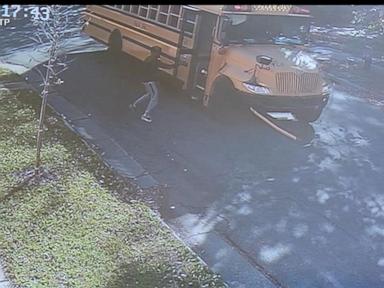
When a bus is in trouble, saving children rarely comes down to a single cinematic leap. Usually, it is a chain of small, decisive actions strung together under intense pressure. Let us trace another hypothetical scenario to see what those first ten seconds can look like. Suppose a bus driver experiences a sudden medical event at the wheel, and the vehicle begins to drift toward a busy intersection or a roadside ditch. A quick-thinking monitor or adult on board—say, hypothetical character Tariq—realizes immediately that the bus is not slowing down and the wheel is turning wrong.
What happens next is not magic. It is triage.
First, someone has to keep the vehicle from hitting the worst possible thing. If the bus is still moving, grabbing the wheel or hitting the emergency stop—where accessible—can mean the difference between a glancing scrape and a catastrophic impact. Second, someone has to manage the room. Children take their emotional cues from the adults around them. If the adult screams or panics, thirty kids multiply that panic tenfold. If an adult barks clear, short instructions—"Stay in your seats," "Hold the rail," "Back door now"—fear still exists, yet it gets channeled into motion.
Third comes the exit. Evacuating a bus sounds simple until you picture thirty kids with heavy bags, narrow aisles, uneven steps, and traffic whizzing past outside. A single jammed latch or a child tripping on the bottom step can create a bottleneck in two seconds. Someone has to be at the door, steadying small hands, pushing kids clear of the roadway rather than letting them wander into oncoming lanes.
I find that detail—where children go after stepping off the bus—deeply unsettling. Getting off the vehicle is only half the battle. A child who steps out of a disabled bus into live traffic faces a second, deadlier hazard if nobody guides them to solid ground away from the curb. True rescue is not just pulling someone out of danger; it is setting them down somewhere safe.
Why Headlines Flatten The Human Cost
There is a reason stories about saving children hit a nerve that few other news items touch. Children carry an unspoken promise in every society: they are the ones who have not had their chance yet. When a bus full of kids is threatened, every parent, sibling, aunt, uncle, or neighbor who reads the story quietly substitutes their own child's face into the back seat.
Yet standard news coverage often treats the event like a fast-moving sports highlight. We get the dramatic clip, a quote from a shaken witness, maybe a brief mention of emergency crews arriving at the scene. It is fast, tidy, and easy to digest between meetings.
But the real problem lies elsewhere: speed often erases context.
A short video clip cannot show the shaking hands ten minutes after the adrenaline fades. Adrenaline is an extraordinary chemical—it sharpens focus, numbs minor pain, and pushes muscles past normal limits—but it bills you later. Anyone who has ever slammed on the brakes to avoid a collision knows that strange, hollow trembling that hits your legs once the car finally stops. Now multiply that by dozens of terrified kids and a crisis that lasted a whole minute instead of two seconds.
Consider what happens next: the crowd gathers, phones come out, sirens wail in the distance, and the person who stepped up suddenly has to answer questions while their heart is still hammering against their ribs. Often, the person called a hero does not feel heroic at all. They feel exhausted. They feel grateful nothing worse happened. Sometimes they replay the moment for weeks, wondering if they could have moved faster or checked one more seat before stepping off.
Admitting that uncertainty matters. If we turn every rescuer into a cartoon superhuman, we set up an unfair myth—that only rare, fearless people can help when trouble hits. In truth, ordinary people step up every day because someone has to, even while their stomach is in knots and their mind is racing with doubts.
The Quiet Architecture Behind Every Safe Arrival
When we talk about safety on buses, we usually focus on the dramatic failure—the blowout, the collision, the emergency stop. Far less glamorous is the quiet architecture that prevents disaster in the first place, or makes escape possible when disaster strikes.
Think of it like the foundation of an old house. You do not admire the foundation while hosting dinner, yet the moment the ground shifts, everything above it depends on how solid that base was poured.
On a bus, that foundation includes things most passengers never notice:
- Routine mechanical upkeep: Brakes, tires, steering linkages, and warning lights checked before a route starts, not after a strange noise becomes impossible to ignore.
- Clear emergency exits and aisles: Latches that actually open smoothly under stress, windows and roof hatches that people know how to use, and aisles not choked with loose gear.
- Practiced drills: Evacuation drills can feel tedious or silly when the sun is shining and the bus is parked safely in the lot. Yet muscle memory is built in boredom so it can answer when terror arrives.
- Calm leadership: A driver or attendant who knows the route, knows the vehicle's quirks, and can project steadiness when things go sideways.
None of these things make flashy television. Nobody posts a thrilling clip of a mechanic tightening a fitting at six in the morning or a driver running through a pre-trip check in the cold. Yet those unglamorous habits are the exact reason most bus rides end with nothing more exciting than a late arrival.
Even when a failure does happen, good habits act like shock absorbers. A well-maintained vehicle is easier to steer out of trouble. A person who has thought through "What would I do if..." loses fewer precious seconds staring blankly at the aisle.
When Ordinary People Become The Difference
I have noticed a pattern in how people talk about emergencies after the dust settles. First comes awe: How did they react so fast? Then comes distance: I don't know if I could ever do that.
That second thought is understandable, yet it misses the most encouraging part of the story. Most rescues are not performed by action stars. They are performed by people who showed up to do an ordinary job, or happened to be standing in the right spot when a terrible second arrived.
Imagine a hypothetical scenario where a bus stalls on a steep incline or in a hazardous spot, and a nearby motorist—let us call him hypothetical character Daniel—pulls over, puts on his hazard lights, and steps forward to block oncoming traffic while kids exit the door. He is not wearing a cape. He is probably late for work. He might be nervous around heavy traffic himself. For two or three minutes, though, he chooses to stand between vulnerability and harm.
Or picture an older student sitting near the back—hypothetical character Ayesha—who notices smoke or distress up front, helps younger kids unbuckle or gather their things calmly, and guides them toward the rear exit without pushing. Nobody gave her a medal beforehand. She simply refused to let panic take the wheel.
When we strip away the clichés and look closely at what happens in those moments, something remarkably human shines through. Courage rarely looks like a roar. More often, it looks like a steady voice in a shaking room. It looks like one hand reaching out to steady a child on a steep step. It looks like refusing to look away when everything in your body wants to run.
A headline can tell you that children were saved on a bus. It can give you the barest skeleton of an event in five words. Yet the real story lives in the breath between danger and safety—in the split-second choice of a human being who decided those kids were worth fighting for.
The doors swing open, small feet hit solid ground, and somewhere a parent's phone stays silent because a stranger—or a driver, or a teacher—refused to let the worst happen.