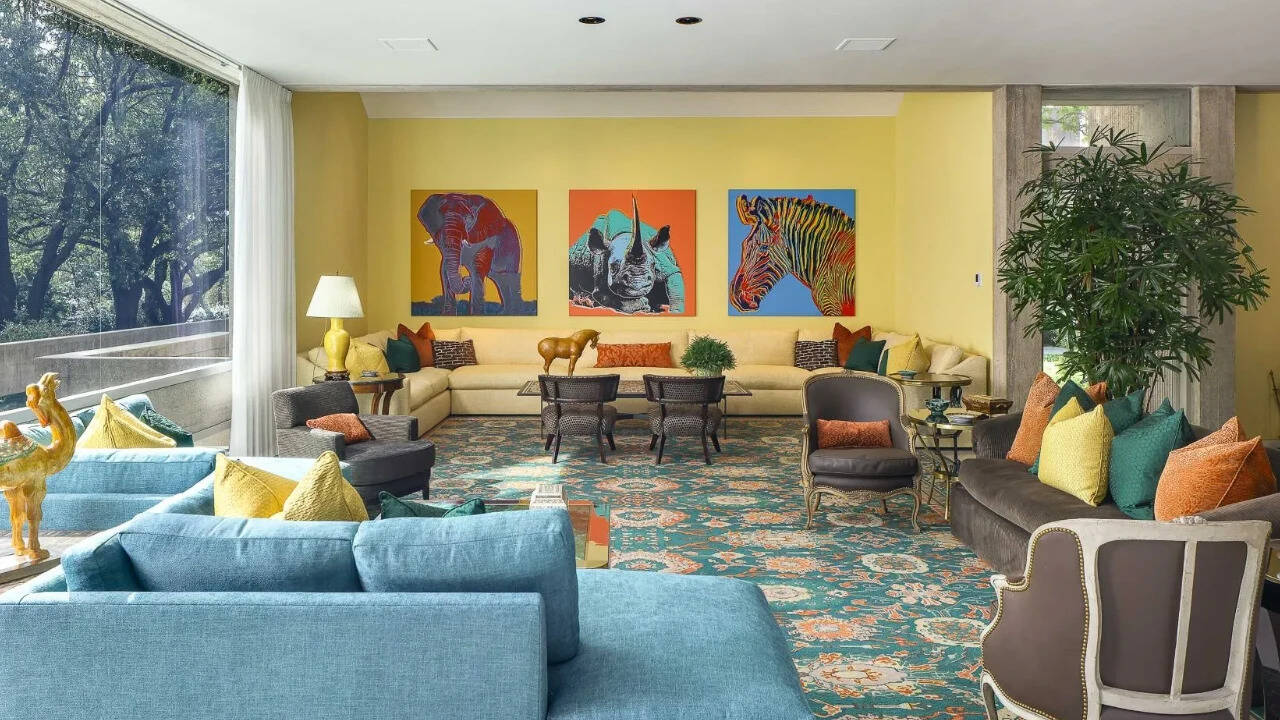
Twenty-two million dollars buys a lot of square footage in Texas. For that sum, a buyer can claim sprawling ranches with private airstrips, gated estates in Highland Park or River Oaks with wine cellars deep enough to outlast a siege, or glass-walled palazzos overlooking quiet hill country valleys.
Money.
Yet when a rare residential work by I.M. Pei reaches the market at that price tag, the ledger stops behaving like a normal real estate sheet. Suddenly, you are not merely pricing timber, stone, glass, and acreage. You are pricing an argument about space, light, geometry, and permanence made by an architect who spent his career treating buildings as quiet instruments tuned to the sky.
I have walked enough architectural properties over the years to know the strange hush that settles over a room when a master has shaped the daylight. You stand still without deciding to stand still. Your eyes track a sharp shadow cutting across a travertine or concrete wall at four in the afternoon, and for a second you forget your phone, your schedule, and the asking price sitting on the brochure.
That is the real tension behind a twenty-two-million-dollar Pei residence in Texas. Real estate markets love certainty—price per square foot, comparable sales, bedrooms, bathrooms, resale velocity. Great architecture resists all of it. A house designed in the spirit of I.M. Pei is not a trophy to be flipped every thirty-six months like a luxury car; it is a physical essay in proportion that demands stewardship.
The Price Tag That Measures the Wrong Thing
Ask any seasoned broker in Dallas or Houston what twenty-two million dollars means on paper, and they will give you crisp numbers. They will talk about lot size, privacy, school districts, and trophy appeal among ultra-high-net-worth buyers relocating from California, New York, or overseas.
Numbers are easy. Meaning is harder.
In conventional luxury real estate, a home's value is built from accumulation: more square feet, higher ceilings, grander foyers, extra guest suites, lavish finishes stacked one on top of another until the house feels like a five-star resort that forgot how to exhale. Pei worked in the opposite direction. His discipline came from subtraction, clarity, and structural discipline—the kind of rigor forged through modernist training and lifelong study of how natural light behaves across angled planes.
To understand why a rare I.M. Pei home commands twenty-two million dollars, you have to stop counting rooms and start watching shadows.
Consider what happens when a house is built around geometry rather than ornament. Angles create pockets of calm. Skylights and tall expanses of glass do not simply let the Texas sun pour in—in a state where summer light can be blinding and relentless, careless glass turns a living room into a greenhouse. Thoughtful modernist architecture filters, frames, and paces that light so a morning coffee feels different from a late-afternoon conversation.
Still, I have to admit something honest here: buying an iconic modernist house can feel intimidating, even a little scary. When you look at crisp lines, exposed structural materials, and carefully calibrated sightlines, a nagging voice asks a very human question: Am I allowed to live comfortably here, or do I have to tiptoe around my own home like a museum guard?
That doubt is real. Anyone who has ever set a wet glass on a prized table or wondered whether a sofa looks "too messy" in a minimalist room knows the friction between museum reverence and everyday life.
A Hypothetical Afternoon Inside the Walls
To see how that friction plays out in real life, picture a hypothetical scenario—a fictional buyer named Elena, a gallery director who has spent fifteen years curating sculpture and drawings, walking through a Pei-designed Texas residence on a warm October afternoon.
Elena arrives skeptical. She has seen plenty of "architectural" homes that were really just cold concrete boxes with high ceilings and echoing hallways. Places that look extraordinary in a magazine spread and feel exhausting by Tuesday night.
She steps across the threshold and pauses. There is no theatrical foyer shouting for attention. Instead, the eye is guided along a clean geometric axis toward a courtyard where live oaks filter the afternoon sun. As she moves from one room to the next, the ceiling height shifts subtly. A low, intimate passage opens into a tall, light-filled volume where a crisp diagonal beam of sunlight moves slowly across a textured wall.
Elena notices something subtle: there is no visual clutter competing for her attention. Even the transition between indoors and outdoors feels deliberate rather than accidental. She imagines hosting a small dinner there—friends lingering at the table long after dessert while cicadas hum outside and warm lamps glow softly against cool stone.
Then her practical side kicks in. Where does the mail go? Where do muddy boots land after a walk in the yard? How do you heat or cool expansive glass and heavy masonry without watching utility bills spike when a July heatwave hits ninety-eight degrees?
Those questions are not petty. They are the exact questions that separate a romantic fantasy from a livable home. A great house survives those questions because its bones were planned for human routines, even when its silhouette looks sculptural enough to belong in an art monograph.
Why Texas Makes This Pairing Unforgettable
Texas has never been shy about building big. From historic limestone houses and ranch compounds to sleek contemporary towers, the state's architectural history is a tug-of-war between wide-open horizons and intense climate.
Bringing I.M. Pei's sensibility into that environment creates a striking dialogue. Pei was famous for public landmarks—museums, civic buildings, glass pyramids, and soaring geometric forms—that gave communities places to gather and look up. Residential commissions by architects of his stature are far rarer, which is why every one that surfaces draws intense scrutiny from collectors, design historians, and wealthy buyers alike.
People often ask a straightforward set of questions whenever a property like this hits the market: Why is a single-family home priced at twenty-two million dollars when it doesn't have the sprawling excess of a mega-mansion? Does a famous architect's name automatically hold value over decades? And what happens if a future owner wants to renovate?
The answer to the first question lies in scarcity and pedigree. You cannot mass-produce an architect's signature touch, and you cannot go back in time to commission a late-career or mid-century master on a whim. When supply is measured in single digits rather than subdivisions, price reflects cultural rarity alongside land and structure.
The second question—whether architectural pedigree holds value—depends on whether the next buyer cares about provenance. To someone chasing trendy finishes, a decades-old modernist house might look dated. To someone who understands architectural lineage, clean proportions and enduring materials age with far more grace than passing interior fads.
And the third question is the most delicate of all: renovation. Buying a home tied to a celebrated architect carries an unspoken covenant. If you gut the floor plan, slap cheap drywall over intentional sightlines, or ignore roof and glazing maintenance, you risk stripping away the very soul that made the property valuable in the first place.
What Stewardship Actually Costs
Here is the part real estate listings rarely spell out in bold print: the purchase price is only the opening bid in a much longer relationship.
Owning a significant architectural residence in Texas means respecting the climate and the craft. Extreme heat, sudden storms, shifting soil, and aging mechanical systems all test a building over time. Flat or low-sloped roofs, expansive glazing, specialized stone or concrete finishes, and custom millwork require craftspeople who know what they are doing—not contractors guessing their way through unfamiliar detailing.
But the real problem lies elsewhere.
The biggest threat to a rare architectural home is not weather or wear and tear. It is indifference. It is treating a work of spatial art like a disposable asset, letting deferred maintenance pile up, or chasing flashy updates that erase the quiet restraint that made the house extraordinary.
Consider what happens next when a buyer steps forward with genuine care instead of mere ego.
Suddenly, the twenty-two-million-dollar price stops looking like an extravagant splurge and starts looking like a transfer of custody. One owner passes the keys to another, keeping a piece of twentieth- and twenty-first-century design history alive and breathing rather than locked behind velvet ropes.
Living With Light Rather Than Owning a Trophy
There is a reason people still talk about I.M. Pei decades after his major works reshaped skylines and public squares around the world. He understood that architecture isn't just about walls holding up a roof. It is about shaping how human beings experience time, light, and stillness.
A house can hold a family, host a hundred memories, absorb quiet mornings and loud celebrations, and still stand as a testament to clear thinking. When a rare Pei home in Texas goes on the market for twenty-two million dollars, the number on the sign is only a headline.
The real story is whether the next person who walks through the door knows how to listen to the light.
A single shaft of late-day sun slips across a quiet wall, marking the hour without a single chime.