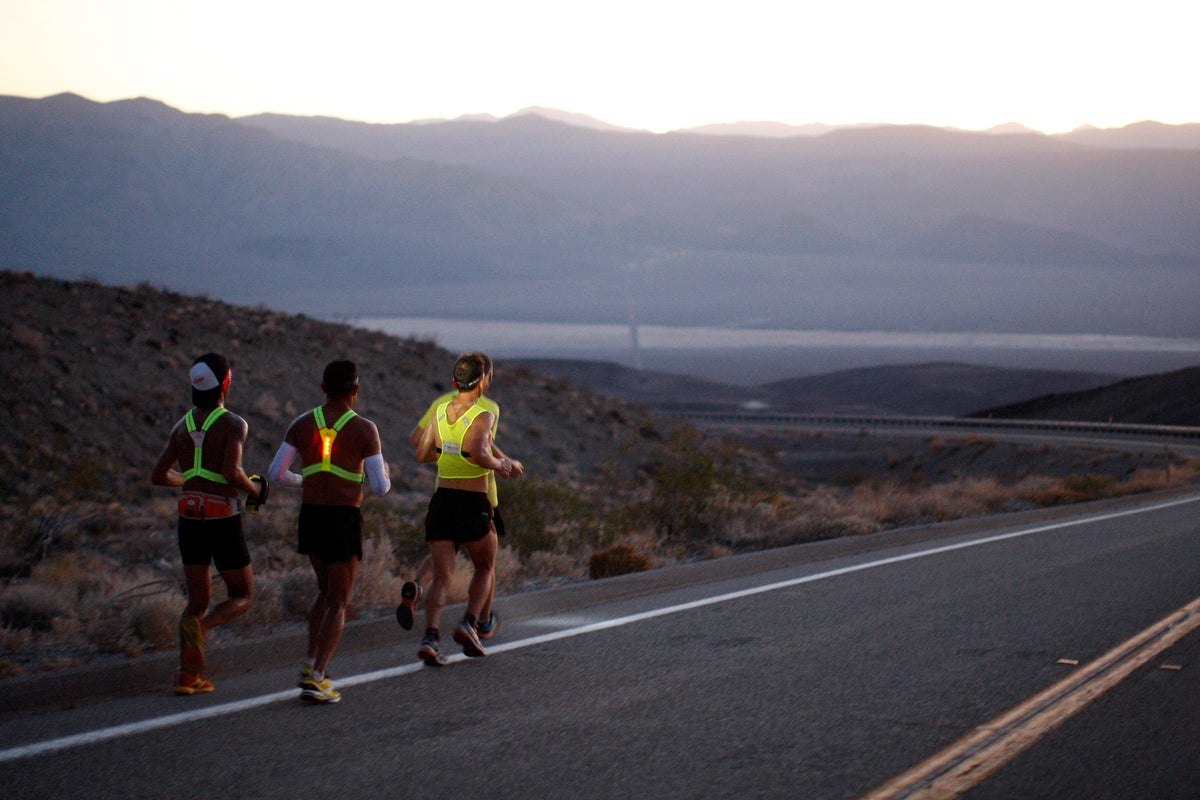
Ultramarathon running isn't just about sore legs or missing toenails anymore. It has reached a level of physical tax that the human body wasn't designed to handle. This week, the community is reeling after a runner died during the Cocodona 250, a massive race through the rugged terrain of Arizona. This isn't just another tragic headline. It’s a wake-up call about the limits of endurance and the inherent dangers of 250-mile races.
The runner, identified as 45-year-old Pierre-Alexis Souliere from Montreal, collapsed on the trail. Despite immediate medical intervention from fellow runners and race staff, he couldn't be revived. He was an experienced athlete. He knew the risks. But in a race like Cocodona, "risk" is a constant companion that doesn't care about your resume.
What actually happens during the Cocodona 250
You don't just "run" 250 miles. You survive them. The Cocodona 250 starts in Black Canyon City and ends in Flagstaff. The course climbs over 33,000 feet. That's more than the height of Mount Everest. You're dealing with extreme heat in the canyons and freezing temperatures as you climb into the pine forests.
Most people think the biggest threat is a heart attack. While cardiac events are a concern, the real killers are often more subtle. Rhabdomyolysis is the big one. It happens when your muscle tissue breaks down so fast that the debris clogs your kidneys. Your organs literally stop working because you're pushing too hard. Then there’s hyponatremia, where you drink too much water and your sodium levels crash, leading to brain swelling.
The physical toll is staggering. Data from ultra-endurance studies shows that after 48 hours of continuous movement, cognitive function drops to levels similar to legal intoxication. You make bad choices. You forget to eat. You miss the signs that your body is shutting down.
Why Arizona trails are uniquely dangerous
Arizona isn't like the lush trails of the Pacific Northwest or the consistent climbs of the European Alps. It's erratic. The ground is often "kitty litter" — loose decomposed granite that slides under every step. It wears out your stabilizing muscles three times faster than flat ground.
Then there’s the sun. In the 2024 race, temperatures in the lower elevations hit the mid-90s. When you're 150 miles in, your body’s ability to regulate temperature is basically gone. You aren't sweating effectively. You're just cooking.
The race organizers, Aravaipa Running, are among the best in the business. They have medics, tracking pings every few minutes, and aid stations stocked like small grocery stores. But 250 miles is too much ground to cover perfectly. There are sections where you’re miles away from the nearest road. If you go down there, you’re relying on the kindness of the next runner to find you. In Souliere's case, he was found quickly, but sometimes the damage is already done.
The demographic of the ultra-distance runner
We need to talk about who is doing these races. It isn't just elite 20-somethings. The average ultramarathoner is in their 40s.
Recent participation stats show that while the 100-mile distance has grown, the "mega-ultra" (200+ miles) has exploded by over 400% in the last decade. People are looking for the next "hardest thing."
- Age: 40-49 is the most common age bracket for 200-mile finishers.
- Gender: Men make up about 70-75% of the field, though female participation is rising.
- Background: Often high-achieving professionals (doctors, engineers, CEOs) who crave the mental clarity found in extreme suffering.
The problem? These runners have "grit." Grit is great for finishing a project at work. It’s dangerous when your heart is skipping beats on a mountain at 3:00 AM. They’re trained to ignore pain. Sometimes, they ignore the pain that’s trying to save their life.
Medical screening and the future of the sport
Should these races require more than just a credit card and a qualifying run? Currently, most 200-milers require you to have finished a 100-mile race recently. That proves you can run for 24 hours. It doesn't prove your heart can handle 100 hours.
We might see a shift toward mandatory EKG heart screenings, similar to what some European races like the UTMB (Ultra-Trail du Mont-Blanc) have explored. Some argue it's an invasion of privacy or an unnecessary hurdle. I think that's nonsense. If we can spend $1,500 on carbon-plated trail shoes and $500 on race entries, we can afford a heart check.
The tragedy at Cocodona wasn't due to a lack of preparation by the organizers. It was the brutal reality of the sport. When you redline the human engine for four days straight, things break.
Understanding the signs of total system failure
If you're training for an ultra or supporting someone who is, you have to know when "toughing it out" becomes "dying." Pain in the legs is fine. Pain in the chest, neck, or jaw is an immediate DNF (Did Not Finish).
Dark urine is another massive red flag. If it looks like Coca-Cola, your kidneys are failing. You need an IV and a hospital, not a salt pill and a pep talk.
We also need to normalize quitting. In the ultra community, the DNF is often seen as a badge of shame. That culture has to change. Quitting because you’re tired is one thing. Quitting because your pulse is 160 while you’re sitting down is a smart business decision.
How to stay alive on the 200 mile circuit
If you're planning to tackle a race like Cocodona, Moab 240, or Bigfoot 200, stop focusing only on your weekly mileage. Start focusing on your "floor."
- Get a full cardiac workup. Don't just do a physical. Get an echocardiogram. Know if you have an underlying condition that extreme stress will trigger.
- Train for the heat, not just the hills. Heat stroke is a primary driver of organ failure in Arizona races. Use sauna protocols to acclimatize.
- Prioritize sleep. The hallucinations at mile 200 are funny in YouTube videos, but they indicate severe neurological stress. Sleep for 20 minutes before you think you need it.
- Listen to the medics. If an aid station volunteer tells you that you look like death, believe them. They have a perspective you lost 50 miles ago.
The death of Pierre-Alexis Souliere is a tragedy for his family and the entire running community. He died doing something he loved, but we owe it to his memory to be smarter about how we approach these limits. The desert is beautiful, but it's indifferent to your goals. Respect the distance, respect the heat, and for God's sake, respect your own heart. Stop treating your body like an infinite resource. It isn't.
If you’re feeling off during training—weird palpitations, extreme dizziness, or recovery that takes weeks instead of days—see a sports cardiologist. Don't wait for a race day collapse to find out something is wrong.