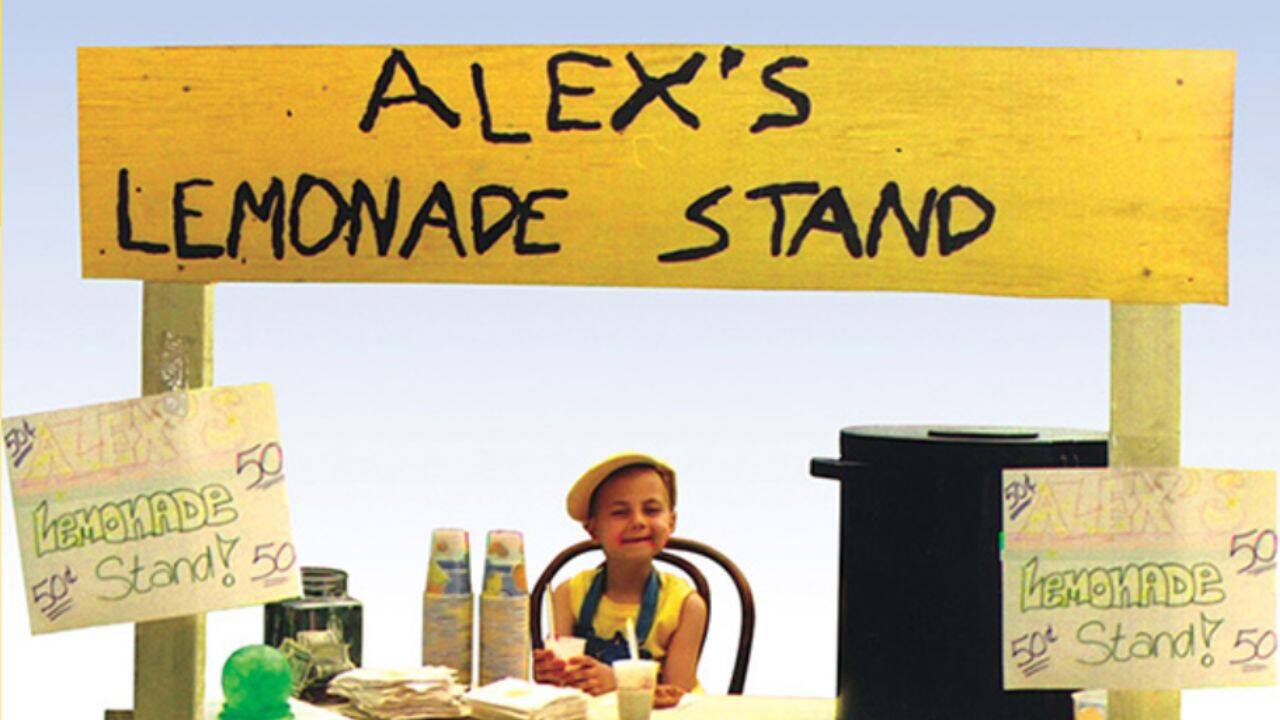
Every summer, local news outlets recycle the exact same script. A kid sets up a folding table, squeezes a few dozen lemons, and raises $22,000 for cancer research. Cue the soft piano music. Cue the anchors smiling into the camera. Cue the collective sigh of relief from an audience that believes good intentions and sidewalk hustle are enough to beat pediatric oncology.
It is a comforting lie. And it is actively distracting us from why cancer funding is broken.
The legacy media loves a feel-good story because it requires zero structural analysis. A New York girl turning a childhood lemonade stand into a five-figure donation is undeniably admirable on a personal level. Her parents raised a compassionate kid. Her neighbors are generous. Nobody is attacking the child.
We are attacking the adult ecosystem that applauds a $22,000 check as a victory while ignoring the multi-billion-dollar funding chasm that keeps pediatric cancer treatments stuck in the 1980s.
When we treat grassroots bake sales and lemonade stands as the engine of medical breakthroughs, we let institutions, policymakers, and pharmaceutical giants off the hook. We turn a systemic public health crisis into a cute community photo-op.
The Math Nobody Wants to Do on Local News
Let’s look at the actual economics of drug development. Bringing a single new oncology drug from laboratory discovery to FDA approval costs an estimated $1 billion to $2.8 billion, according to research from the Tufts Center for the Study of Drug Development. Even a basic Phase I clinical trial—just testing whether a compound is safe in humans—regularly eats up several million dollars before a single patient shows remission.
Against that backdrop, $22,000 is not a war chest. It is a rounding error. It buys roughly two weeks of reagent supplies for a mid-sized university lab, or pays for a fraction of one patient's genomic sequencing.
I have sat in boardrooms with nonprofit directors and biotech founders who spend millions chasing donor dollars, and the harsh reality is that micro-fundraising often carries a massive hidden cost. When major cancer charities process thousands of small, decentralized community drives, administrative overhead balloons. Processing checks, sending tax receipts, managing donor databases, and complying with state-by-state charitable solicitation laws eats into the net yield.
The public sees a $22,000 headline. They do not see the 15% to 25% chewed up by payment processors, compliance audits, and foundation bureaucracy before a dime ever touches a pipette.
Why Pediatric Cancer Relies on Lemonade in the First Place
If you want to understand why kids are selling sugar water to fund their peers' survival, look at the market failure built into modern medicine.
Adult cancers—breast, lung, prostate, colorectal—represent massive patient populations. Pharmaceutical companies pour tens of billions into adult oncology because the return on investment is guaranteed. A blockbuster immunotherapy drug for lung cancer can generate $10 billion a year in revenue.
Pediatric cancer is classified as an orphan disease market. Roughly 15,000 children and adolescents are diagnosed with cancer each year in the United States. Because the patient pool is small and biologically distinct from adults, big pharma views pediatric drug development as a financial dead end.
Consequently, the National Cancer Institute (NCI) allocates only about 4% of its multi-billion-dollar annual federal budget specifically to childhood cancers. Think about that number. Four percent.
That vacuum is why parents and children are standing on street corners with pitchers of lemonade. They are not doing it because grassroots charity is an innovative funding model. They are doing it because federal appropriations and venture capital have abandoned the space. Celebrating the lemonade stand without indicting the 4% federal allocation is like praising a community for buying buckets while the fire department refuses to turn on the hydrants.
The Dark Side of "Feel-Good" Philanthropy
There is a well-documented psychological phenomenon in behavioral economics called "moral licensing," alongside what researchers like Paul Slovic call the "identifiable victim effect."
When people donate $20 to a cute kid on their block, their brains register a hit of dopamine. They feel they have done their part to fight cancer. That small, emotionally satisfying act often suppresses their urgency to demand systemic change, vote for higher research appropriations, or scrutinize how major cancer nonprofits actually spend their money.
Consider the administrative bloat across the broader cancer charity sector. While grassroots pioneers like Alex’s Lemonade Stand Foundation have genuinely funded hundreds of millions in legitimate research grants over two decades, countless other cancer nonprofits operate as little more than direct-mail marketing machines. Watchdog groups like CharityWatch and ProPublica have repeatedly exposed organizations that spend up to 80% of donations on telemarketing, executive salaries, and fundraising consultants, passing pennies on the dollar to actual researchers.
When media outlets blindly celebrate every $22,000 drive without teaching the public how to audit a charity's Form 990, they train donors to give based on emotion rather than efficacy.
What People Actually Ask (And Why the Questions Are Flawed)
When stories like this go viral, search engines light up with predictable queries from well-meaning people trying to replicate the success. Let’s strip away the sentimentality and answer them directly.
How can my child start a charity lemonade stand to raise thousands of dollars?
If your goal is to teach your kid empathy, financial literacy, and community engagement, buy the lemons. It is a phenomenal parenting exercise.
If your actual goal is to fund cancer research, do not set up a lemonade stand. The time, parental labor, and supply costs yield a terrible return on effort. Instead, have your child organize a digital peer-to-peer matching campaign tied to a corporate employer match. Most Fortune 500 companies offer 1:1 or 2:1 charitable gift matching that goes completely unused every year. A kid emailing twenty relatives who work at major corporations will raise triple the money in a tenth of the time, with zero sticky sidewalks.
Do small donations really make a difference in cancer research?
Only when they are pooled into hyper-focused, low-overhead seed funds that de-risk early science.
In academic medicine, researchers call the gap between an initial lab discovery and a major federal NIH grant the "Valley of Death." The National Institutes of Health is notoriously conservative; they rarely fund bold, unproven hypotheses without preliminary data. Small philanthropic grants—typically $50,000 to $100,000—allow young investigators to run the initial experiments needed to prove a concept works. Once they have that data, they can unlock $2 million in federal funding. So yes, small money matters, only if it goes directly to early-career seed grants rather than general awareness campaigns.
Which cancer charities actually put the most money toward research?
Stop looking at marketing slogans and start looking at program expense ratios and grant-making transparency. Look for organizations that fund peer-reviewed, investigator-initiated research directly, rather than vague "patient education" or "awareness" initiatives. Everyone is already aware of cancer. Awareness does not shrink tumors. Basic science and clinical trials do.
The Contrarian Playbook for Real Impact
To be clear, cynicism is easy, and tearing down a kid's hard work is not the point. The flaw in my own argument is obvious: if you tell everyday people their $20 doesn't matter against a $2 billion drug pipeline, they might stop giving altogether. That would starve the exact early-stage seed grants that keep young scientists in the lab. Grassroots passion builds lifelong advocates, and a child who raises $22,000 today might become the oncology researcher or biotech founder who cracks glioblastoma thirty years from now.
We do not need fewer passionate kids. We need smarter adults.
If you want to honor the spirit of a $22,000 lemonade stand without falling for the media's lazy narrative, change how you deploy your money and attention:
- Demand the Form 990 before you open your wallet. Before donating to any local drive, look up the recipient organization's IRS Form 990. If less than 75% of total expenses go directly to research grants and clinical programs, walk away.
- Fund the "Valley of Death," not awareness. Direct your dollars exclusively to foundations that explicitly fund early-career investigators and Phase I/II clinical trials. Skip organizations that spend millions on pink ribbons, galas, and celebrity endorsements.
- Weaponize corporate matching. Never make a standalone donation if you or your spouse work for a mid-to-large corporation. Route every dollar through your employer’s Benevity or matching portal to instantly double the capital hitting the lab.
- Pressure the gatekeepers. Write to your congressional representatives about NCI pediatric funding allocations and FDA incentives for orphan drug development. One legislative tweak to the Pediatric Research Equity Act moves more capital in an afternoon than ten thousand lemonade stands will raise in a century.
A little girl in New York worked her tail off to raise $22,000 because she wanted to save lives. She held up her end of the bargain. Until adults stop treating her effort as a heartwarming bedtime story and start fixing the broken economics of medical research, we are failing hers.