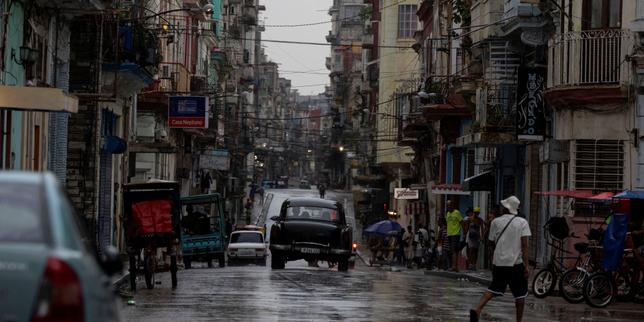
Rain hits the Mersey differently in September. It doesn’t fall so much as it hangs, a cold, grey mist clinging to the brick warehouses along the Liverpool waterfront, turning the cobblestones slick and smelling faintly of salt and wet wool. Inside the cavernous ACC Liverpool, however, the air is dry, recycled, and humming with the low-frequency thrum of thousands of lanyards clacking against synthetic blazers.
I have walked these carpeted corridors through winters of opposition and the dizzying, disorienting mornings after victory. When you spend enough time watching British politics up close, you stop listening to the applause lines and start watching the hands. You watch the way a junior minister grips a paper coffee cup until the cardboard buckles. You watch the delegates from northern towns checking their bank balances on their phones while a speaker on the main stage promises national renewal. Also making news in this space: The Empty Plates Waiting For Us.
"Political Fix from the Labour Party conference: Hope again?"—that was the question hanging over the press room, typed into headlines and whispered over lukewarm pints at the bars lining Albert Dock. It sounds simple. Almost quaint. After years of economic stagnation, crumbling public infrastructure, and a political culture that felt less like governance and more like permanent crisis management, the central tension of the Labour Party conference comes down to a single, fragile commodity.
Can people afford to hope again? More insights regarding the matter are detailed by The Washington Post.
To understand why that question feels less like a slogan and more like a high-wire act without a net, you have to step away from the main auditorium. You have to look at the invisible math happening in living rooms three hundred miles away, and the agonizing choices being made behind closed doors by a leadership terrified of promising a single penny it cannot deliver.
The Weight of an Empty Ledger
Consider a hypothetical scenario, grounded in the exact fiscal realities debated on the conference floor. Imagine a composite character—let us call her Sarah—a 42-year-old NHS physiotherapist living in a terraced house outside Leeds. Sarah voted for change because she wanted the black mold in her daughter’s school classroom fixed, and she wanted her mother’s hip replacement to happen before 2028.
When Sarah turns on the evening news to watch the Labour Party conference, she isn't looking for ideological purity. She isn't parsing the philosophical differences between social democracy and post-war Keynesianism. She is listening for the sound of relief.
Instead, she hears the language of constraint.
According to political analysts and commentary surrounding the conference—including coverage from outlets like the Financial Times and BBC political desks examining the party’s messaging—the central dilemma facing Prime Minister Keir Starmer and Chancellor Rachel Reeves is how to manufacture optimism while simultaneously insisting that the cupboard is bare. Treasury officials and party strategists have repeatedly pointed to a multibillion-pound fiscal hole, sluggish productivity growth, and the highest tax burden since the aftermath of the Second World War.
Think of the UK economy right now like an old Victorian house with a leaking roof and dry rot in the floorboards. For years, the previous owners painted over the water stains and told everyone the house was fine. Now, the new owners have moved in, pulled up the carpets, and called a press conference to announce that the joists are crumbling—and that nobody is allowed to buy new furniture until the foundation is poured.
It is an honest diagnosis. Politically, however, honesty about a broken foundation does not keep anyone warm in January.
During the conference, this tension manifested in real time. On one hand, ministers spoke of long-term missions: clean power by 2030, planning reform to build 1.5 million homes, and a ten-year plan to modernize the National Health Service. On the other hand, the immediate policy announcements were marked by strict fiscal discipline, including the contentious decision to means-test the Winter Fuel Payment for millions of pensioners—a move that sparked fierce internal debate and a non-binding union-backed vote against the leadership on the conference floor.
Wait.
Look closely at that moment on the floor. A union delegate steps up to the microphone, voice trembling slightly with genuine anger, arguing that taking £200 or £300 away from a pensioner living just above the Pension Credit threshold is not a tough choice; it is a cruel one. Across the hall, a Treasury loyalist checks their notes, knowing that every pound spent on universal benefits is a pound taken away from stabilizing the public finances and keeping the bond markets calm.
Both people in that room believe they are protecting Sarah. Both are terrified of what happens if they get it wrong.
Ghosts in the Auditorium
If you stand at the back of the conference hall when the lights dim for the leader's speech, you can feel the weight of history pressing down on the podium. Labour conferences are never just about the present; they are haunted by the ghosts of conferences past.
In 1997, the soundtrack was triumphant, almost euphoric, built on a booming global economy that allowed Tony Blair and Gordon Brown to expand public spending without raising basic income tax rates. In 2017, the mood was insurgent and electric, fueled by mass rallies and an unapologetic promise to tear up the rulebook.
This conference felt entirely different. It felt like the morning after a long, exhausting shift.
As political commentators noted throughout the week in Liverpool, the mood among delegates was neither euphoric nor rebellious—it was sober, anxious, and fiercely pragmatic. People are tired. Britain is tired. After a decade defined by Brexit divisions, a global pandemic, an energy price shock triggered by the invasion of Ukraine, and the fastest rise in interest rates in a generation, the national nervous system is frayed.
When people ask, "Why does the Labour conference feel so cautious despite a massive parliamentary majority?" the answer lies in the memory of September 2022.
Every senior figure in the Labour leadership watched Liz Truss’s mini-budget trigger a gilt market meltdown, sending mortgage rates spiraling and shattering a government in weeks. That memory acts like a governor on a car engine. Whenever a cabinet minister feels the urge to step on the accelerator and announce a bold, unfunded spending spree, the ghost of the bond markets taps them on the shoulder.
The result is a brand of politics that treats hope like a controlled substance. You can have a little, administered carefully, under strict medical supervision, provided it does not spike inflation or spook international investors.
The Invisible Stakes of the Waiting Room
Let us return to Sarah in Leeds, because macroeconomics only matters when it hits the kitchen table.
What happens when a government asks a nation for patience? Patience is not free. Patience has an expiration date, and that date is determined by the speed at which ordinary life stops feeling so relentlessly difficult.
In Britain today, the invisible stakes of the Labour Party conference are measured in waiting times.
- The waiting room at A&E, where staff work twelve-hour shifts in corridors because hospital beds are full of elderly patients who cannot be discharged due to a lack of social care.
- The waiting list for council housing, which has stretched past 1.2 million households across England, forcing families into temporary bed-and-breakfast accommodation with a single kettle and no kitchen.
- The magistrate’s court backlog, where victims of crime wait two or three years for a trial date while the details of their trauma fade and witnesses move away.
When cabinet ministers stood on the stage in Liverpool and talked about "fixing the foundations," they were talking about structural reforms: rewriting the National Planning Policy Framework so wind farms and housing estates cannot be blocked by a handful of local objections; creating Great British Energy to co-invest in renewable infrastructure; establishing a National Wealth Fund to crowd in private capital.
These are serious, technocratic levers. As economists from institutions like the Institute for Fiscal Studies (IFS) have frequently pointed out, planning reform and public investment are among the few tools that can genuinely raise Britain’s long-term growth rate without triggering inflation.
Yet there is a brutal mismatch in timing. Building a grid connection or training a new cohort of doctors takes five to ten years. A voter’s mortgage renewal happens next Tuesday.
That is the central fracture running right down the middle of the conference. Delegates applauded the vision of a rebuilt Britain, then walked out into the Liverpool drizzle and asked one another in hushed tones: How do we survive the next twenty-four months?
Power Without Euphoria
There is a strange psychological shift that happens to a political party when it crosses the floor from opposition to government. In opposition, your currency is outrage. You point at a broken window, name the person who threw the stone, and promise that when you are in charge, the glass will shine.
In government, you own the window. You own the rain coming through it. And you quickly discover that the glazier is booked until next spring, the glass costs twice what you budgeted, and the neighbors are arguing over what color the frame should be.
Throughout the conference fringe events—packed into hotel basements and makeshift tents where warm prosecco is served in plastic flutes—you could watch MPs adjusting to this reality in real time. Newly elected backbenchers, many representing seats Labour had not held in decades, spoke with a mixture of pride and vertigo. They had won on a promise of change, and now their inboxes were overflowing with constituents demanding to know why their winter fuel allowance was gone or why their local bus route had been cut.
Meanwhile, external pressures refused to pause for the conference schedule. Questions over donor hospitality—specifically free clothes, glasses, and concert tickets accepted by senior ministers—dominated front pages and forced the leadership onto the defensive. Critics seized on the story as evidence of hypocrisy from a party that had campaigned on cleaning up politics; defenders argued the rules had been followed and the focus should remain on policy.
Whatever one’s view of the controversy, its real impact inside the hall was emotional. It punctured the aura of moral certainty that newly elected governments usually enjoy during their honeymoon period. Instead of riding a wave of goodwill, ministers spent half the week explaining themselves.
What Happens When Hope Becomes a Verb
So, was there hope at the Labour Party conference?
If by hope you mean the intoxicating, effortless optimism of a crowd convinced that the hard part is over—no. That kind of hope died somewhere between the 2008 financial crash and the energy bills of 2022. Nobody in Liverpool was selling miracles, and nobody in the hall looked gullible enough to buy them.
What existed instead was something quieter, heavier, and far more fragile.
It was the recognition that a country cannot be healed by slogans, and that the work of rebuilding state capacity—train line by train line, hospital ward by hospital ward, planning application by planning application—is unglamorous, slow, and fraught with political peril. Critics on the left argue the leadership is too timid, trapped by self-imposed fiscal rules that starve public services of urgent cash. Critics on the right argue that higher taxes and stronger employment rights will stifle business investment and choke off the very growth Labour needs to fund its ambitions.
Both critiques carry real risk. If the government cuts too deep now, the social fabric frays further before growth ever arrives. If it spends too freely, borrowing costs rise and eat the budget alive.
Walking out of the conference center on the final afternoon, the wind off the Mersey had picked up, whipping the banners against the steel lampposts. Delegates were dragging wheelie suitcases toward Lime Street Station, faces pale under the grey sky, heading back to constituencies where the problems waiting for them were not abstract policy papers.
They were heading back to Sarah in Leeds, waiting for a letter from the hospital. They were heading back to pensioners checking the thermostat before turning the dial up a single degree. They were heading back to small business owners staring at energy contracts and wage bills, wondering whether to hire one more person or hold off until spring.
Inside the hall, the speeches had ended, the stage lights were cooling down, and the cleaners were already sweeping up the discarded conference guides—leaving behind a government with enormous power, almost no margin for error, and a country watching through narrowed eyes to see if the foundation holds before the winter sets in.