Silence.
In an arena that holds nearly nineteen thousand people, the quietest sound in professional sports is not an empty building, nor is it the polite applause of a blowout loss; it is the sudden, collective intake of breath inside Scotiabank Arena when a three-goal lead begins to evaporate in the third period. Meanwhile, you can explore other stories here: What Most People Get Wrong About the 2027 FIFA Presidential Race.
You can feel it in your ribs before you even look at the scoreboard. The popcorn tastes like cardboard. The guy two rows down stops shouting at the referee and starts staring intently at the laces of his boots. Everyone in blue and white suddenly remembers every spring since 1967, and the air turns thick with a familiar, suffocating dread.
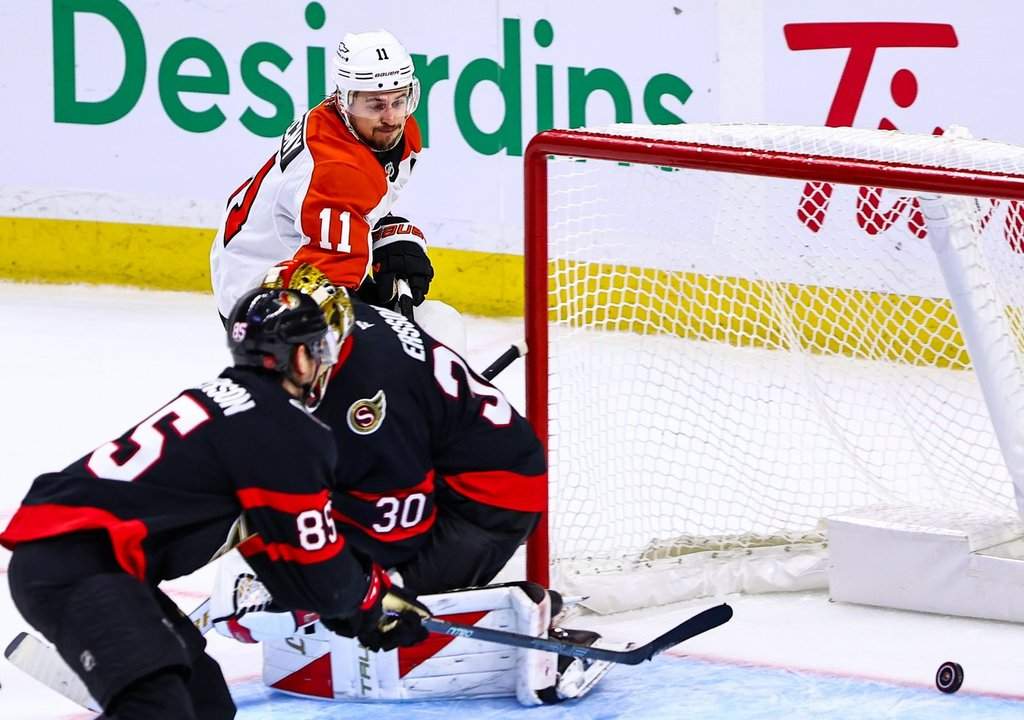
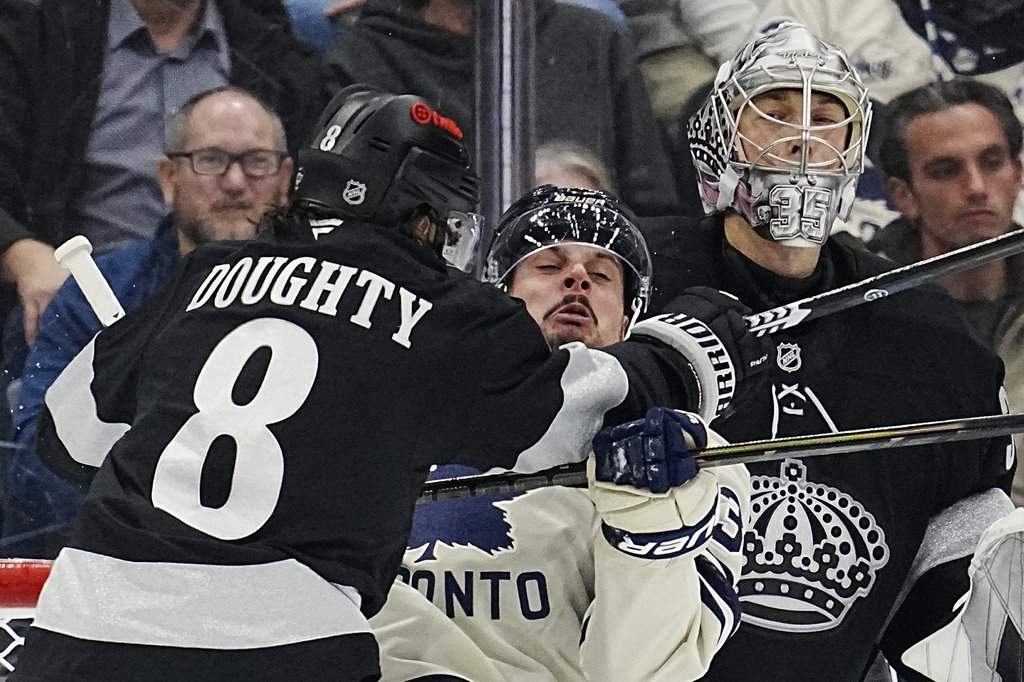
The box score from the latest collapse will tell you a simple, sterile story. The Toronto Maple Leafs jumped out to a commanding multi-goal advantage, controlled the pace for forty minutes, surrendered three unanswered goals in the final frame, and walked away with zero points as their ugly stretch continued. A beat writer on a deadline calls it a blown lead. A statistician calls it an outlier in expected goals against. To understand the bigger picture, check out the excellent report by FOX Sports.
They are both missing the point.
To understand what is actually happening to this hockey club, you have to stop looking at the standings and start looking at the psychology of inherited trauma. Because in Toronto, a hockey game is never just sixty minutes of rubber and ice; it is an ongoing negotiation with fifty-nine years of scar tissue.
The Architecture of a Collapse
Consider a hypothetical fan—let us call him Arthur—who has watched every Leafs broadcast from his living room in Scarborough since the Pat Quinn era. Arthur knows the exact frequency of a goalpost ping. He knows the difference between a goalie who is tracking the puck through traffic and a goalie who is merely hoping it hits him in the chest.
When Toronto goes up 3-0 in the first period, Arthur does not celebrate. He does not text his brother or pour a celebratory drink. Instead, he checks the clock, calculates how many minutes remain for things to go wrong, and braces himself.
That reaction is not cynicism. It is pattern recognition.
Sports psychologists refer to a phenomenon called defensive reactivity—the subtle shift in human posture and decision-making that occurs when protecting a prize feels more stressful than chasing one. When a team plays from behind, the brain simplifies. Every pass is aggressive. Every skate stride is committed. There is nothing left to lose, so the nervous system operates without friction.
Now flip the script. Give a roster burdened by relentless market scrutiny a comfortable cushion entering the third period, and watch what happens to their central nervous systems.
They stop skating through checks. Instead of firing a puck seventy feet down the ice to clear the zone, a defenseman holds onto it for a half-second too long, terrified of icing it and facing another defensive-zone draw. That half-second is an eternity in the National Hockey League. A forechecker closes the gap. Stick meets stick. The puck hops over a blade and lands directly on the tape of an opponent in the high slot.
Red light. Horn. Groan.
The first goal against is never the fatal blow, yet in Toronto, it acts like a syringe of adrenaline injected straight into the opponent's bench and a sedative poured into the home team's veins. You can see it in the shoulders of the players gliding back to the center-ice dot. The chin drops a fraction of an inch. The stick grip tightens until the knuckles turn white beneath the leather gloves.
When Talent Becomes a Burden
Let us be completely honest about the math here, because the numbers make the emotional reality even harder to swallow.
On paper, the Toronto Maple Leafs possess the kind of offensive firepower that general managers across the league spend decades trying to assemble. They have elite center depth, a power play that regularly converts at a top-five clip, and wingers capable of altering the geometry of the ice with a single crossover. Over the past several seasons, Toronto has consistently ranked near the top of the NHL in regular-season points, five-on-five shot share, and high-danger scoring chances generated.
By every traditional metric of roster construction, this is a juggernaut.
Yet during this current slide—a stretch defined by blown third-period leads, baffling defensive lapses, and overtime heartbreaks—that very talent begins to work against them. Think of a Formula One car designed for clean air and dry asphalt suddenly forced to navigate a gravel logging road in the pouring rain. All that horsepower does not help you if the tires cannot find traction.
When you are built to outscore your mistakes, what happens when the puck stops going in, or when a hot goaltender steals two or three grade-A chances in the second period? You have to win ugly. You have to survive twenty minutes of dump-and-chase hockey, blocked shots off the inside of the ankle, and greasy wall battles where nobody gets a highlight-reel assist.
And winning ugly requires a specific kind of emotional callousness that this group has struggled to sustain when the pressure spikes.
I have sat in enough cold rinks and watched enough third-period meltdowns to recognize the exact moment a bench loses its collective nerve. It happens during a television timeout with roughly nine minutes left on the clock. The arena PA system blasts some upbeat stadium rock to keep the crowd awake, while down at ice level, the players are not looking at each other. They are staring up at the jumbotron, watching the replay of the goal they just gave up, dissecting the mistake instead of resetting their posture for the next shift.
The Invisible Opponent on Bay Street
To understand why an ugly run in November or January feels like an existential crisis in Toronto—whereas a similar four-game skid in Dallas or Carolina barely registers on the local news—you have to account for the weight of the sweater itself.
In most NHL markets, a regular-season slump is a private affair between the coaching staff, the locker room, and a few thousand diehards. In Toronto, it is a civic referendum.
Before a player even finishes unlacing his skates after a blown lead, twenty microphones are thrust toward his stall. By the time he drives down the Gardiner Expressway toward home, three different sports talk radio shows are already debating whether the core needs to be dismantled, whether the goaltending tandem is viable, and whether the coach has lost the room.
No athlete is immune to that noise. They can claim they stay off social media. They can insist they only care about the twenty-three guys inside the dressing room. It does not matter. You cannot walk into a coffee shop in Yorkville or drop your kids off at school in Etobicoke without feeling the temperature of the city.
Over time, that external pressure internalizes. It turns a routine two-goal deficit from the opponent into a full-blown panic attack on the ice.
Consider the mechanics of the second goal in a comeback. Usually, it comes off a broken play—a point shot that deflects off a shin pad, a rim-around pass that hits a stanchion and bounces straight out in front of an empty net. Hockey is governed by chaos; rubber bounces unpredictably on scarred ice. Good teams shrug at bad bounces. Fragile teams treat bad bounces like divine punishment.
When that second goal goes in to cut a 3-0 lead to 3-2, the crowd does not roar to lift the team up. A low, anxious murmur ripples through the lower bowl. The players hear it. They feel the collective flinch of nineteen thousand people waiting for the inevitable collapse, and in trying desperately to prevent the disaster, they summon it into existence.
The Anatomy of Trust
Why does a group of world-class professionals suddenly forget how to execute a basic breakout under pressure?
Because defensive structure is built entirely on trust, and losing streaks erode trust faster than acid eats through steel.
In a healthy defensive system, the weak-side winger trusts that his defenseman will win the puck battle behind the net, so he stays high in the zone, ready to receive a clean outlet pass. The center trusts that his partner will cover the slot, so he commits aggressively to the puck carrier along the half-wall. Every player does twenty percent of the job, knowing the other four guys will cover the remaining eighty percent.
During an ugly run, that trust fractures.
Suddenly, the winger does not trust the defenseman to win the battle, so he cheats five feet lower into the zone to help. Now, when the defenseman actually does win the puck and looks up for an outlet, nobody is there. He is forced to eat the puck against the glass, another scrum ensues, the shift stretches past fifty seconds, legs turn to lead, and the opposing team cycles the puck until a shooting lane opens up from the point.
From the couch, it looks like laziness or a lack of effort. It looks like the Maple Leafs simply stopped skating in the third period.
In reality, it is the exact opposite. They are over-skating, over-helping, and abandoning their structural assignments out of a frantic, well-intentioned desire to fix everything at once. Five individuals trying to play goalie at the same time is a guaranteed way to leave the back door wide open.
What Actually Stops the Bleeding
If you ask ten different hockey analysts how Toronto breaks out of a tailspin like this, nine of them will give you tactical adjustments. They will talk about adjusting the neutral-zone forecheck, changing the penalty-kill diamond, or shuffling the bottom-six forward lines to spark energy.
Tactics are fine, yet tactics do not cure hesitation.
History shows us that championship-caliber teams—from the Tampa Bay Lightning rosters that endured humiliating playoff sweeps before winning back-to-back Cups, to the Colorado Avalanche groups that suffered repeated second-round exits before breaking through—do not solve their late-game fragility by inventing a new breakout play. They solve it by surviving a moment of acute terror without blinking.
It requires a stubborn, almost irrational commitment to boredom.
When a team is bleeding leads, the cure is not scoring a fourth goal to put the game out of reach; the cure is winning three consecutive neutral-zone faceoffs, chipping the puck deep into the opposing corner, and refusing to turn it over at the offensive blue line even if it means sacrificing a pretty scoring chance. It means treating a 3-1 lead with twelve minutes left not as a fragile glass ornament that might shatter if touched, but as a weapon to suffocate the opponent's will.
Watch how a veteran team closes out a game on the road. They do not back off into a passive shell inside their own blue line, inviting wave after wave of pressure. Instead, they attack the puck carrier with controlled, suffocating predictability. They force the opponent to skate through two hundred feet of mud just to earn a harmless shot from the outside perimeter.
Can this version of the Maple Leafs learn that kind of ruthless composure?
I genuinely do not know, and anyone pretending to have a guaranteed answer is selling you a narrative rather than the truth. There are nights when this roster looks entirely capable of imposing its will on any opponent in the Eastern Conference, skating with effortless speed and precision. Then forty-eight hours later, against a hungrier, less talented opponent, the exact same group looks paralyzed by the fear of making the next mistake.
That contradiction is what makes watching them so exhausting, and so impossible to turn away from.
The Empty Sheet of Ice
Late at night, long after the Zamboni has finished its final pass and the arena lights have been dimmed to their maintenance setting, Scotiabank Arena finally exhales.
The spilled beer has been mopped off the concrete concourses. The microphones are packed away in their cases. Down at ice level, the fresh sheet sits completely smooth, unmarked by skate blades, unbothered by the weight of fifty-nine years of expectation or the sting of another blown lead.
In forty-eight hours, the doors will open again, Arthur will sit down in his living room in Scarborough, and nineteen thousand people will file back into their seats, ready to hold their breath all over again.