The rain in Fiji does not just fall. It commands. When a tropical downpour hits the concrete lip of the Suva port, the noise is deafening, masking the grind of rust-streaked cranes and the low hum of idling diesel engines. For decades, the people who work these docks have watched the world arrive in containers. They know the exact weight of a promise. They can tell you how long a political pledge lasts before the salt air eats it alive.
Lately, the talk around the harbor isn't about shipping manifests or fuel prices. It is about the Quad.
To a bureaucrat in Washington, Tokyo, New Delhi, or Canberra, the Quad—the Quadrilateral Security Dialogue—is a sophisticated diplomatic apparatus. It is a strategic counterweight, a chess move on a blue map, a framework to ensure a free and open Indo-Pacific. But to a crane operator working a grueling shift in the humidity of Viti Levu, those grand words melt into something far simpler.
Will they actually build the damn pier?
History leaves scars on the coastlines of developing nations. For years, Western powers treated the Pacific Islands as a picturesque backdrop for postcards or a tragic setting for nuclear testing. Suddenly, the geopolitical weather shifted. Beijing began cutting checks, building roads, and upgrading wharves across the region. Panic rippled through Western capitals. The response was a flurry of summits, press releases, and high-minded declarations.
Among them was a flashy commitment by the Quad to counter Chinese influence by funding critical infrastructure, including a major overhaul of Fiji’s maritime facilities. It sounded magnificent on paper.
But paper does not withstand a Pacific storm.
The Ghost Infrastructure of the Pacific
Consider a hypothetical shopkeeper named Sione. He operates a small market stall a few miles from the main port. Sione does not read strategic defense white papers. He reads the faces of his suppliers. When the Quad announced its intention to invest heavily in Fiji’s maritime infrastructure, Sione’s suppliers talked about cheaper freight costs, reliable shipping schedules, and a break from the volatile economic monopolies that dictate life on an island.
Months turned into a year. The year stretched longer.
Sione still watches the same clogged bottlenecks at the pier. The same outdated machinery breaks down. The grand announcements made in air-conditioned rooms thousands of miles away have not translated into a single new slab of concrete.
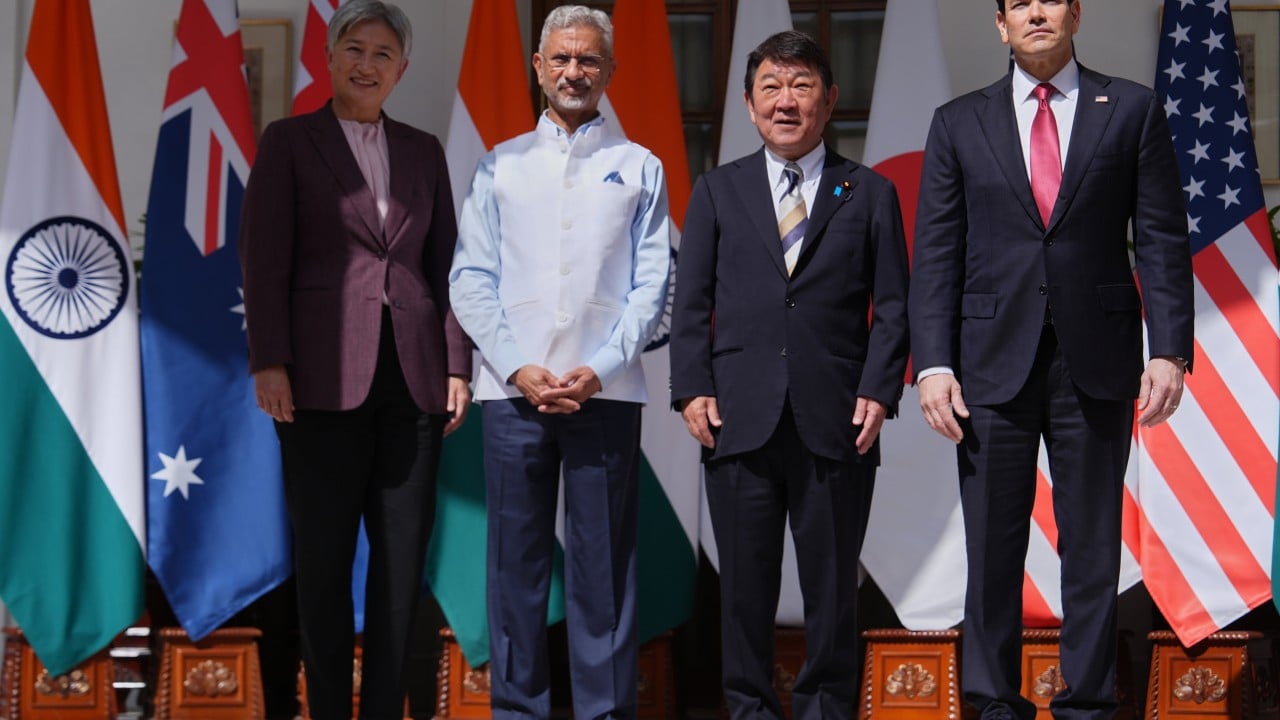
This is the agonizing friction of modern diplomacy. It is easy to stage a photo opportunity with four foreign ministers smiling in unison. It is remarkably difficult to align the budgetary cycles, environmental regulations, and political will of four separate democracies to build a functioning port in a developing nation.
While the Quad deliberates, analyzes, and conducts feasibility studies, the reality on the ground hardens. Beijing’s state-backed enterprises operate under a completely different architecture. They do not wait for parliamentary debates or multi-lateral consensus. They arrive with laborers, heavy machinery, and ready cash. It is a predatory model, wrapped in debt-trap risks that many local leaders recognize and fear, but it possesses one undeniable advantage.
It is visible.
When you are drowning, you do not question the motives of the person throwing you a rope, even if you suspect the rope might eventually be used to tie your hands. You grab it because the water is rising.
The Hidden Cost of Hesitation
The skepticism brewing in Suva is not born of cynicism. It is born of memory.
Pacific nations are exhausted from being treated as geopolitical prizes rather than sovereign communities. The phrase "another empty promise" echoes through local media editorials because the region’s archives are full of them. Climate funds that require impossible bureaucratic gymnastics to access. Maritime security initiatives that consist of donating patrol boats without providing the budget for the fuel to run them.
Trust is a finite resource. Every time a major international coalition announces a project and fails to execute it with urgency, that resource depletes.
The real danger here is not just a missed economic opportunity for Fiji. The danger is a profound psychological decoupling. If the world’s leading democracies cannot prove that their system of governance can deliver tangible, material benefits to ordinary people, their arguments about democratic values fall completely flat.
You cannot eat a democratic value. You cannot dock a fishing boat on a shared commitment to international law.
The technical challenges of the proposed Fiji port project highlight a deeper systemic flaw in Western statecraft. The Quad is trying to fight a commercial war using purely diplomatic tools. They are bringing legal briefs to a knife fight. To build a port, you need to navigate land rights, local labor laws, environmental impact assessments, and complex financing mechanisms that spread the risk across four sovereign treasuries. It is a logistical nightmare.
Meanwhile, the daily grind at the existing port continues under the weight of inefficiency. Storage fees pile up. Perishable goods rot in the heat because a vessel is stuck waiting for an open berth. Every hour of delay increases the price of milk, fuel, and medicine in the local markets. The macroeconomic struggle is felt in the micro-moments of everyday survival.
Moving Past the Press Release
To understand how to fix this, we have to look at how we got the entire relationship backward.
For too long, metropolitan powers have viewed infrastructure aid as a favor bestowed upon the Pacific. A charitable donation to keep the locals happy and keep the rivals out. This paternalistic lens is precisely why these projects stall. Because it is viewed as charity, it lacks the raw, self-interested urgency that drives domestic infrastructure spending in Washington or Canberra.
If the Quad wants to salvage its reputation in the South Pacific, the proposed Fiji port project cannot be treated as a side-hustle of regional diplomacy. It must be executed with the same ferocity and focus as a domestic national security priority.
That means streamlining the funding mechanisms. It means establishing a single, unified project management office that answers to all four nations but possesses the autonomy to make decisions on the ground without waiting for approval from four separate capitals. It means hiring local workers, paying fair wages, and ensuring that the economic windfall of the construction phase stays inside the Fijian economy.
But most importantly, it requires humility.
Diplomats must sit on the wooden benches of the Suva port authority, breathe in the smell of low tide and diesel smoke, and listen to the people who actually understand the rhythm of the harbor. They need to stop talking about the "Indo-Pacific theater" as if it were a stage play and start treating it as a home where real people are trying to build a future.
The rain eventually stops in Suva, giving way to a thick, oppressive heat that makes the air feel heavy enough to chew. On the water, a solitary container ship waits just outside the reef, its lights blinking in the gathering dusk. It is waiting for space. It is waiting for efficiency. It is waiting, like everyone else here, to see if the horizon holds something real this time, or just another bank of clouds.



:max_bytes(150000):strip_icc()/how-many-types-of-dwarfism-are-there-2860725-v1-8dae2c531b4b47d9ae36ae404d3308a0.png)