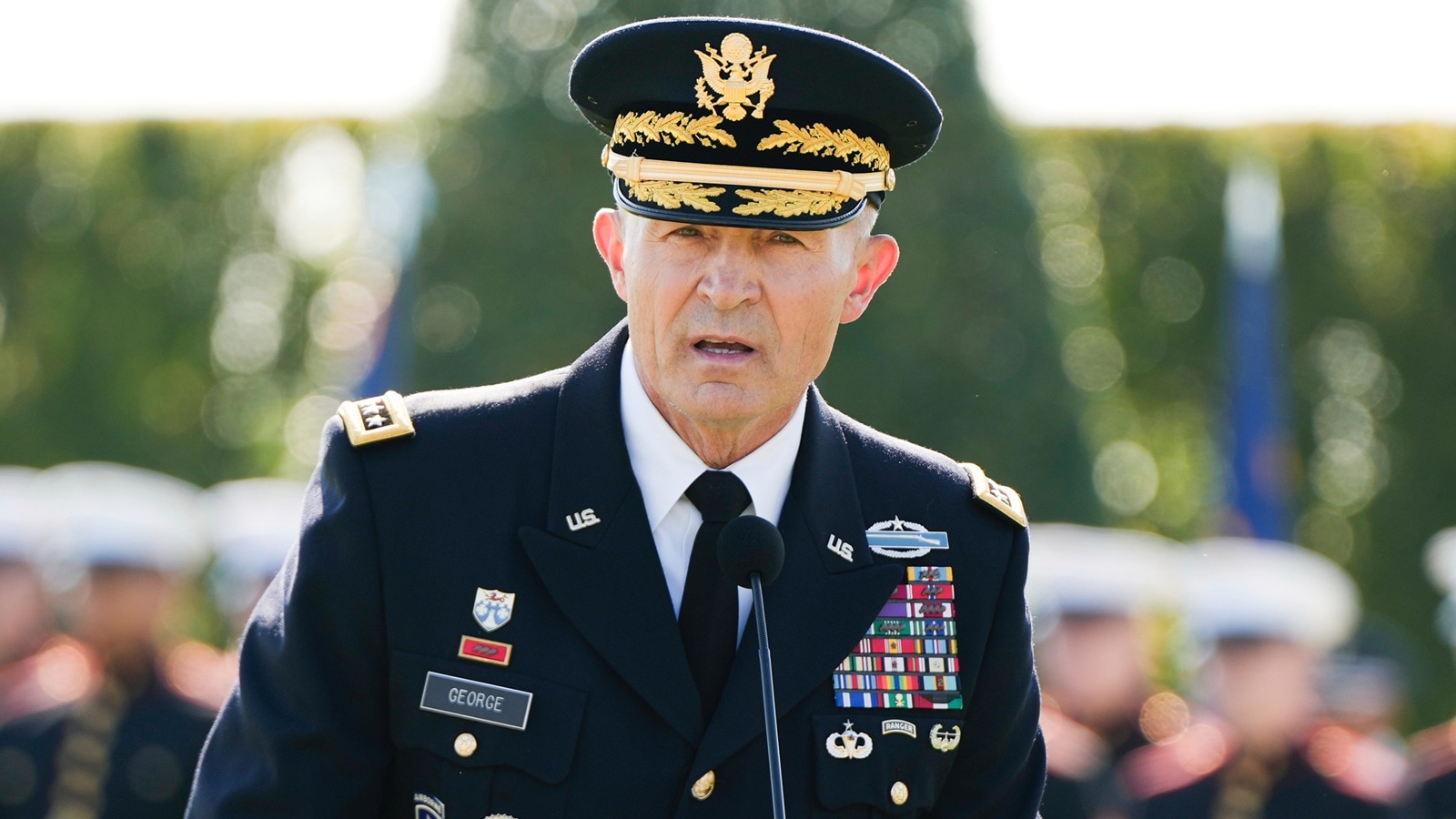
The middle of a war is usually the last place you’d expect a massive leadership shakeup. You don't swap out the person running the show while missiles are flying and troops are moving into position. But that’s exactly what Defense Secretary Pete Hegseth did this week. He asked General Randy George, the Army’s top uniformed officer, to step down immediately. It isn't just George either. Two other senior generals are out too. This isn't a "retirement" in the traditional sense. It's a clear signal that the Pentagon is being rebuilt from the ground up, even as the U.S. intensifies its campaign against Iran.
If you’re looking for a formal reason from the Pentagon, you won't find one. Spokesperson Sean Parnell kept it brief, stating that George would be "retiring" effective immediately. But the timing is impossible to ignore. We’re five weeks into U.S. and Israeli strikes on Iran. President Trump just promised to hit Tehran so hard they’ll go "back to the Stone Ages" within weeks. Why fire the guy leading the Army right now? It looks like Hegseth is trading traditional military experience for absolute alignment with the administration’s aggressive new doctrine.
The end of the Biden era leadership
General Randy George wasn't just any officer. He was a West Point grad with a resume that screams "old school military." He served in the first Gulf War, Iraq, and Afghanistan. More importantly, he was a key aide to former Defense Secretary Lloyd Austin. That connection likely put a target on his back from day one of the new administration. Hegseth has spent the last year systematically removing leaders appointed under the Biden administration. He’s already cleared out the Navy’s top admiral and the Air Force’s number two.
By removing George, Hegseth has now remade almost the entire Joint Chiefs of Staff. The only holdovers left are the heads of the Marine Corps and Space Force. This isn't just a personnel change. It's a total shift in how the Pentagon operates. George was known for being "soft-spoken and understated." That doesn't exactly fit the current vibe in Washington. Hegseth wants leaders who mirror his own "Stone Age" rhetoric.
A meteoric rise for Hegseth’s inner circle
While George exits, we’re seeing the rise of a new kind of officer. General Christopher LaNeve is stepping in as acting Army Chief of Staff. Just two years ago, LaNeve was a two-star general. His climb has been nothing short of a rocket ship. He served as Hegseth’s top military aide before being moved into the Vice Chief role last October.
This is how Hegseth is consolidating power. He’s bypassing the traditional "wait your turn" promotion track in favor of people he trusts implicitly. Critics call it a purge. Supporters call it necessary modernization. Either way, it means the Army is now led by someone who owes their entire recent career to the Secretary of Defense. In a wartime environment, that kind of loyalty is exactly what the administration is looking for.
Who else got the axe?
The shakeup didn't stop at the very top. Two other significant names were caught in the crosshairs:
- General David Hodne: He was leading the Army’s Training and Transformation Command. This was a unit George personally prioritized to modernize the force. Removing him suggests Hegseth wants a different direction for how soldiers are trained for the Iran conflict.
- Major General William Green Jr.: As the Chief of Chaplains, his removal highlights the cultural battle inside the military. Hegseth recently complained that chaplains were focusing too much on "therapeutic self-help" and mental health. He wants them focused on "God and country" instead.
The Kid Rock helicopter controversy
There might be a more personal reason for the friction between George and Hegseth. Rumors are swirling about an incident involving an Army Apache helicopter flying near the home of singer Kid Rock, a vocal Trump supporter. The Army initially suspended the pilots, claiming the flight was unauthorized. Hegseth reportedly flipped that decision within hours, reversing the military’s stance. If George pushed back on that kind of political interference in standard disciplinary matters, it’s easy to see why he’s suddenly out of a job.
It highlights a growing divide. On one side, you have the "by-the-book" generals who believe in strict military protocol. On the other, you have a Secretary of Defense who sees those protocols as obstacles to his agenda.
What this means for the war with Iran
The timing of these firings is risky. We have paratroopers from the 82nd Airborne and thousands of Marines heading to the Middle East right now. A ground invasion of Iran isn't officially on the table, but the chess pieces are being moved. Usually, you want continuity during a deployment of this scale. Instead, the Army is dealing with a leadership vacuum at the top.
Trump has stated that the next two to three weeks will be "extremely hard" for Iran. By installing LaNeve now, Hegseth ensures there is zero friction between the White House’s orders and the Army’s execution. There won't be any "understated" advice or caution from the Chief of Staff’s office.
Your next steps to stay informed
The situation at the Pentagon is moving fast. If you want to understand where the military is heading, watch the Senate.
- Track the confirmation hearings: Keep an eye on whoever Trump officially nominates to replace George permanently. If it's LaNeve, expect a fight in the Armed Services Committee.
- Monitor chaplain policy: Watch for changes in how the military handles mental health. If Hegseth’s "God over therapy" approach takes hold, it will fundamentally change how the Army supports stressed troops during wartime.
- Watch the troop movements: The removal of the "modernization" generals like Hodne suggests a pivot toward immediate, high-intensity combat rather than long-term tech development.
The U.S. military is being rebuilt in real-time while actively engaged in one of the most dangerous conflicts in decades. Whether this makes the force more lethal or just more political is the question everyone should be asking. Expect more "retirements" as the Iran war hits its next phase.


