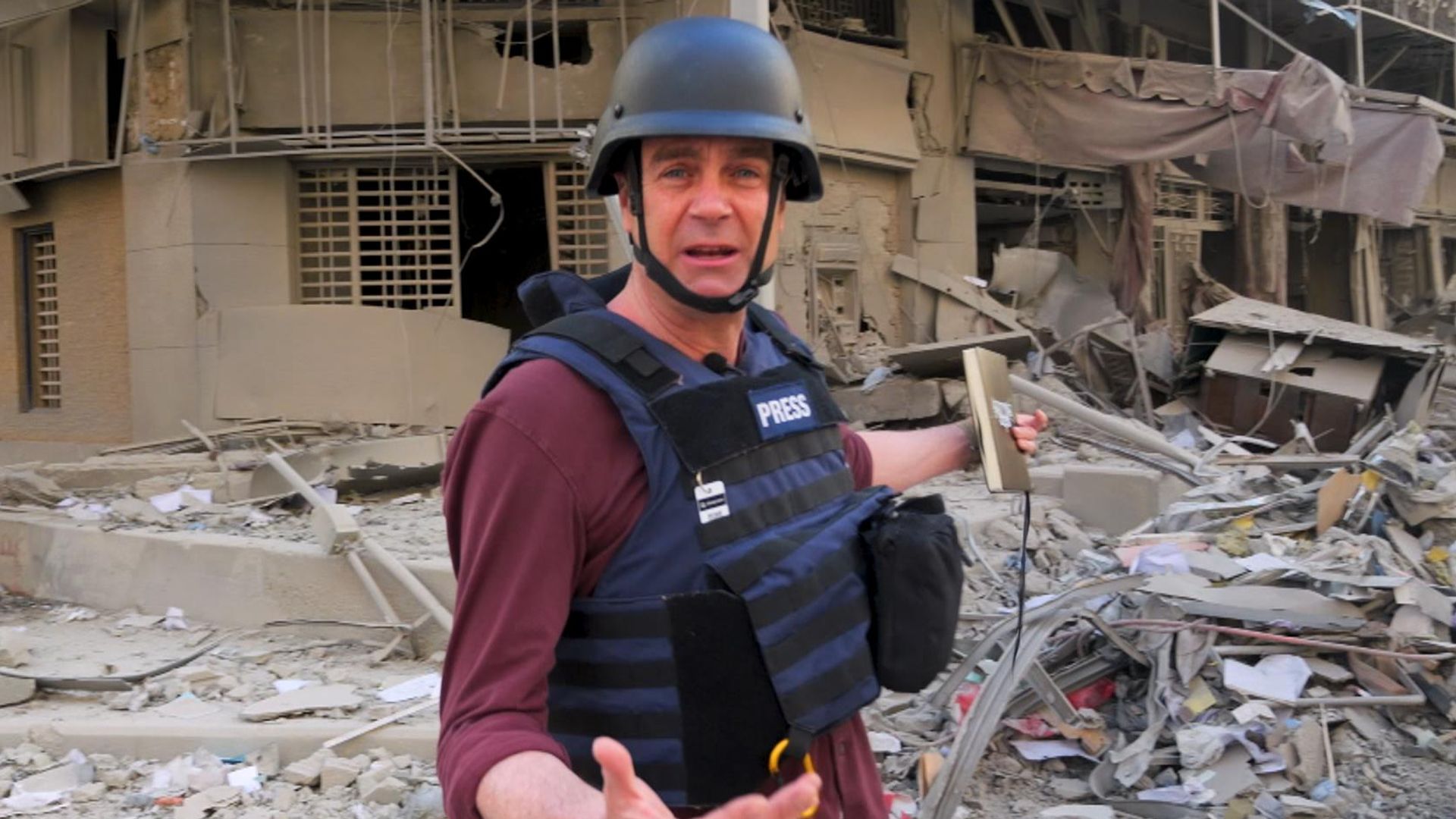
The survival of a non-state actor within a failing sovereign state depends on its ability to maintain a closed-loop ecosystem of security, social services, and ideological cohesion. In Beirut, Hezbollah’s operational dominance is not merely a product of military hardware; it is a sophisticated integration of urban geography, parallel administrative structures, and a redundant communications network that bypasses national infrastructure. When kinetic conflict degrades the physical layer of this system—specifically the buildings and streets of the Dahiyeh district—the underlying logic of "Resistance Governance" faces a stress test: can a centralized command structure survive the decentralization of its physical assets?
The Triple-Layer Architecture of Territorial Control
Hezbollah’s control over Lebanese territory, specifically the southern suburbs of Beirut, functions through three distinct layers that operate independently yet maintain a synchronized output. This architecture ensures that the removal of one node does not result in the total collapse of the local governance model.
- The Subterranean Kinetic Layer: This involves the hardened military infrastructure designed for long-term survival under aerial bombardment. It is decoupled from the civilian grid, utilizing dedicated fiber-optic lines and independent power generation.
- The Surface Administrative Layer: This comprises the Al-Qard al-Hassan Association (banking), Jihad al-Bina (construction), and various health networks. These entities replace the Lebanese state's absence, creating a high switching cost for the local population. If a resident relies on the party for electricity, water, and credit, political loyalty becomes a prerequisite for basic survival.
- The Information and Surveillance Layer: Control is maintained through a combination of SIGINT (Signals Intelligence) monitoring of local networks and a human intelligence (HUMINT) mesh. In districts like Haret Hreik, "security through community" means that every storefront serves as a sensor, reporting anomalies to a central security apparatus (the Amn al-Hizb).
Geography as a Defensive Asset
The Dahiyeh is not a monolith but a series of high-density urban canyons that provide natural concealment and complicate modern ISR (Intelligence, Surveillance, and Reconnaissance) capabilities. The "bombed-out" state of these neighborhoods often serves a secondary tactical purpose: it restricts civilian movement to known corridors, allowing the party to monitor entries and exits with minimal personnel.
The relationship between urban decay and control is inverse. As the Lebanese state’s ability to provide infrastructure (paving, lighting, zoning) reaches zero, the party’s informal management of these same variables reaches maximum utility. This is a predatory equilibrium. The party does not require a functioning city; it requires a dependent population.
The Economic Cost Function of Conflict
The destruction of Hezbollah-affiliated residential and commercial blocks introduces a massive liability into the party’s balance sheet. Under the "Wa'ad" (Promise) project—the reconstruction initiative following the 2006 conflict—the party solidified its legitimacy by rebuilding faster than the state. However, the current economic climate in Lebanon, characterized by hyperinflation and a collapsed banking sector, renders the 2006 model obsolete.
- Capital Flight: Unlike 2006, the Iranian patronage model faces severe constraints due to regional sanctions and domestic economic pressures in Tehran.
- Liquidity Crises: The Al-Qard al-Hassan branches, often targeted in strikes, are the primary source of micro-liquidity for the Shia middle class. Their destruction is a direct attack on the party’s "Social Contract."
- Infrastructure Replacement Costs: The cost of maintaining a parallel telecommunications network (the "Purple Network") grows exponentially as parts become harder to source via illicit supply chains.
The tactical objective of targeted strikes on these facilities is not just the destruction of wealth, but the forced realization of "opportunity cost" for the constituency. When the cost of hosting a party office in a residential building becomes a life-safety risk that the party cannot financially compensate for, the "Closed-Loop" begins to fracture.
Signals Intelligence and the Human Mesh
Hezbollah’s security protocols have historically relied on a "low-tech" preference to avoid sophisticated SIGINT. The pivot toward pagers and analog communication was a response to the vulnerability of the GSM network, which is heavily monitored by regional adversaries. However, the supply chain breach that compromised these devices exposed a fundamental flaw in the party's procurement process: the tension between security and scale.
To manage a population of hundreds of thousands, a governing body must use standardized communication. Standardization creates a single point of failure. The transition back to couriers and physical proximity for command and control (C2) limits the party's ability to react to rapid-cycle aerial threats. It effectively "localizes" the war, forcing regional commanders to make autonomous decisions without the strategic oversight of the central Shura Council.
The Sovereignty Paradox
The presence of "rules made by Hezbollah" in Beirut creates a sovereignty paradox for the Lebanese Armed Forces (LAF). The LAF is funded largely by international donors who require it to act as a counterweight to non-state actors, yet the LAF lacks the domestic political mandate to enter Hezbollah strongholds. This creates "Grey Zones"—areas where the law is determined by the most heavily armed local actor rather than the constitution.
In these zones, the "rules" are enforced through three mechanisms:
- Zoning by Force: Restricting access to specific streets or buildings without legal permits.
- Economic Shadowing: Ensuring that contracts for local services (waste, water, internet) are awarded to party-aligned firms.
- Judicial Parallelism: Resolving disputes through party-run committees rather than the state’s corrupt and slow court system.
Strategic Vulnerabilities of the Current Model
The primary risk to Hezbollah’s urban dominance is no longer just external kinetic force, but internal structural fatigue. The party’s model assumes a baseline level of stability in the Lebanese state to provide "background noise" and basic utility support. As the state nears total collapse, Hezbollah is forced to assume the full cost of governance—a burden it is not structured to handle.
The second vulnerability is the "Demographic Dilution" caused by internal displacement. When residents of the Dahiyeh flee to other parts of Beirut or the north, they enter environments where the party’s surveillance mesh is thinner and where they are exposed to competing political narratives. This physical displacement erodes the ideological echo chamber required for total control.
The Shift Toward Fragmented Command
The attrition of senior leadership and the destruction of physical command centers necessitates a shift toward a "Cellular Governance" model. In this scenario, the party stops trying to govern the Dahiyeh as a centralized district and instead manages it as a series of disconnected strongholds. This reduces the efficiency of social service delivery but increases the resilience of the military wing.
For the international community and the Lebanese state, the tactical play is not to wait for the party’s total destruction—which is unlikely given its deep social roots—but to aggressively fund and implement "State Alternatives" in the immediate vicinity of these strongholds. If the Lebanese state provides better credit, more reliable electricity, and faster internet than the party, the cost-benefit analysis for the average resident shifts.
The current environment in Beirut is a race between two forms of entropy: the degradation of Hezbollah’s hardware versus the total collapse of the Lebanese state’s software. The victor will be whichever entity can provide a predictable set of rules first, regardless of how "bombed-out" the surroundings remain.
To counter the entrenched influence of non-state governance, the primary strategic move is the immediate decentralization of Lebanese utility management. By empowering local municipalities to manage their own power and water grids via decentralized renewable energy, the state can bypass the "bottleneck" areas controlled by the party. This severs the physical dependency of the population on party-managed infrastructure. Simultaneously, the international community must pivot from high-level state aid to direct-to-consumer micro-grants that utilize blockchain or other transparent ledgers, rendering the party’s informal banking systems irrelevant. The battle for Beirut is won not by clearing the rubble, but by out-competing the party on the delivery of essential services at the neighborhood level.
Would you like me to analyze the specific economic impact of the Al-Qard al-Hassan strikes on Lebanon’s informal shadow economy?


