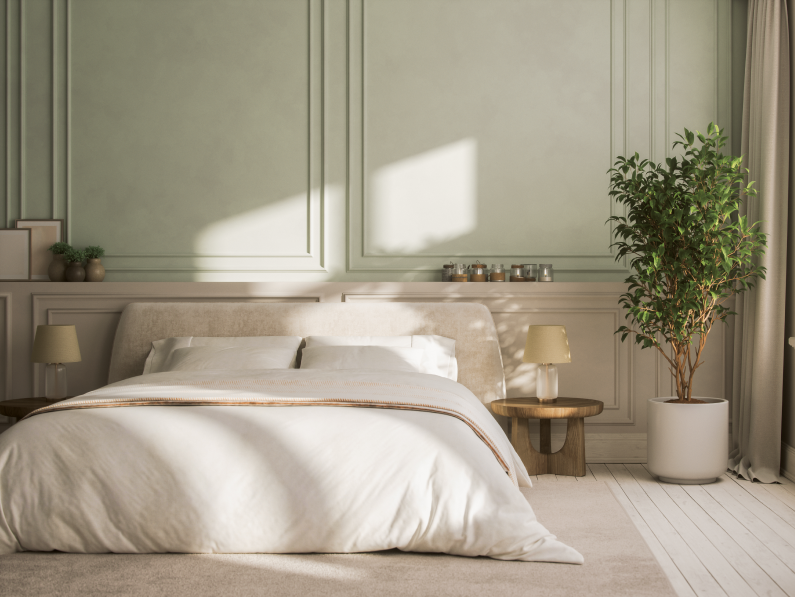
Most people treat bedroom cleaning as a cosmetic chore designed to satisfy an aesthetic standard or a lingering sense of guilt. They swap the sheets, vacuum the visible carpet, and perhaps dust the nightstand if the buildup becomes too obvious to ignore. This superficial approach ignores a grim biological reality. Your bedroom is not just a place of rest; it is a high-volume collection site for organic waste, chemical off-gassing, and microbial colonies that thrive in the dark, warm environments provided by modern bedding.
A true deep clean is not about organization. It is about the aggressive removal of accumulated biological loads that compromise respiratory health and sleep quality.
The Mattress as a Living Filter
The average adult loses nearly half a liter of moisture and sheds millions of skin cells every single night. These are not just statistics; they are the primary fuel source for Dermatophagoides pteronyssinus, the common house dust mite. While the mites themselves are harmless, their waste contains enzymes that trigger significant allergic reactions and inflammation in the human airway.
If you have not stripped your mattress to the core in the last six months, you are sleeping on a saturated filter. Vacuuming the surface is a start, but it fails to address the particles embedded deep within the quilting. A professional-grade approach requires high-heat steam or a specialized UV-C vacuum to neutralize pathogens.
More importantly, the mattress must be deodorized using an alkaline agent like sodium bicarbonate. Sift it over the entire surface and let it sit for at least four hours. This is not a suggestion. The powder pulls moisture and acidic oils from the fibers that a standard vacuum cannot reach. When you finally pull that powder off, you are removing the actual chemical baseline of "stale" air.
The Toxic Legacy of Soft Surfaces
Curtains and upholstered chairs are the most overlooked reservoirs of particulate matter in the home. They act as massive, vertical nets for gravity-settling dust and outdoor pollutants that drift in through open windows. In most households, these items go years without a deep soak.
Standard dusting actually worsens the problem. It launches settled particles back into the breathing zone, where they remain suspended for hours. You must use a damp-dusting method or a vacuum equipped with a genuine HEPA filter. If the filter isn't sealed, the vacuum is simply a motorized dust redistributor, taking fine matter from the floor and spraying it into the air at eye level.
Laundry Chemistry and the Biofilm Problem
Washing your sheets at 40°C is an exercise in futility. It removes the smell, but it does almost nothing to kill bacteria or break down the lipids from skin oils. To truly sanitize bedding, you need a thermal threshold of at least 60°C.
There is also the issue of detergent buildup. Modern high-efficiency machines use so little water that soap residue often stays trapped in the fibers, creating a sticky biofilm that attracts even more skin cells and bacteria. Switch to a vinegar rinse in the fabric softener compartment once a month. The acetic acid breaks down the alkaline detergent remains, stripping the "crunch" from the fabric and ensuring the material is actually clean, rather than just perfumed.
The Architecture of Airflow
Dust settles in stagnant air. Most bedrooms are designed with furniture pushed flush against walls, creating "dead zones" where air never circulates. These gaps are where mold spores find the stillness they need to take root, especially on exterior-facing walls where temperature differentials cause condensation.
Pull every piece of furniture six inches from the wall. You will likely find a grey film of "ghosting"—a mix of soot, dust, and moisture. Scrub these surfaces with a borax solution. Borax changes the pH of the surface, making it inhospitable for fungal growth in a way that standard bleach cannot match. Bleach is mostly water; on porous surfaces like drywall, the water soaks in and feeds the mold roots while the chlorine evaporates off the surface. It is a temporary fix that often invites a more aggressive return of the fungus.
Invisible Contaminants in the Closet
We think of the closet as a storage space, but it is actually a primary source of indoor air pollution. Clothing fibers break down constantly, creating a high concentration of lint and microplastics. Furthermore, shoes bring in a cocktail of street filth, including heavy metals and animal waste.
A deep clean must include a total evacuation of the closet floor. This is the dirtiest square footage in the entire room. If you are keeping your shoes in the same room where you breathe for eight hours a night, you are inviting outdoor toxins into your recovery space. Use a dedicated storage solution or, better yet, move the shoes to a mudroom. Wipe down the baseboards inside the closet with a microfiber cloth—not a feather duster—to capture the fine grey powder that accumulates there.
The Psychology of the Scour
There is a documented link between environmental clutter and cortisol levels. A bedroom filled with "to-do" lists—unfolded laundry, stacks of books, or stray electronics—prevents the brain from entering a full parasympathetic state. Deep cleaning is as much about removing mental friction as it is about removing dirt.
Clear the surfaces completely. Every item on your nightstand should be interrogated for its utility. If it does not contribute to sleep or necessary utility, it belongs in another room. The goal is a sterile, neutral environment that signals to the brain that the day is over.
Why Your Pillows Are Heavier Than When You Bought Them
It is an uncomfortable truth of the industry: after two years, a significant percentage of a pillow's weight can be attributed to dead skin, mold, and dust mite excrement. You cannot "clean" a five-year-old cheap polyester pillow. The structural integrity is gone, and the biological load is too high.
If your pillow is washable, it needs a high-heat cycle and a thorough drying process to prevent internal mildew. If it isn't, and it's over two years old, it is no longer a comfort item; it is a liability. Replace it. When you do, invest in a non-porous protector. These covers act as a barrier that prevents the core of the pillow from becoming a petri dish in the first place.
The Final Threshold
The last step of a genuine deep clean is the floor-to-ceiling wipe. This includes the tops of ceiling fan blades, which are often coated in a thick, greasy layer of dust that is flung across the room every time the fan is turned on. It also includes the light fixtures and the window tracks.
Window tracks are notorious for holding moisture and insect remains. They require a stiff brush and a vacuum attachment. Once the physical debris is gone, wipe the glass with a mixture of isopropyl alcohol and water. This removes the film left by aerosol sprays and cooking oils that drift through the house.
A bedroom should be a sanctuary, but without a rigorous, scientifically-informed cleaning regimen, it quickly becomes a stagnant box of biological irritants. Stop treating the room like a storage locker and start treating it like a medical recovery suite.
Move the bed. Scrub the walls. Sanitize the air. Your lungs will notice the difference before your eyes do.