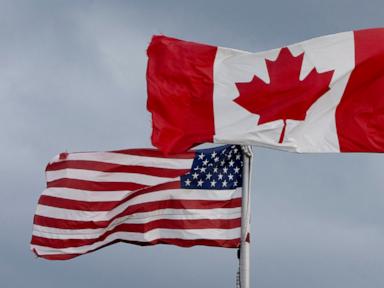
Cold. That is the first thing you feel when a forty-foot refrigerated container rolls into a receiving dock in northern New Jersey. Not just the thirty-four-degree blast of chilled air that hits your face when the doors swing open, though that is sharp enough to make your knuckles ache. It is the cold of a ledger sheet turning red before the pallets even touch concrete.
Forklifts hum. Compressors rattle. Somewhere in a fluorescent-lit office behind glass, a customs broker stares at a tariff code until the numbers blur together.
Fifty percent.
Two digits. One tiny percentage sign. Yet on a shipment of Canadian food—maple syrup from Quebec, flour milled on the prairies, baked goods, dairy, frozen vegetables, specialty pantry staples—that single surcharge can turn a working-class business model into a slow-motion emergency.
When a food importer in New Jersey files suit to challenge fifty percent tariffs on Canadian goods, the headlines usually shrink the whole drama down to a legal skirmish. Court docket numbers. Executive authority. Statutory limits. Trade policy.
Paper words. Bloodless words.
Because behind every customs entry is a chain of perishable decisions made by real people who cannot hit pause on a shelf life. Yogurt expires. Dough stales. Warehouse space costs money whether the pallets move or sit. A grocery buyer in Newark or Paterson or Edison does not care about constitutional theory when the price of a case jumps overnight; they care whether their customers can still afford to fill a basket on a Tuesday evening.
I have spent years standing beside loading docks, talking to supply-chain managers, plant operators, and small business owners who live inside the margins where policy meets reality. Let me be honest with you: international trade law is labyrinthine, counterintuitive, and sometimes maddeningly opaque. Even seasoned operators admit they feel like they are reading a rulebook written in shifting ink. When a fifty percent duty lands on cross-border food shipments, nobody has the luxury of waiting three years for a supreme court ruling to figure out how to pay next Friday's payroll.
To see how a legal challenge like this actually feels on the ground, let us use a hypothetical scenario grounded in how mid-sized food importers operate between Canada and the New Jersey/New York corridor. Imagine a family-run specialty food importer in Bergen County—let's call the company Northbound Provisions and its president David Kowalski. (Again, David and Northbound Provisions are fictional stand-ins built to illustrate real industry mechanics, not a specific named litigant from the headline.)
David does not trade oil futures or sovereign debt. He brings in pallets of Canadian oats, preserves, crackers, and frozen goods, clears them through port or highway entry points, and distributes them to independent grocers, bakeries, and regional chains across the tri-state area.
On paper, Northbound looks sturdy. Twenty-two employees. Long-standing relationships with family farms and food makers north of the border. Contracts signed months in advance with buyers who locked in promotional pricing for the season.
Then comes the shock of a fifty percent tariff.
Picture David sitting at a laminate desk at 6:15 a.m. with a mug of black coffee gone tepid. He opens a spreadsheet that worked cleanly last month. Every column tells a story of squeeze.
Suppose a container of Canadian goods has a customs value of $120,000. Under normal conditions, duties might be modest or zero under North American trade frameworks, leaving room for freight, cold storage, insurance, customs brokerage, distributor margins, and a thin net profit—often just a few cents on the dollar in the food business. Food distribution is a volume game with razor-thin cushions.
Slap a fifty percent tariff onto that $120,000 valuation, and you are suddenly looking at $60,000 in added duty before the goods even reach a store shelf.
Where does sixty thousand dollars come from when a mid-sized importer already has cash tied up in inventory and thirty-to-sixty-day payment terms from grocery accounts?
Now consider a metaphor for what happens next. Think of a cross-border food supply chain like a long relay race in pouring rain. Each runner hands off a baton—a pallet, a purchase order, an invoice—while the track gets slicker. A tariff at fifty percent is not just a heavier baton. It is someone suddenly raising a hurdle halfway down the lane while the runners are already at full stride.
You cannot simply stop mid-stride without tripping the person behind you.
If David passes the full fifty percent increase straight to the retailer, the retailer pushes back—or delists the item in favor of a cheaper domestic or third-country alternative. Sales volume drops. Orders shrink. The Canadian supplier's factory line slows down, cutting shifts or laying off workers in Ontario or Quebec.
If David absorbs the tariff to protect his customer relationships, his cash flow bleeds out. Within weeks, working capital vanishes. Credit lines tighten. A business that spent fifteen years building trust one delivery at a time faces an existential choice: sue, shrink, or shut down.
That is why lawsuits challenging sweeping tariffs are rarely filed out of boredom or ideological sport. They are filed out of desperation dressed in legal briefs.
Why Food Hits Different When Tariffs Spike
Not all imports behave the same way when trade barriers rise. If someone imposes a steep tariff on decorative lamps or seasonal patio furniture, a warehouse can hold stock, renegotiate next quarter, or wait out the storm.
Food refuses to cooperate with delay.
Perishability changes the physics of commerce. Even shelf-stable pantry items have best-by dates and seasonal retail cycles. Frozen and refrigerated foods tick down every single hour. A shipment sitting in dispute or stuck at a border crossing while paperwork is argued over loses value just by existing.
And North American food supply chains have been woven together for decades. That integration did not happen by accident; it grew out of geography, climate, crop specialization, and complementary manufacturing. Canada grows vast quantities of grains, pulses, canola, and cold-climate produce, and runs specialized food processing plants. The United States—and densely populated hubs like New Jersey—provides massive consumer demand, port and rail hubs, packaging networks, and distribution reach.
When a fifty percent tariff drops across that border, it acts like a cleaver on an interconnected system.
Consider what a New Jersey importer actually does. People sometimes picture importers as shadowy middlemen sitting on piles of cash. In reality, most regional food importers operate like translators and shock absorbers. They translate Canadian food safety compliance, labeling rules, and bilingual packaging into U.S. retail requirements. They absorb currency swings, trucking bottlenecks, and seasonal harvest hiccups so a local grocer in Hackensack or Jersey City can offer consistent variety.
Take away the importer's ability to price predictably, and the entire local shelf feels the tremor.
Wait a second. Let us look closely at the legal question sitting at the center of a lawsuit like the one referenced in that New Jersey headline. Why would an importer go to federal court instead of just eating the cost or hunting for new suppliers?
The Tug-of-War Over Presidential Power and Trade Law
In modern U.S. trade disputes, lawsuits challenging steep tariffs usually zero in on authority and procedure.
Historically, the U.S. Constitution gives Congress the power to lay and collect taxes, duties, and imposts, and to regulate commerce with foreign nations. Over the past century, however, Congress passed several statutes delegating certain tariff or trade-restriction authorities to the executive branch under specific conditions—such as national security investigations, unfair trade practices, or national emergencies.
When a president moves to impose sweeping tariffs—especially dramatic rates like fifty percent on a major trading partner like Canada—importers and trade lawyers ask sharp, foundational questions:
Did the statute cited actually authorize tariffs of this magnitude and scope? Were the statutory prerequisites—such as a genuine emergency, formal findings, or specific investigative steps—lawfully met? Or did the executive branch stretch an emergency or trade tool beyond what lawmakers ever intended?
I will admit something right here: watching trade battles unfold in court can feel like watching two people argue over the fine print of an insurance policy while the roof leaks. Courts move methodically. Briefs get filed. Hearings get scheduled. Appeals stretch across months.
Meanwhile, the leak is over the kitchen.
For an importer challenging a fifty percent tariff, the lawsuit is both a shield and a gamble. Filing suit costs money—retainers, filing fees, economic analysis, legal strategy. Small and mid-sized companies do not throw six figures at federal litigators lightly. They do it when the alternative—paying fifty percent on every incoming load—is mathematically fatal.
And there is another layer that rarely makes the three-line summary on a news feed: competitive distortion.
Suppose Company A (our hypothetical Northbound Provisions in New Jersey) imports Canadian specialty goods and faces a fifty percent tariff, while a larger rival has manufacturing plants inside the United States, or sources from a country facing a lower rate, or has deep corporate reserves to weather a loss leader. In a tight grocery aisle, a ten- or fifteen-percent price gap can swing shopper behavior. A fifty percent duty turns a competitive market into a tilted field overnight.
What Happens Between the Border and the Checkout Lane
Let us trace a single hypothetical pallet to see how invisible stakes pile up.
Picture a pallet of Canadian-made artisanal crackers and oat granola bound for a distributor in central New Jersey.
First, the goods cross from Canada into the United States. At customs entry, the fifty percent duty is assessed based on entered value. Even if the importer believes the tariff is unlawful and files suit, duties generally must be paid or bonded at the time of entry unless a court grants specific injunctive relief—and even when refunds are later ordered in trade litigation, getting money back from the government can be slow, complex, and uncertain, especially if liquidation occurs or administrative rules get tangled.
Second, drayage and freight costs keep climbing. Diesel, driver wages, tolls along the New Jersey Turnpike, cold-chain fuel surcharges—none of those shrink because a tariff spiked.
Third, warehousing and retail slotting realities bite. A regional supermarket chain sets planograms months ahead. If a product's landed cost jumps dramatically, the buyer faces a hard choice: raise the retail price and risk shoppers walking past it, cut the retailer's own margin, or pull the SKU off the shelf.
Once a product leaves a shelf, getting it back later is twice as hard. Space is scarce. Another brand moves in.
And look upstream to the Canadian producer. A family mill or bakery in Ontario or Quebec may have built its production schedule around U.S. demand. When orders dry up because fifty percent tariffs price them out of New Jersey and New York, the factory doesn't just lose revenue—it faces idle lines, spoiled ingredients, and painful choices about hours and headcount.
Trade is never a one-way street. When you put fifty percent sand in the gears of cross-border food trade, friction shows up on both sides of the line.
Why Consumers Feel It Later Than They Expect
One of the trickiest parts of tariff stories is timing. People read about a fifty percent tariff today, walk into their neighborhood market tomorrow, and see roughly the same price tag on a box of cereal or a bag of frozen berries.
That delay fools a lot of observers into thinking tariffs are harmless bluffs or purely business-to-business squabbles.
In reality, retail prices often lag behind border costs because of forward contracts, existing warehouse inventory, and businesses absorbing initial hits to keep customers from flinching. Think of it like stepping off a high diving board: for a split second in mid-air, you don't feel the splash yet.
When the splash comes, it rarely arrives as a neat sticker reading "50% Tariff Surcharge." Instead, it shows up gradually:
- A sale price disappears and never comes back.
- A package shrinks slightly or shifts to a cheaper ingredient mix.
- A favorite regional item quietly vanishes from the aisle.
- A local food business stops hiring or delays equipment upgrades.
For families already feeling pressure from grocery bills, housing costs, and everyday expenses, those quiet shifts add up. Food is personal. What we eat is tied to memory, comfort, cultural heritage, and daily routine. When trade friction makes wholesome, familiar foods more expensive or harder to find, the policy stops being an abstraction in Washington or Ottawa and becomes a conversation around the dinner table in New Jersey.
The High Stakes Behind a Court Filing
When a New Jersey food importer steps up to challenge fifty percent tariffs on Canadian goods in court, they are carrying more than their own balance sheet.
They are testing the boundary between executive speed and legal restraint in economic policy. They are forcing a concrete look at what happens when massive, sudden tariffs hit everyday essentials rather than luxury goods. And they are spotlighting a truth that gets lost in loud political slogans: every tariff rate has a human translation.
A fifty percent tariff is not just a number on a customs form. It is a cash crunch at 6:15 a.m. It is a buyer's agonizing call to a supplier. It is a dockworker moving fewer pallets. It is a small business owner deciding whether to fight in federal court because surrendering on paper means closing the doors in reality.
Out on the loading dock, the cold air still rushes out when the doors swing wide, carrying the faint scent of grain and cold steel—and the quiet, stubborn weight of people trying to keep food moving across a line that suddenly feels much wider than a map suggests.