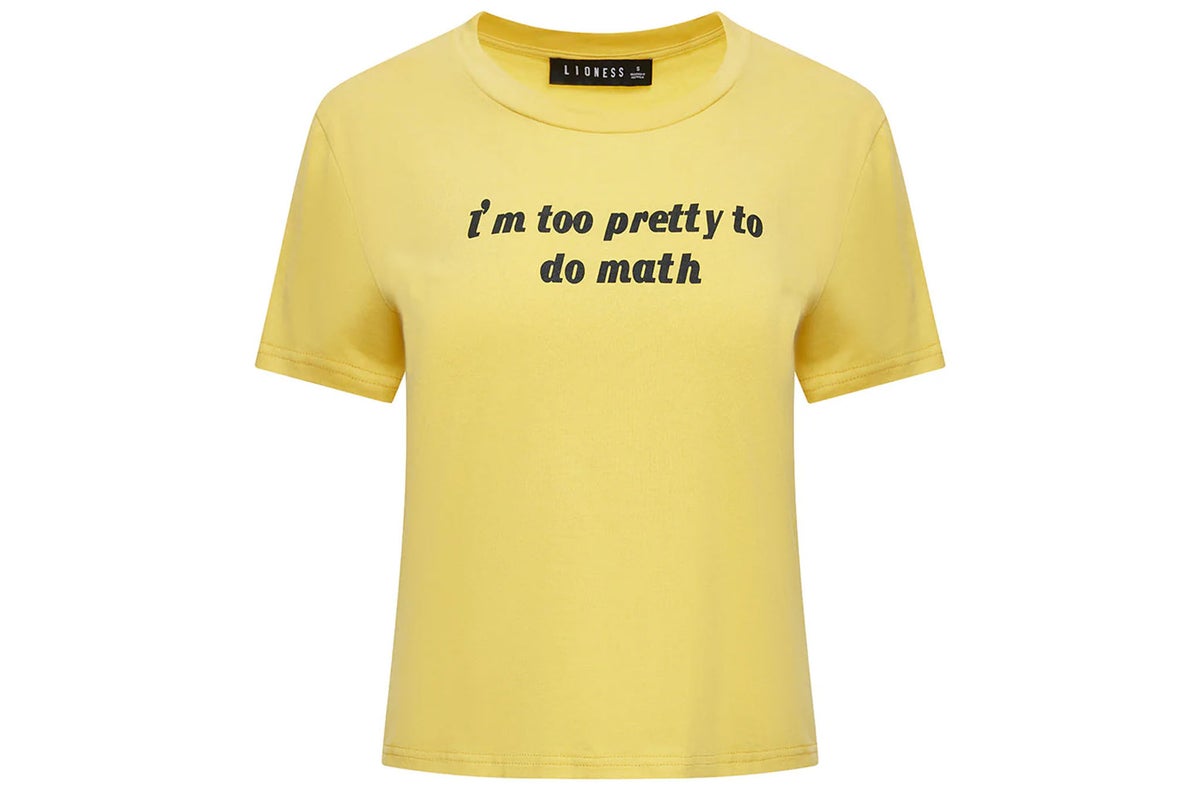
The mirror in the girls' restroom at Oak Creek High was always smudged with fingerprints at eye level, a testament to hundreds of teenagers trying desperately to see themselves clearly. For fifteen-year-old Maya, that mirror was a daily checkpoint. It was not a place of vanity. It was a place of assessment. On a rainy Tuesday morning, she stood before it, tugging the hem of her regulation charcoal skirt downward. It was exactly two inches below her knee, as mandated page 14 of the student handbook. But Maya had grown an inch over the summer. Her knees were stubborn things, poking out just enough to invite trouble.
She felt a tightening in her chest, a familiar physical reaction shared by thousands of students navigating the rigid topography of modern school dress codes.
When we talk about school uniforms and strict dress policies, the conversation usually hovers around discipline, uniformity, and the elimination of socioeconomic barriers. It sounds logical on paper. If everyone looks the same, everyone plays on a level playing field. But this logic ignores the messy, fragile reality of human development. A growing body of psychological research and academic warning suggests that the true cost of these policies is not measured in yards of fabric, but in the slow erosion of a child’s self-esteem.
The Measuring Tape Crisis
Consider what happens twenty minutes after Maya left the restroom.
She was walking down the hallway toward her honors geometry class when a hand clamped gently down on her shoulder. It was the vice principal. There was no malice in the gesture, just the mechanical execution of a duty. Maya was pulled from the line of moving students and instructed to kneel on the linoleum floor. The "kneel test" is a common, archaic ritual used in schools across the country to determine if a skirt is long enough. If the fabric touches the floor while kneeling, you pass. If it hovers an inch above, you fail.
Maya failed.
In that single moment, the hallway became a theater of public shame. Her peers walked past, some looking away out of secondary embarrassment, others snickering. Maya was sent to the office to wait for her mother to bring a change of clothes. She missed her geometry quiz. More importantly, she missed out on the feeling that her body belonged to her.
Dr. Samantha Brooks, an educational psychologist who has spent a decade studying the intersection of school policy and adolescent development, argues that this policing of clothing does something dangerous. It shifts a student's focus from what their brain can achieve to how their body is perceived. When a school principal holds a measuring tape to a teenager's thigh, the message is clear: your appearance is a threat to the learning environment.
This is not a minor inconvenience. It is a psychological disruption. For adolescents, whose identities are as malleable as wet clay, these interactions form the foundation of how they view their worth.
The Invisible Weight of the Rules
The traditional defense of strict dress codes rests on the idea of creating a focused environment. Proponents argue that exposed shoulders, ripped jeans, or graphic tees are distractions that derail academic success.
But let us look closer at the distraction itself. Who is actually being distracted?
Statistically, dress codes disproportionately target female students and students of color. Policies explicitly ban items like yoga pants, tank tops, and short skirts, framing them as "distracting to male students." By doing this, schools inadvertently teach a harmful double lesson. They tell young women that they are responsible for the thoughts and behaviors of their male peers. Simultaneously, they tell young men that they are incapable of controlling their focus if a female classmate shows her collarbone.
This creates an invisible weight. A study examining student anxiety levels found a significant spike in schools with strict, punitive dress enforcement. Students reported spending more time during the school day adjusting their clothes, worrying about getting "coded," and feeling hyper-aware of their bodies than they did focusing on their coursework.
The policy designed to eliminate distractions becomes the greatest distraction of all.
Imagine trying to analyze a Shakespearean sonnet while wondering if your waistband has slipped down far enough to trigger a detention. Imagine trying to give a chemistry presentation while hyper-aware that the collar of your shirt might be deemed too low by an evaluator standing at the back of the room. The cognitive load shifts entirely. Learning requires a sense of safety and belonging. Strict dress codes introduce a persistent undercurrent of surveillance.
The Myth of the Level Playing Field
The most seductive argument for school uniforms is that they act as a social equalizer. They hide wealth disparity. The child of a CEO and the child of a factory worker wear the same polo, the same trousers. The visible markers of poverty are erased.
It is a beautiful theory. But the reality is far more complicated.
Uniforms are expensive. For a family living paycheck to paycheck, purchasing three or four sets of approved, school-branded clothing can be a massive financial strain. When a student shows up in a faded uniform shirt from three years ago because their parents cannot afford a new one, the illusion of equality vanishes. The child is still marked. Except now, they are marked within the very system designed to protect them.
Furthermore, the enforcement of these rules often catches the most vulnerable students in its net. A student who relies on public transit might arrive at school with wet trousers from a sudden downpour, violating the rule against damp or untidy attire. A student staying in temporary housing might not have access to an iron, leading to a disciplinary infraction for wrinkled clothing.
Instead of leveling the playing field, strict dress codes often become another tool that penalizes poverty. The punishment for these infractions is rarely just a verbal warning. It involves being pulled out of class, placed in in-school suspension, or sent home.
The academic stakes are real. Every hour spent in the principal's office waiting for an approved pair of pants is an hour of lost instruction. We are trading a student’s education for a visual standard of conformity.
Healing the Fractured Self
There is an alternative. A growing movement of educators is pushing for "body-positive" dress codes—policies that focus on safety and cleanliness rather than specific measurements and styles. These codes allow for self-expression within reasonable limits, treating students as active participants in their community rather than subjects to be managed.
When schools trust students to dress themselves, something shifts. The relationship between the administration and the student body transforms from adversarial to collaborative. The energy spent policing hem lines is redirected toward mentoring minds.
But the real problem lies elsewhere, deep in the quiet spaces of a teenager's internal world.
The human cost of strict dress codes is not something that can be easily quantified in a spreadsheet or a school board report. It lives in the way a young girl looks at her reflection and sees a problem to be corrected. It lives in the way a young boy feels ashamed because his family cannot afford the exact brand of shoes required by the dress policy.
Maya eventually returned to class that Tuesday afternoon, wearing an oversized pair of sweatpants from the school’s lost-and-found bin. They were gray, bulky, and completely within code. She sat at her desk, her shoulders hunched forward, trying to make herself as small as possible. She did not raise her hand for the rest of the day. The lesson she learned that morning had nothing to do with geometry, but she would remember it for the rest of her life.